
Shop fabrication is faster, more accurate and yields a higher quality product overall
Why Build a Meter and Regulation Station Twice?
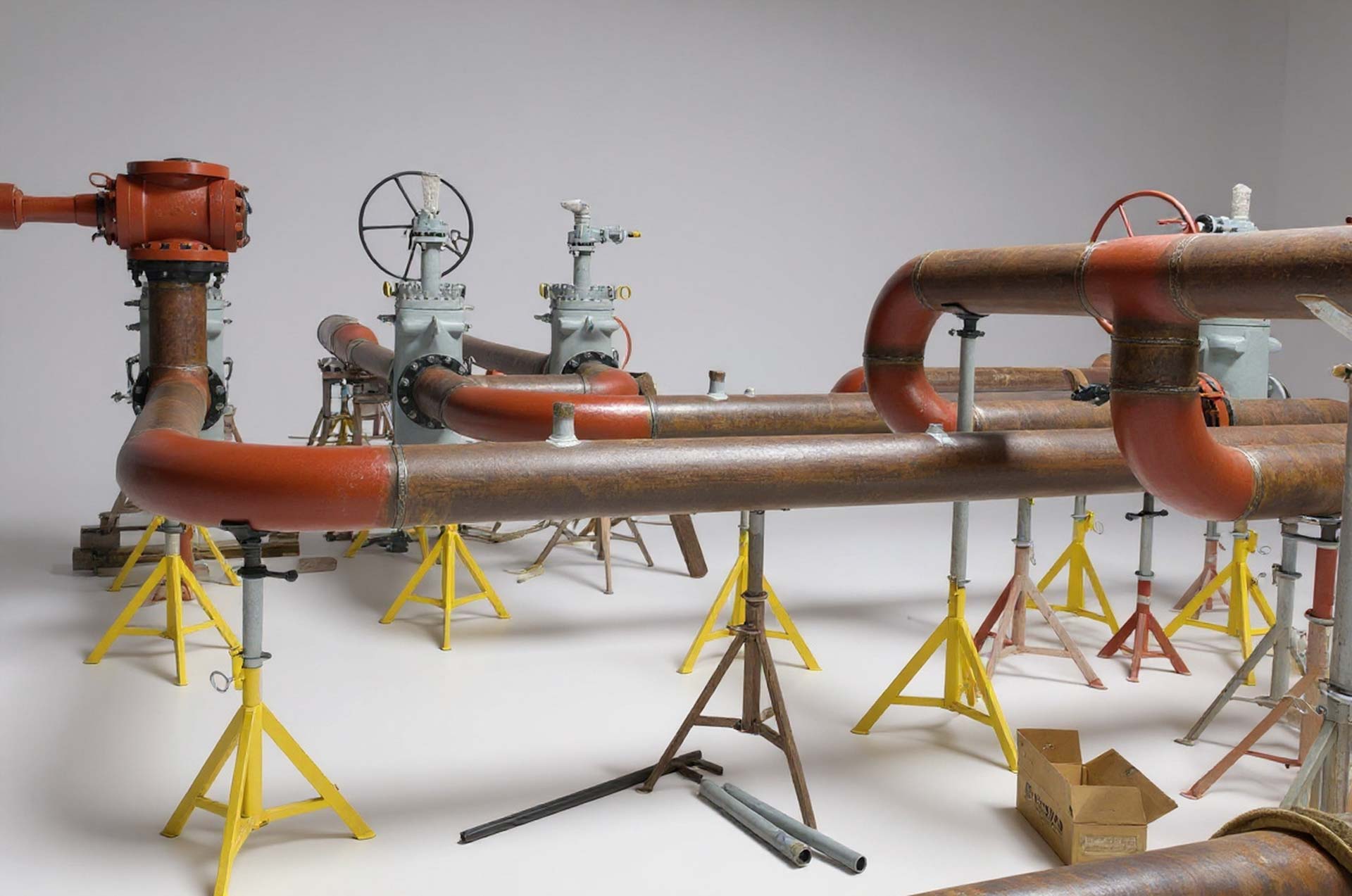
In the pipeline construction industry, efficiency isn't just about speed—it is about managing risk, reducing downtime, and maximizing safety. When it comes to constructing a meter and regulation station, companies face a fundamental logistical choice: build the station directly on-site or fabricate it ahead of time in a controlled shop environment.
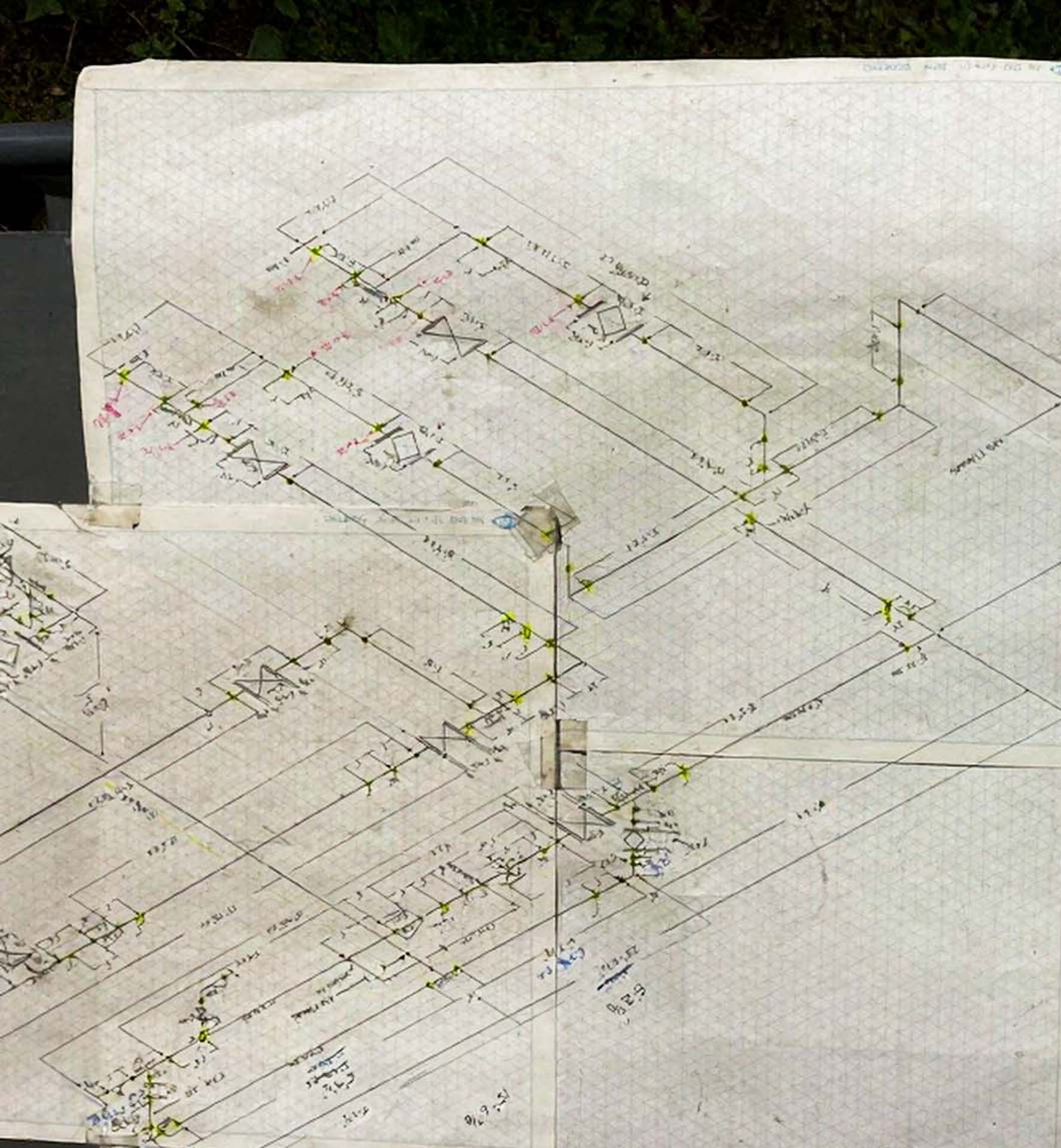
For the experts at Midwestern Contractors, the choice is clear. Building on-site often has too many drawbacks due to the sheer volume of logistical hurdles. Instead, they rely on a powerful, two-dimensional drawing to get the job done right the first time: the isometric drawing.
The Pipe Fitter’s Ultimate Tool
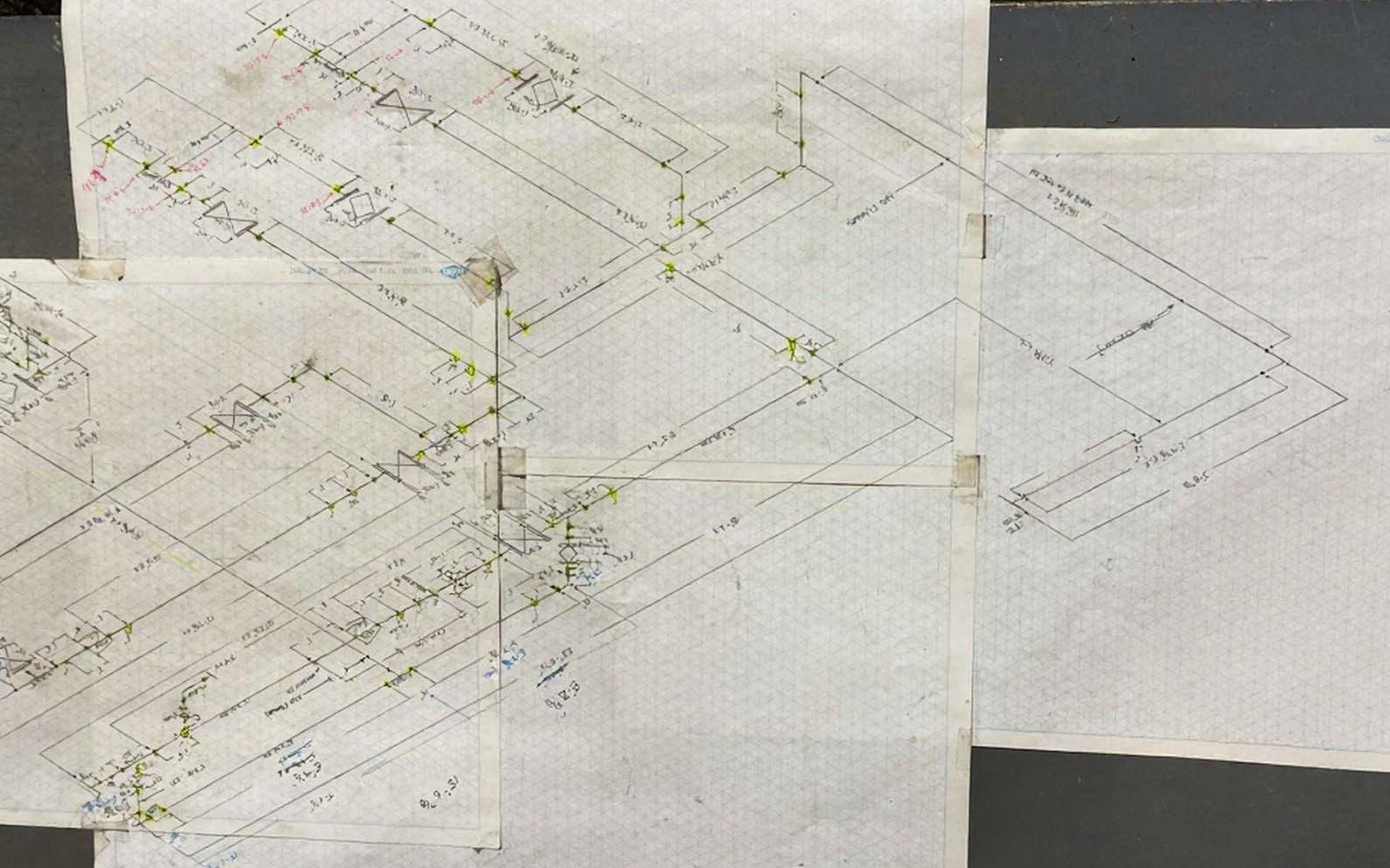
The isometric drawing is a pipe fitter’s best asset. It is a precise, two-dimensional representation of a three-dimensional pipe assembly that conveys every single piece of information necessary to fabricate a complex station.
By taking highly accurate field measurements, a skilled fitter can map out the entire project on paper, bring that drawing into the fabrication shop, and build the station completely off-site. But why go through the trouble of off-site fabrication when the final structure belongs in the field?
The answer lies in the additional costs of on-site construction.
The Hidden Costs of Building On-Site
Building a station directly at the job site introduces a cascade of inefficiencies that can quickly derail a project's timeline and budget:
- Extended Outages: During a pipeline outage, product cannot flow, which means every hour of downtime directly impacts revenue. On-site construction severely extends this window because the demolition of old infrastructure must happen entirely before new construction can even begin.
- Inflated Labor Costs: Building in the field is labor-intensive. It requires operators and laborers to remain on standby just in case welders require materials or structural adjustments.
- The Weather Wildcard: Field construction is entirely at the mercy of the elements. Wind, rain, and extreme winter weather routinely slow down both machinery and crew, creating unpredictable delays.
- Testing Bottlenecks: A hydrostatic test—which checks the pipeline's integrity using pressurized water—must be completed before a line can be commissioned. In the field, these tests are highly vulnerable to environmental temperature extremes, which can skew results or delay the process.
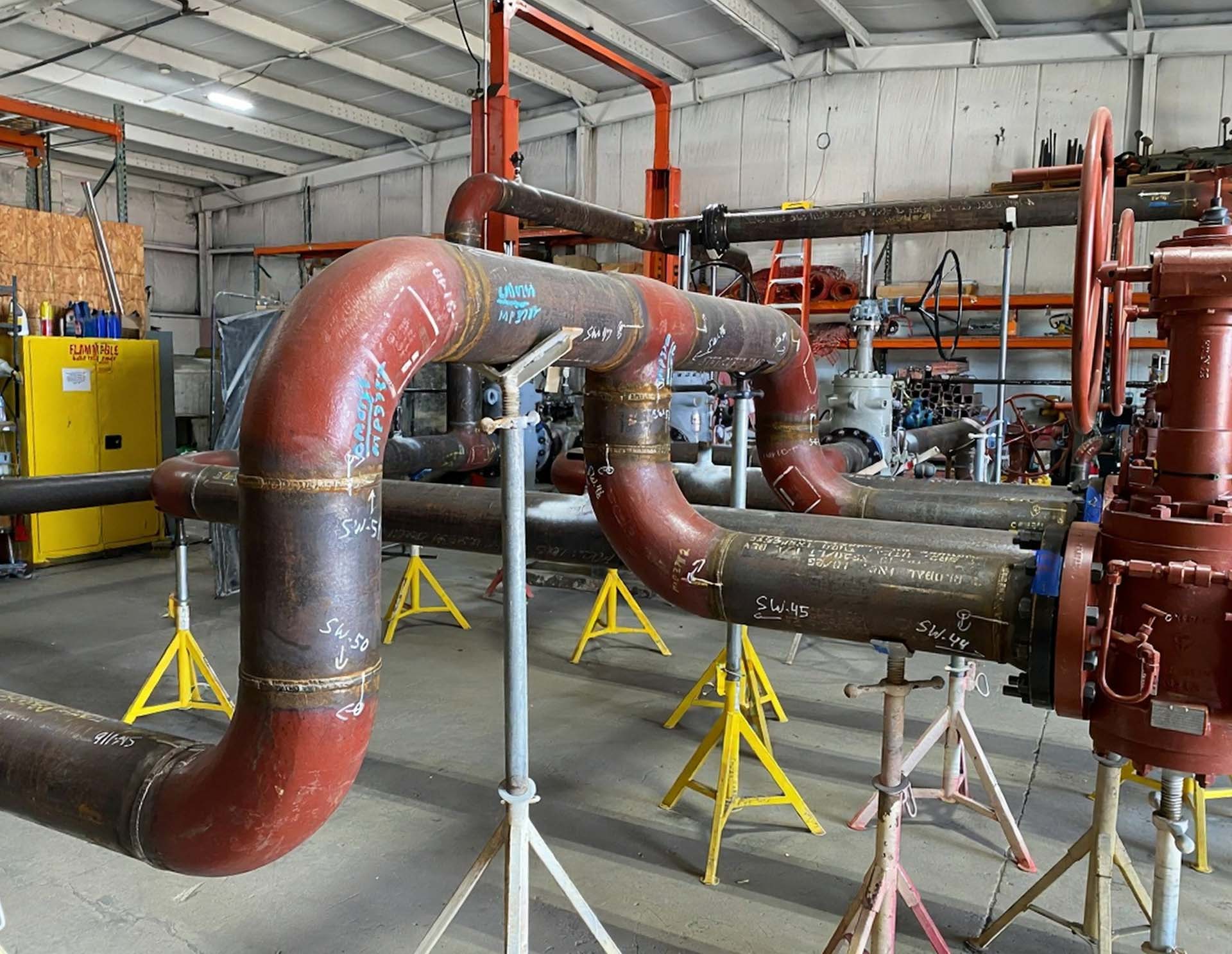
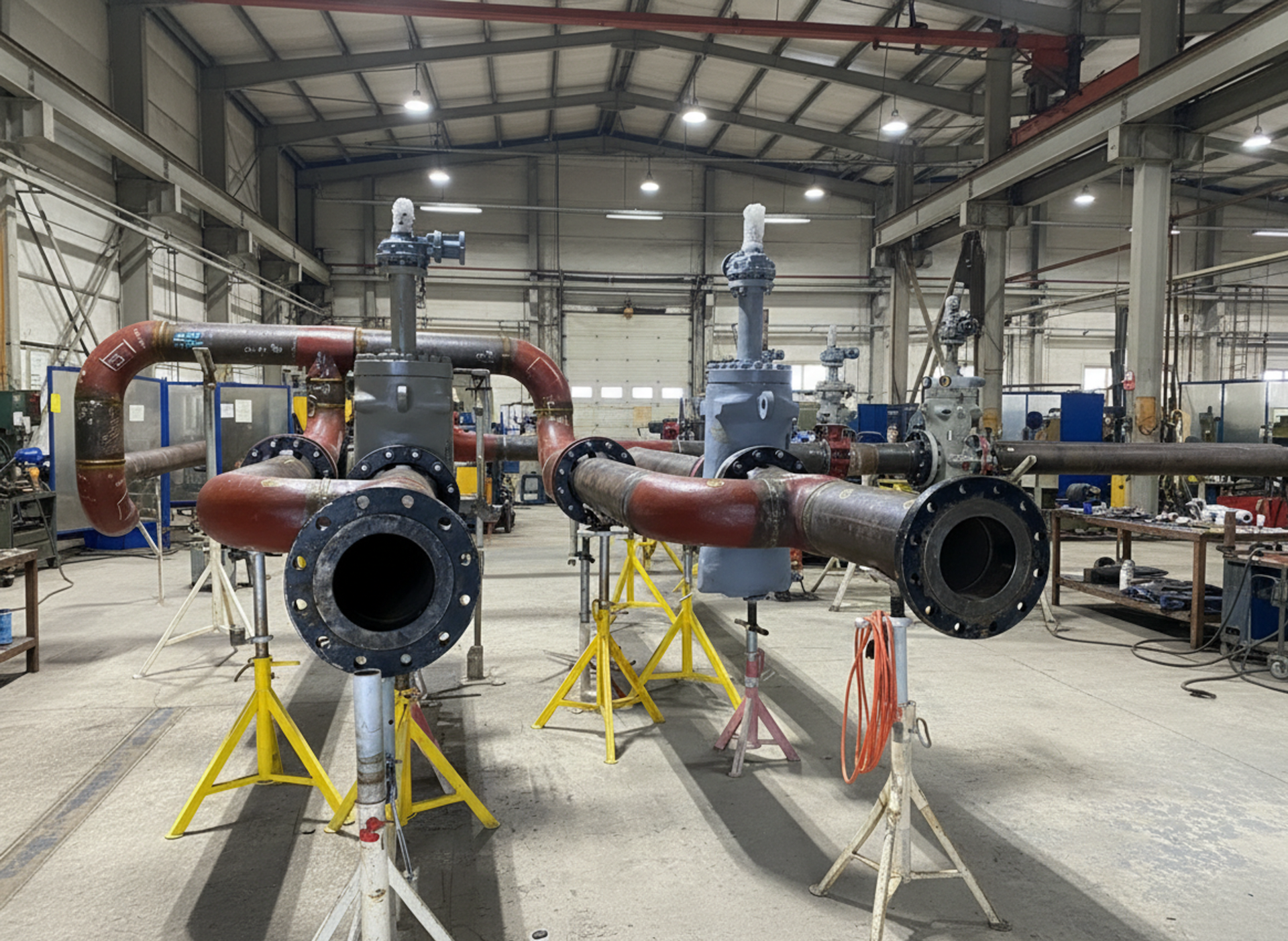
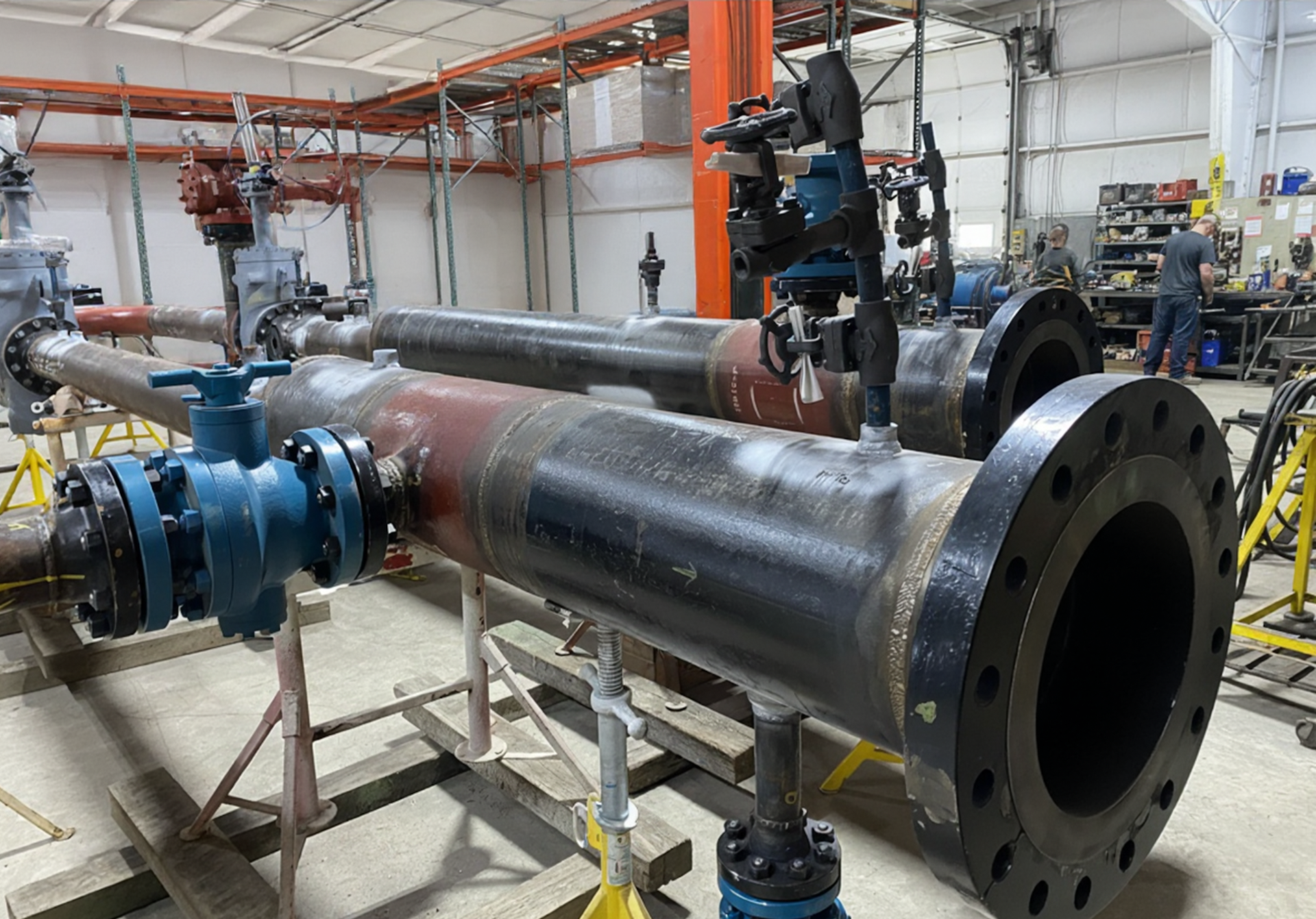
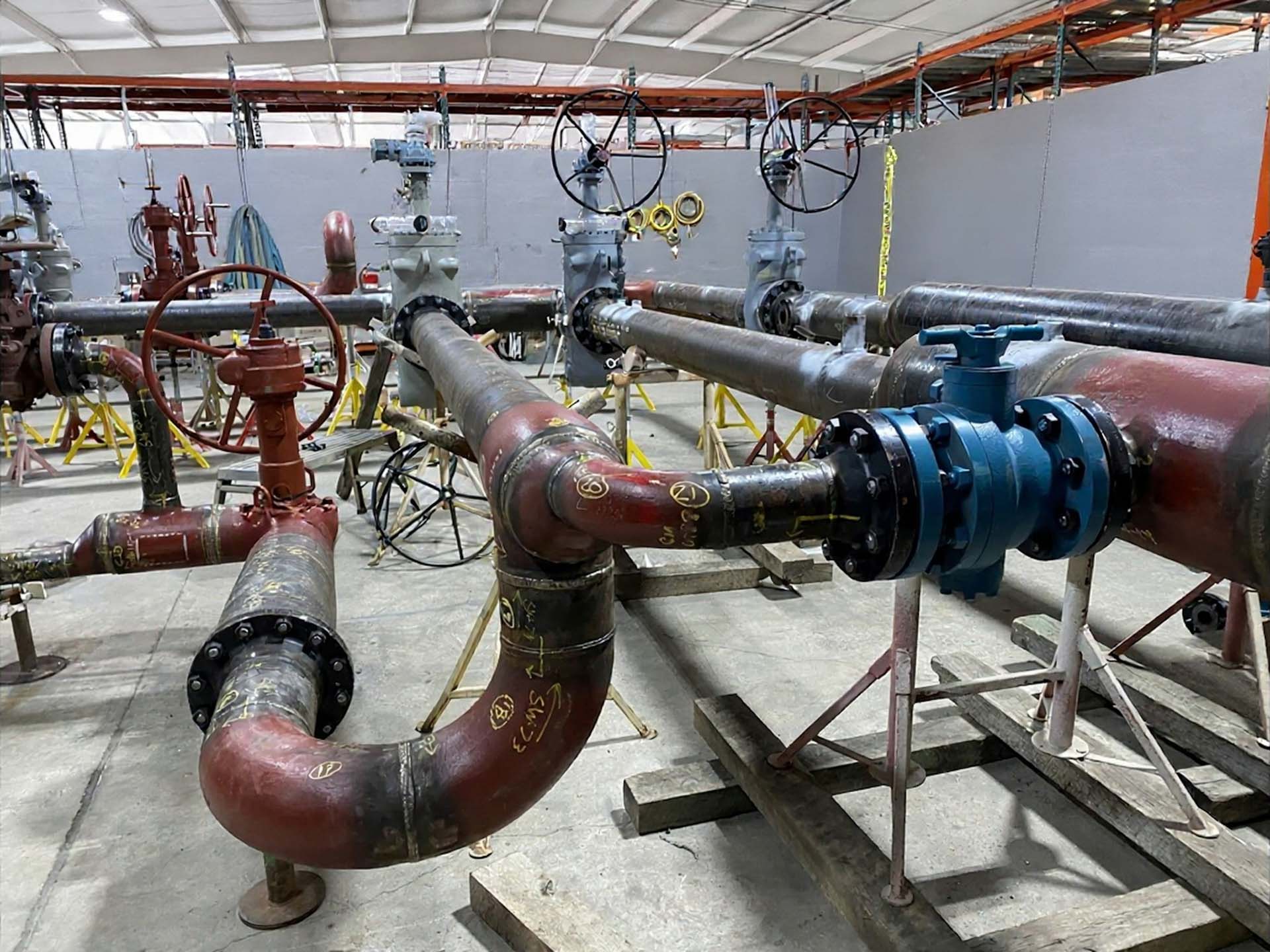
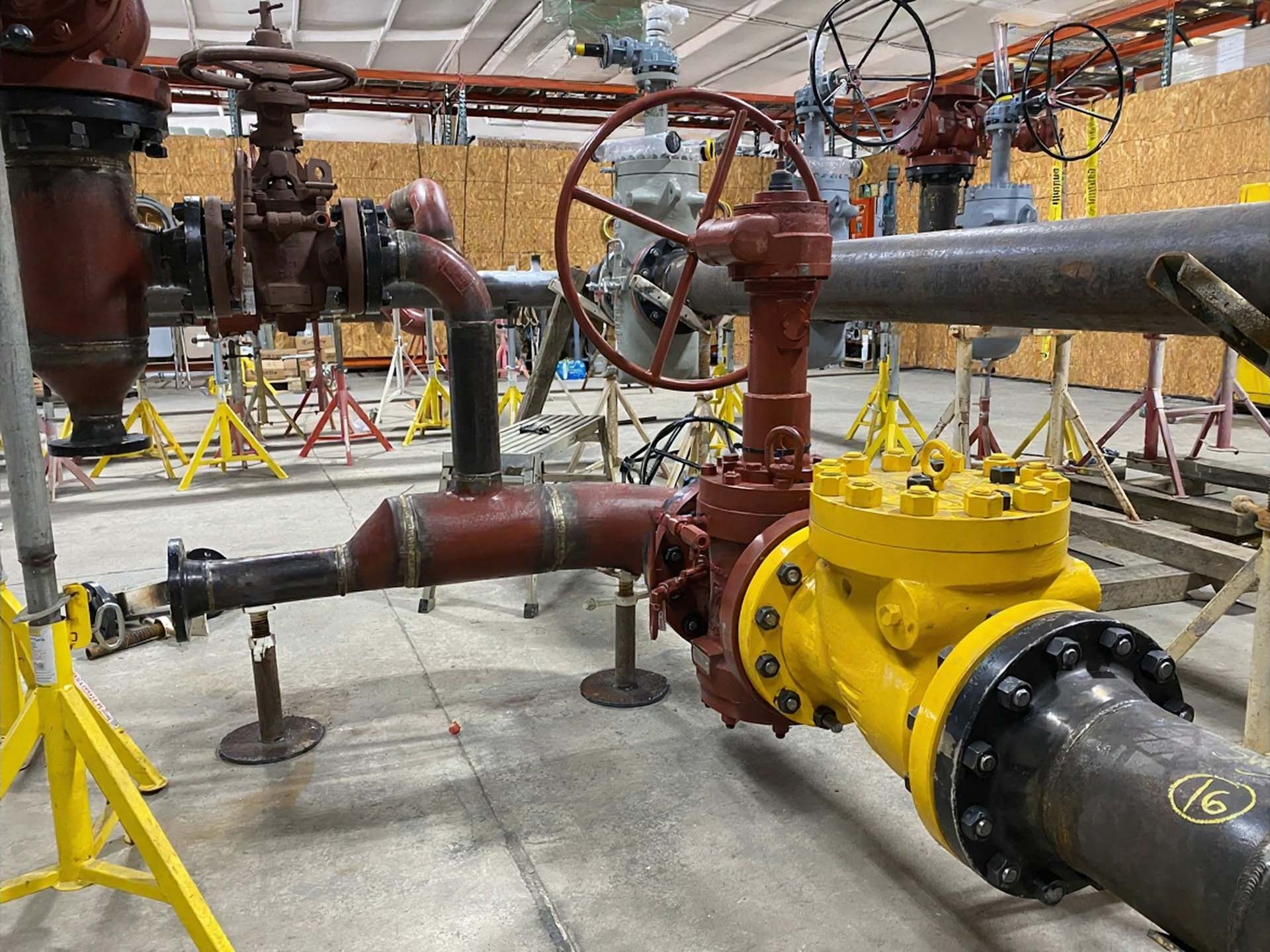
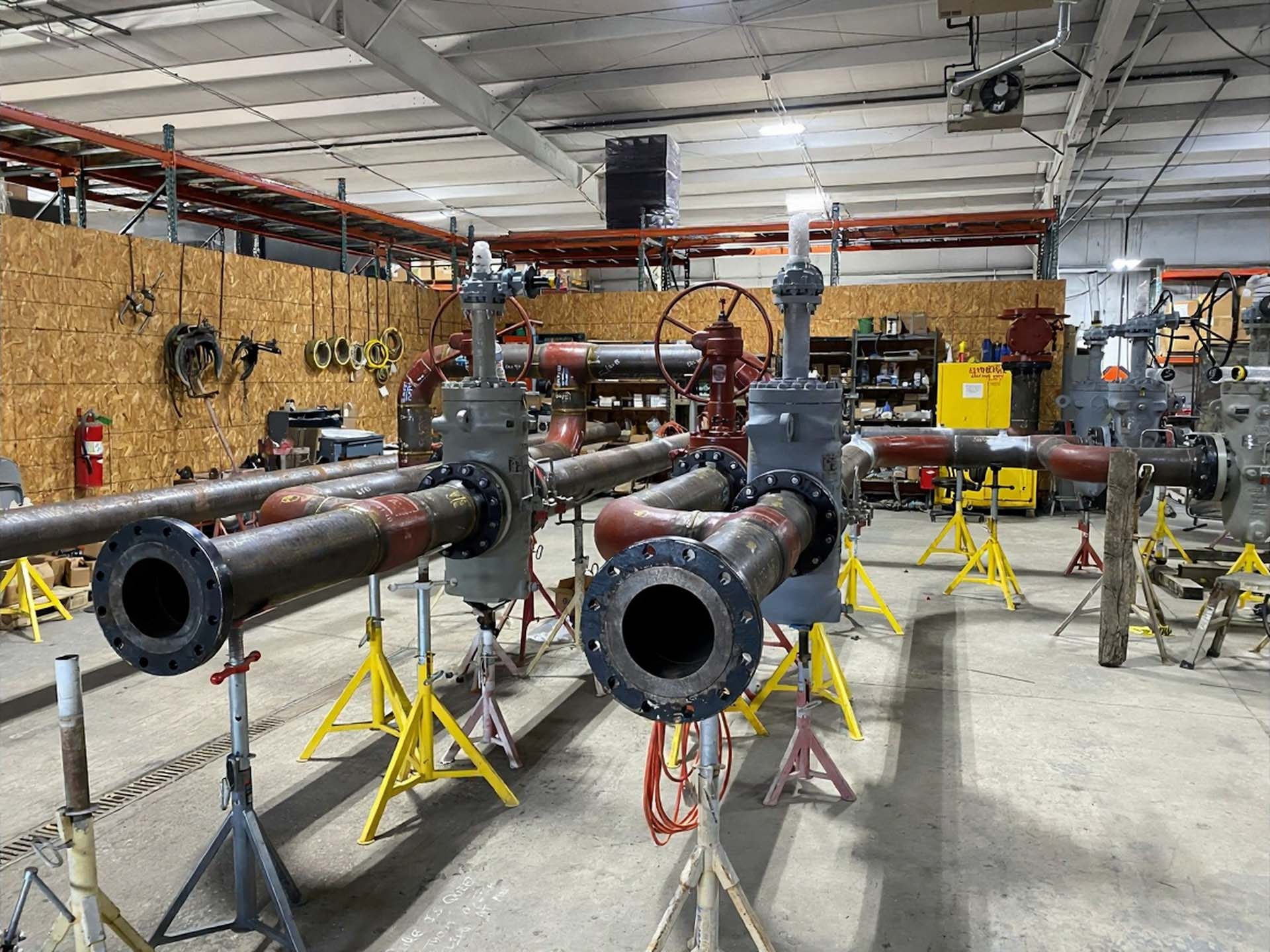
Click on any image to enlarge and run slideshow
The Shop Fabrication Advantage
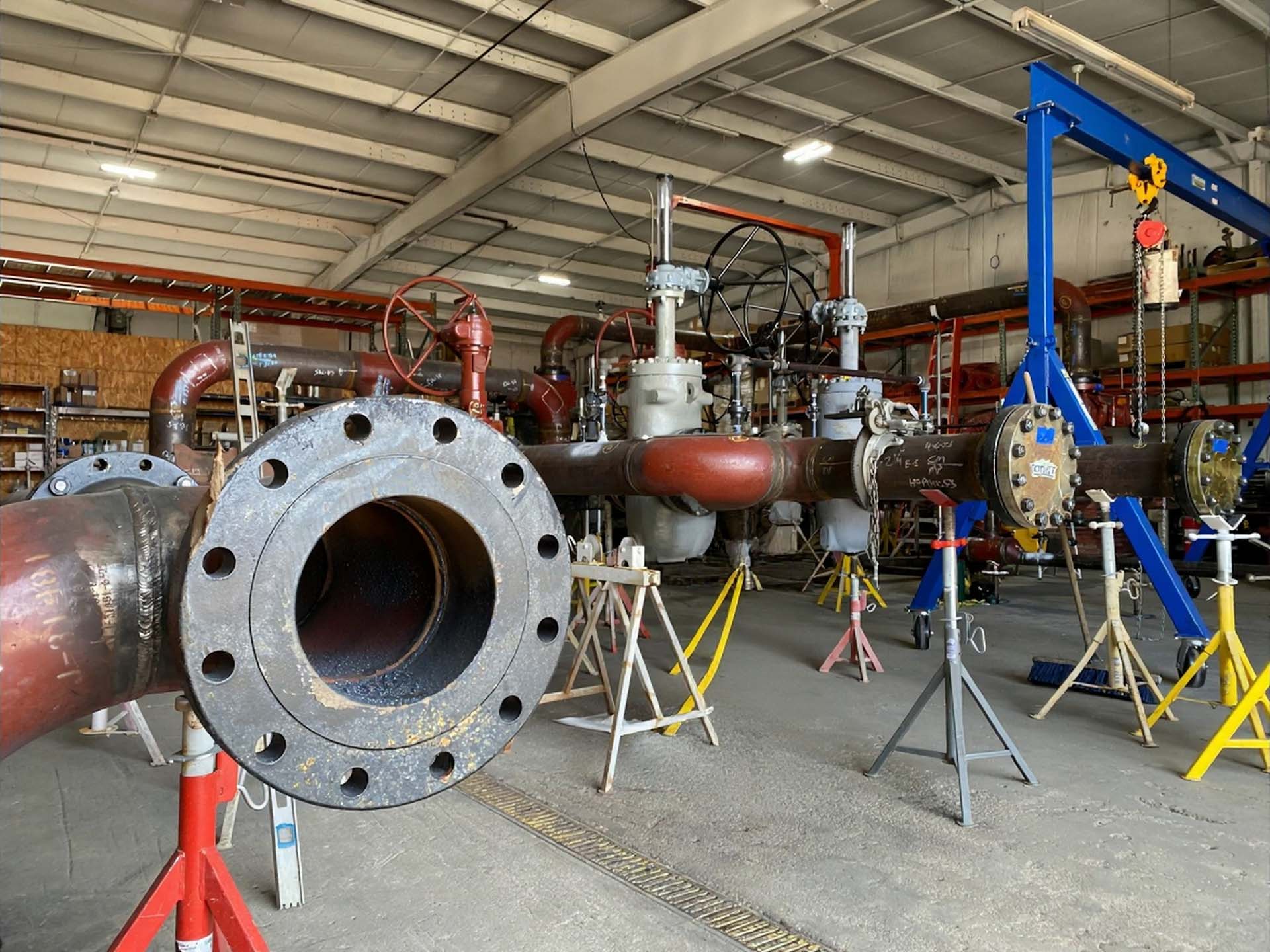
By contrast, shop fabrication transforms the construction process by moving it into a controlled, optimized environment.
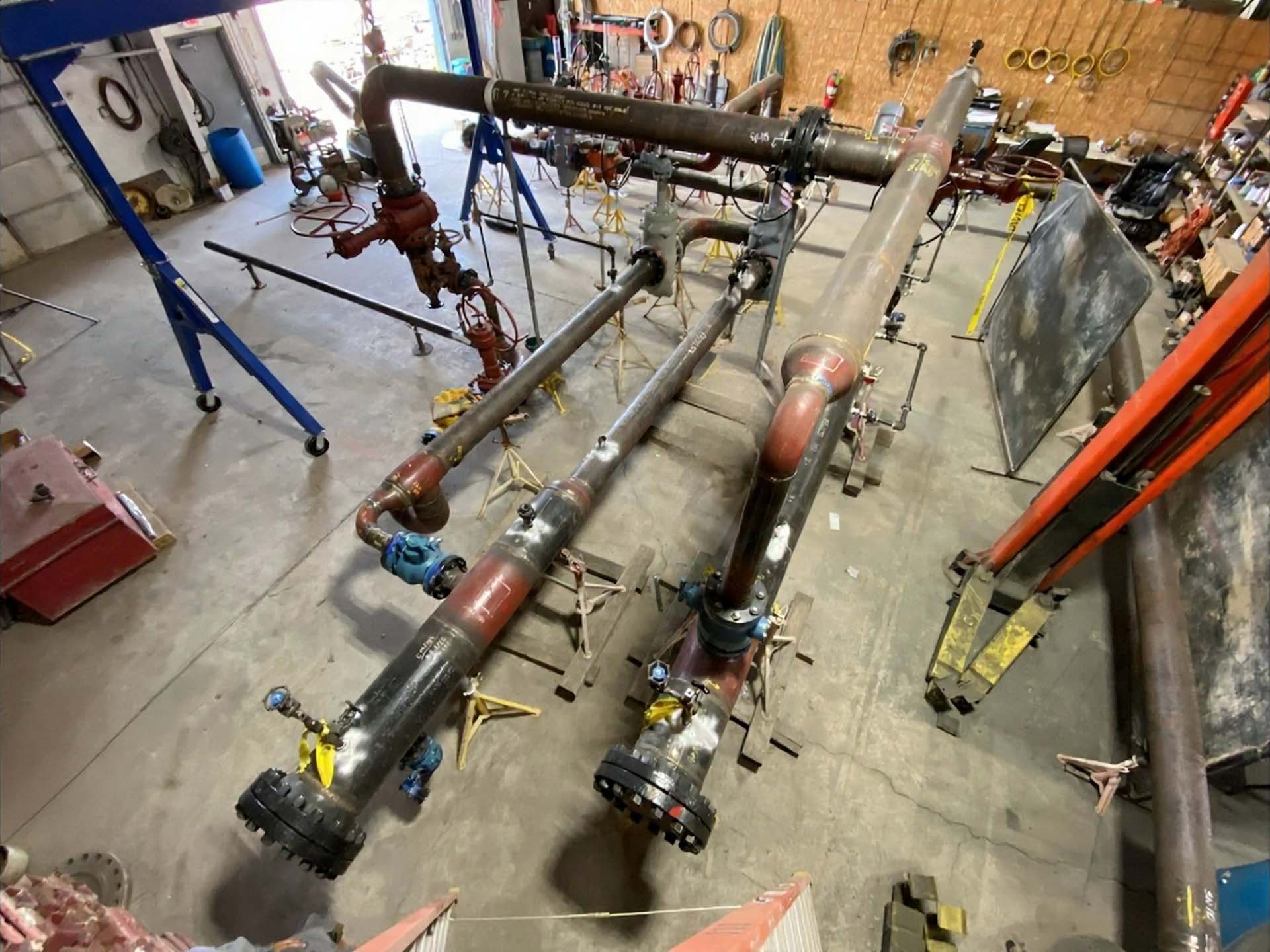
Inside a fabrication shop, crews benefit from level floors and gantry cranes that seamlessly move heavy materials. Because the environment is shielded from wind, rain, and temperature spikes, a single welder and a helper can layout and fabricate complex assemblies entirely on their own—without a massive standby crew. Furthermore, hydrostatic testing can be completed with maximum efficiency, completely insulated from outdoor weather.
While the fabrication team is at work in the shop, field crews can simultaneously manage site preparation and demolition.
Once the on-site demolition is complete, the entire prefabricated assembly is loaded onto a truck, delivered to the site, set securely on cribbing, bolted, and torqued into place. From there, electricians and instrumentation technicians quickly step in to add controls and wiring. The entire system can then be commissioned smoothly, well within the designated outage window. After commissioning the final supports can be placed, surface restoration and any air/ground interfaces can be wrapped.
SHOP FABRICATION>>>SIMULTANEOUS SITE PREP & DEMO>>>TRUCK TO SITE & ASSEMBLE
Precision That Fits Perfectly
The entire off-site fabrication model relies on a single, critical variable: the accuracy of the initial drawing.
It takes a true professional to create an accurate isometric drawing. When the fitters at Midwestern Contractors draw an isometric layout, pipeline operators can count on the resulting station matching up perfectly to the field tie-in points. By leveraging shop fabrication and flawless engineering, they ensure that a station is only built once—saving time, cutting costs, and keeping product flowing safely.