
Turnkey relocations pose challenges that are best handled by planning and constant communication among stake holders
25,000' Pipeline Relocation
Case Study: 25,000-Foot Pipeline Relocation for Major Roadway Improvement
Project Overview
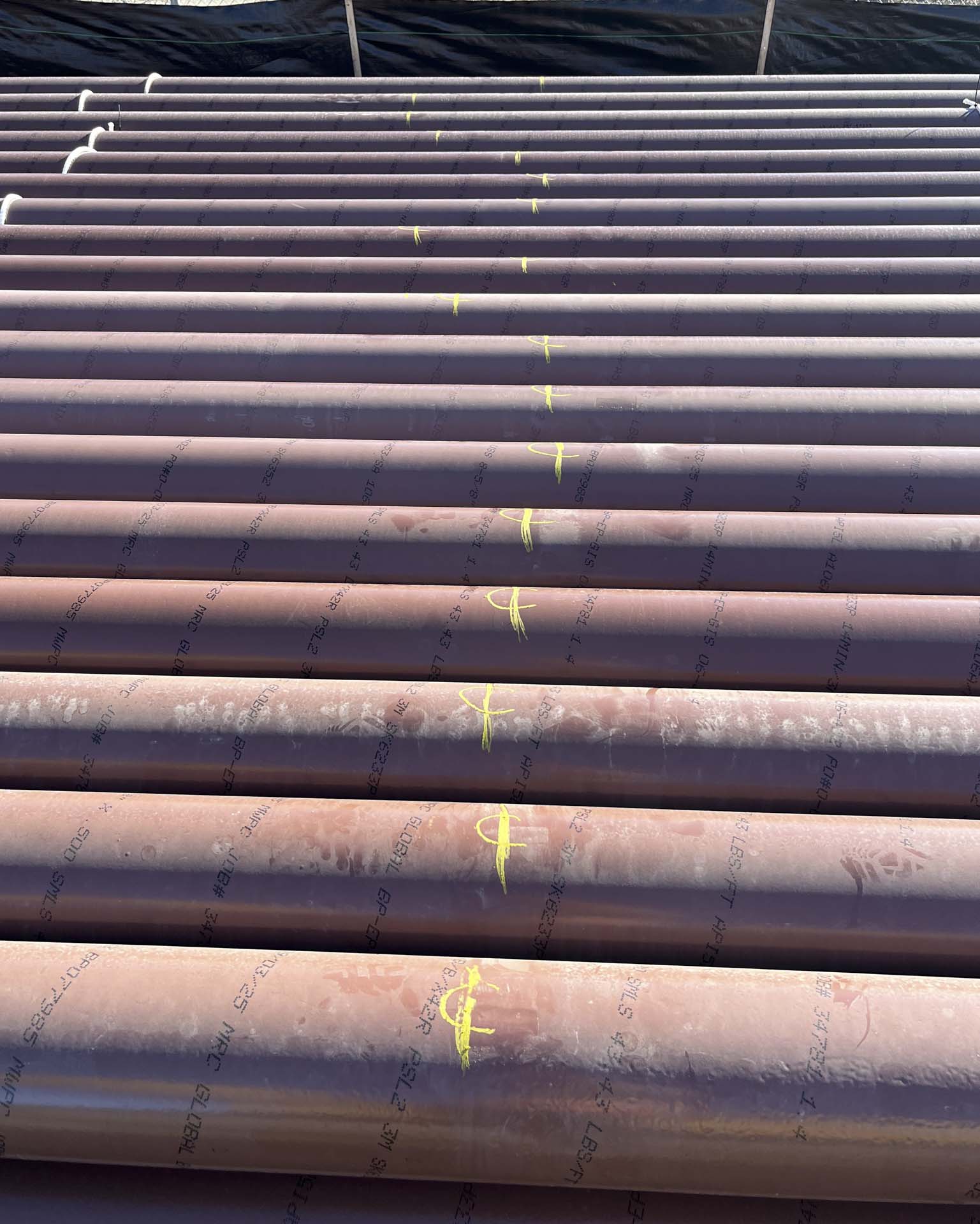
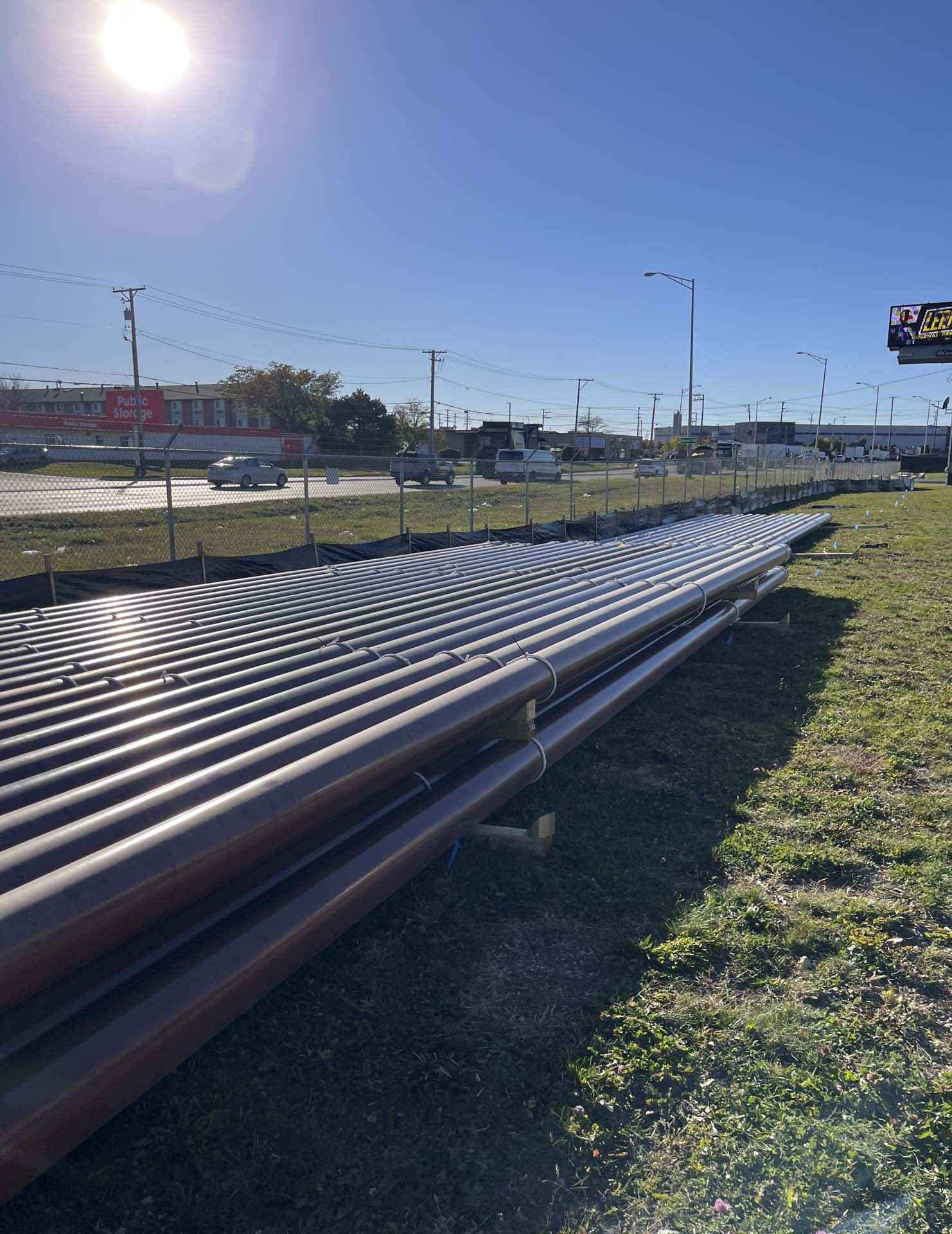
A major roadway improvement project required the relocation of seven 8-inch diameter steel pipelines carrying distillate products. The work involved relocating approximately 25,000 feet of pipeline (documented as seven new 8-inch lines totaling roughly 25,000 feet) while completely rebuilding six existing control stations. The pipelines ran parallel for most of the route, with bundled installations used on directional drills. The project spanned more than a year, encompassing permitting, construction, commissioning, demolition of old pipe, and full site restoration.
Challenges
- Relocating active product pipelines while maintaining safety and operational integrity around existing infrastructure, including storage tanks, valves, and other piping.
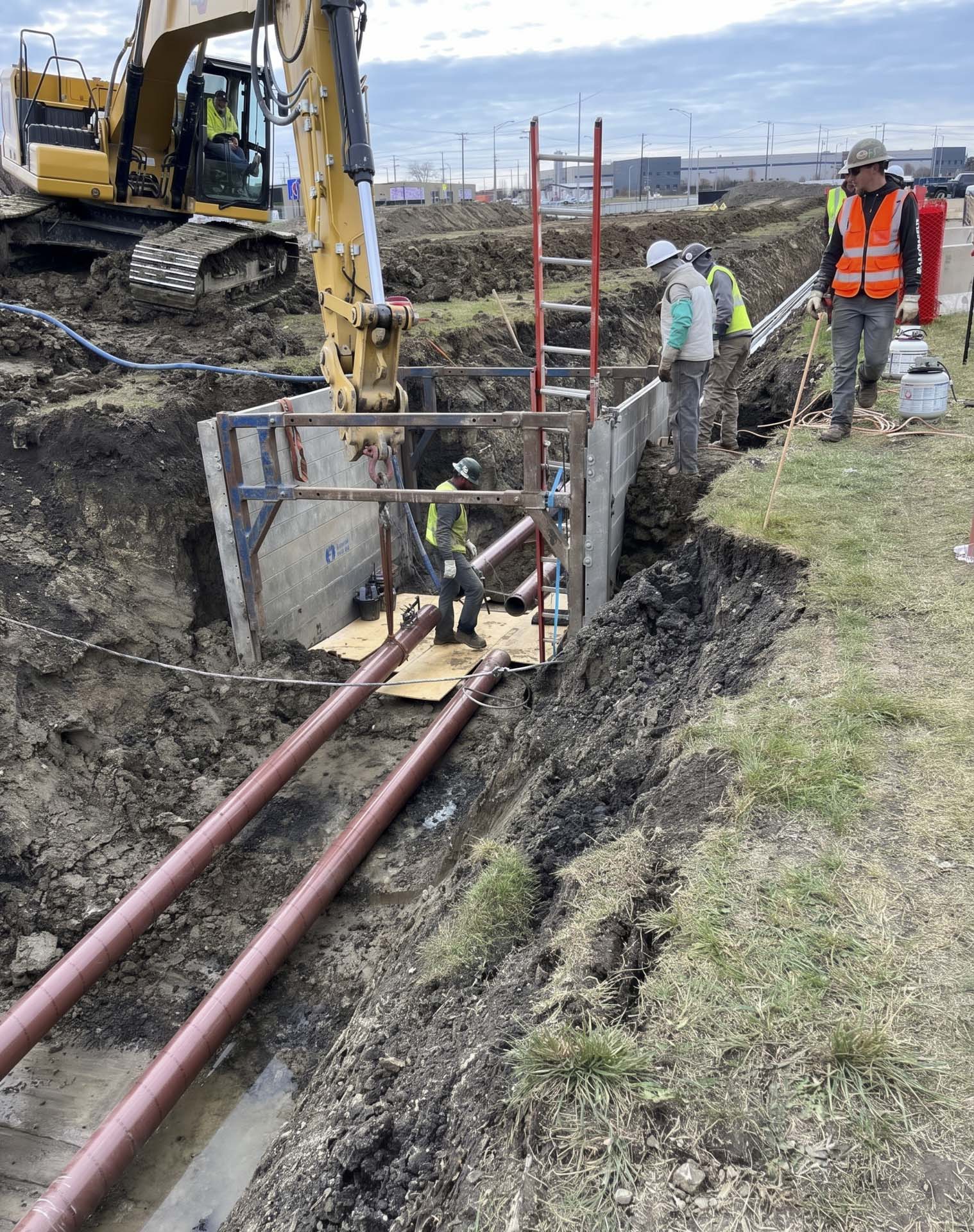
- Coordinating complex installation methods: horizontal directional drills (including multi-pipe bundles), railroad and dike-wall bores, and open-cut trenching.
- Obtaining and managing a wide range of permits (railroad, right-of-way, IDOT, DNR environmental, county, and municipal) over a six-month period prior to construction.
- Working in an industrial corridor with environmental constraints, seasonal hazards (fire risk from dry vegetation, poison ivy, ground-nesting wasps, slip/trip conditions in rain and freezing weather), and the need to protect against erosion and runoff.
- Coordinating among six stakeholders with differing interests and impact timelines on a linear project.
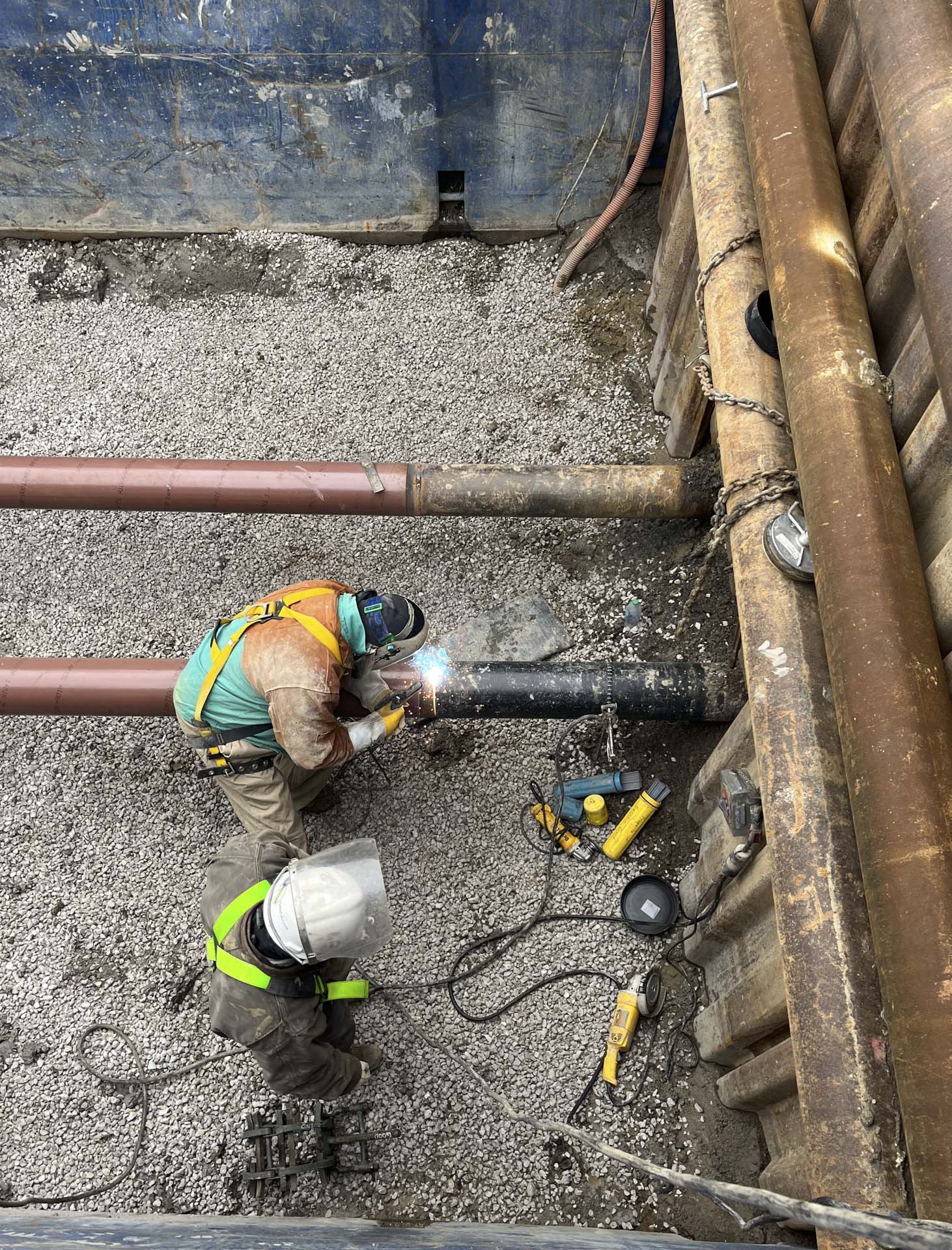
- Ensuring rigorous quality control (100% x-ray on critical welds, hydrostatic testing) and material handling safety across long distances and multiple work fronts.
- Demolishing and extracting approximately 8,000 feet of old pipe after the new system was in service, followed by complete restoration.
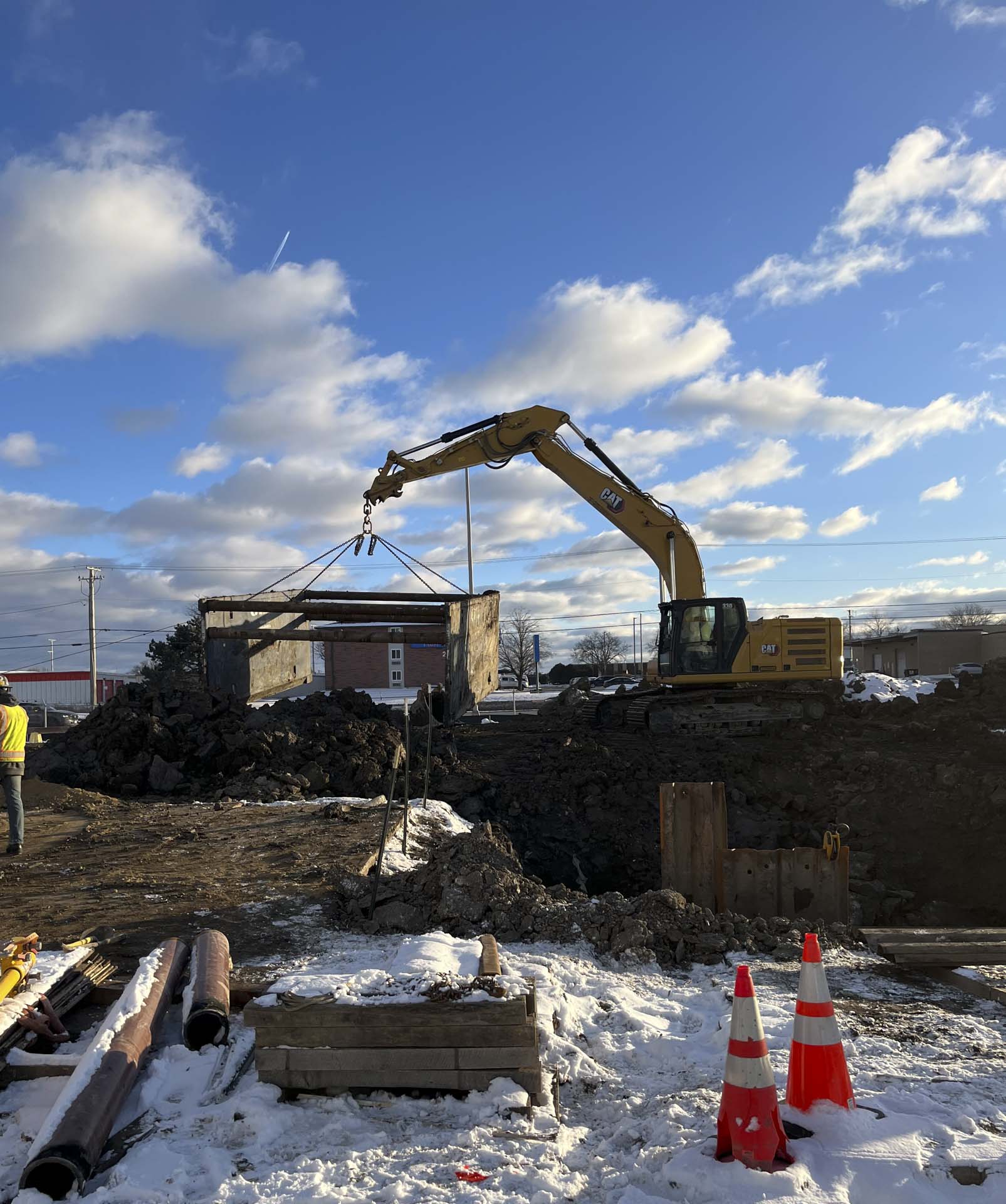
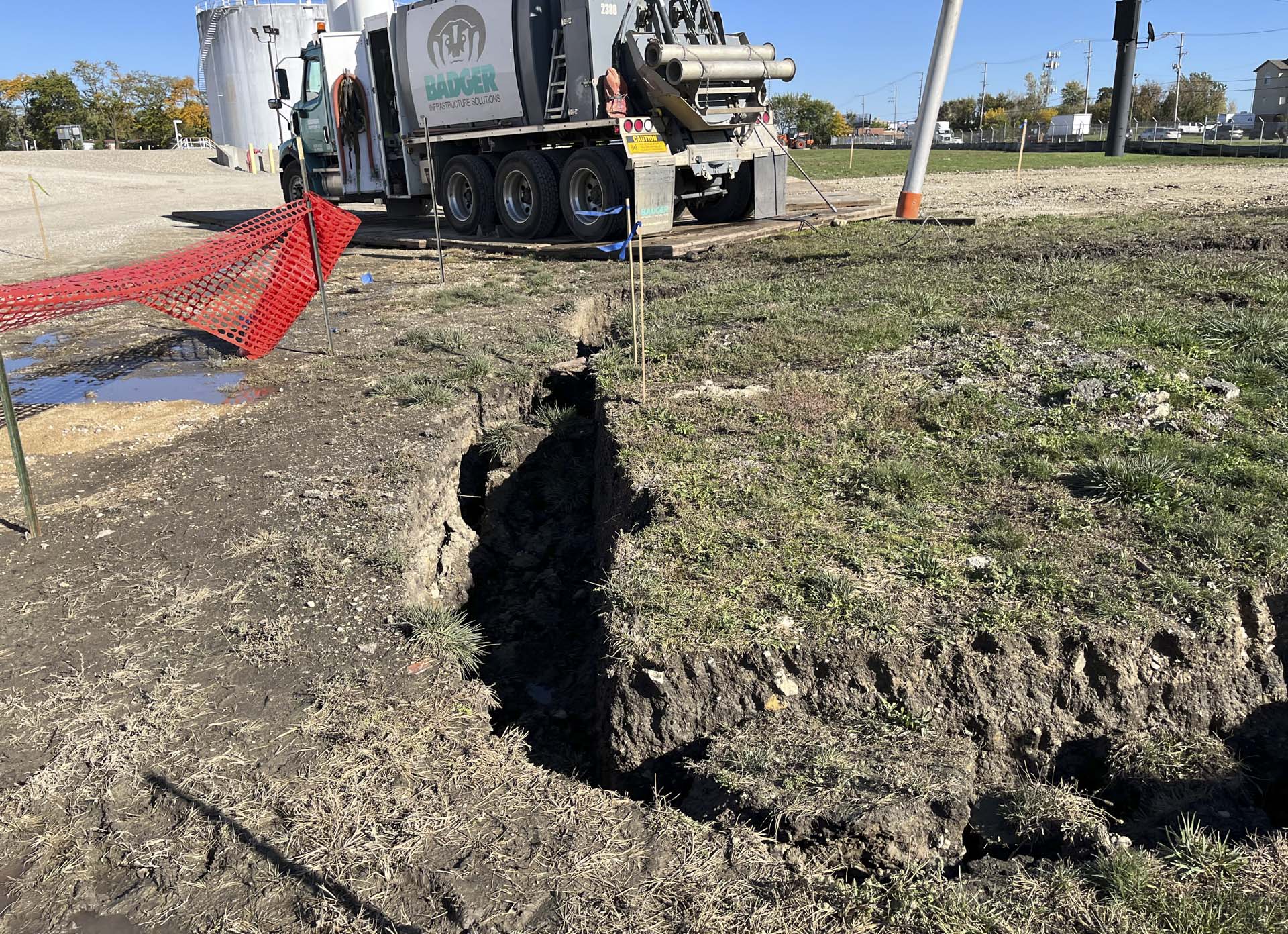
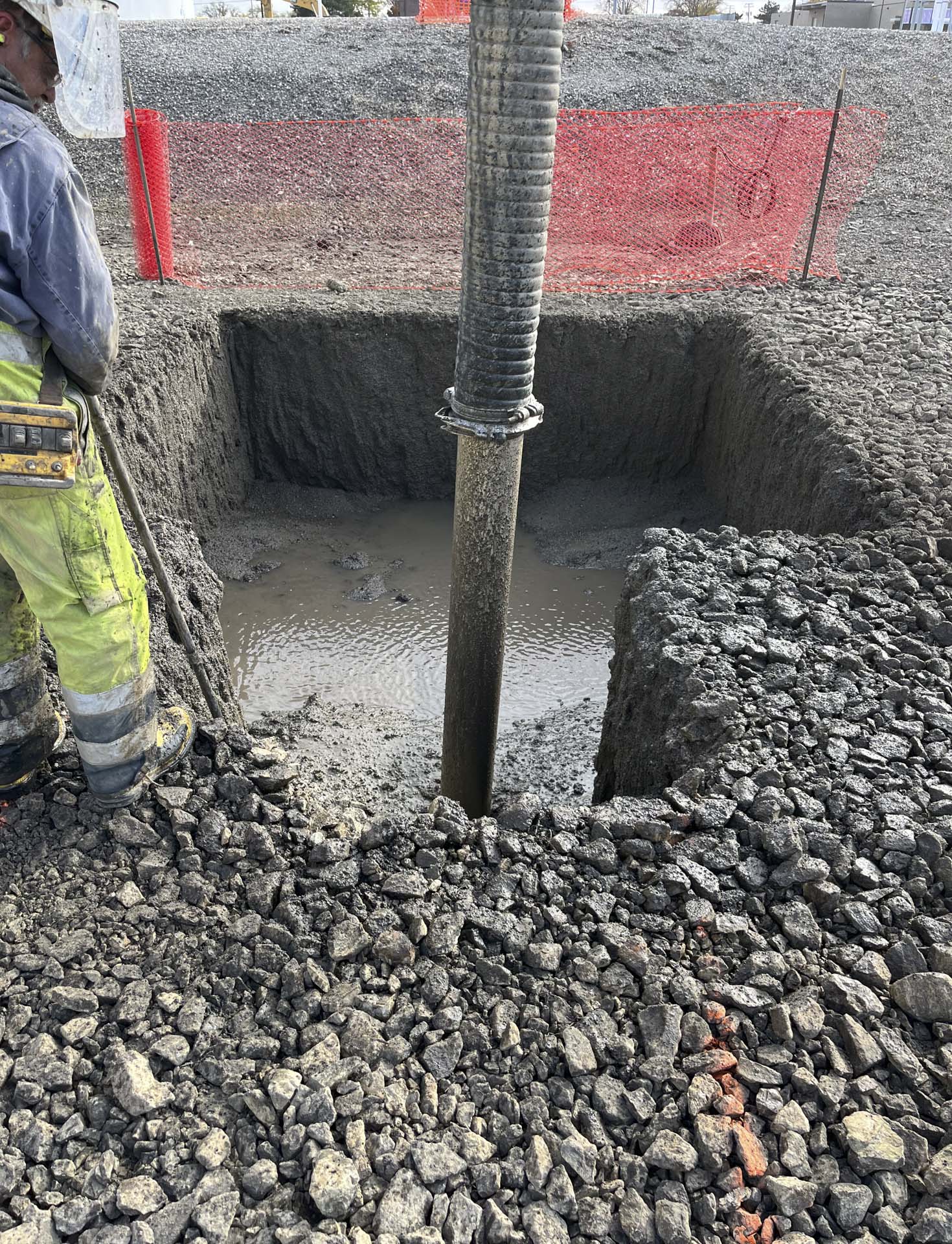
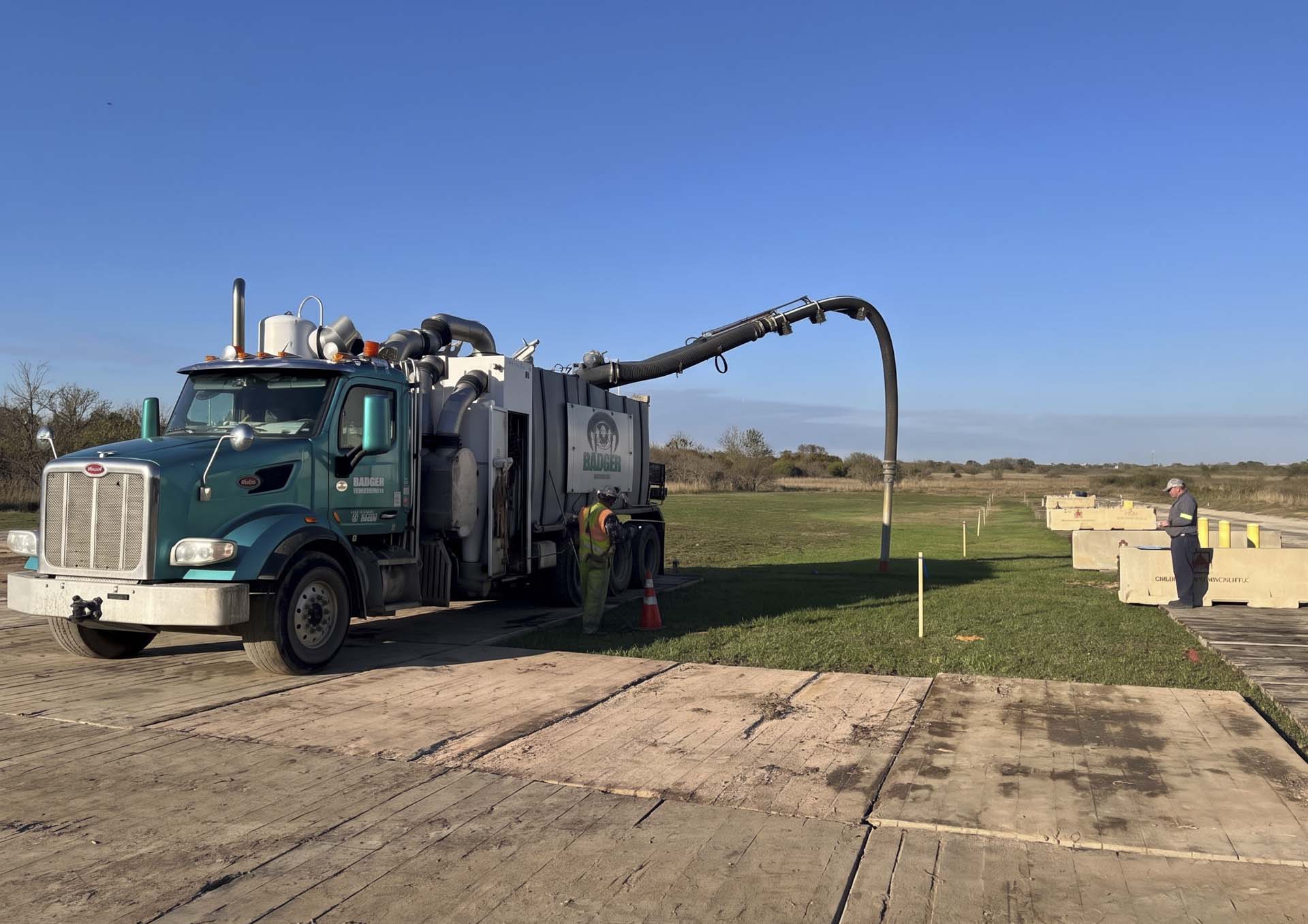
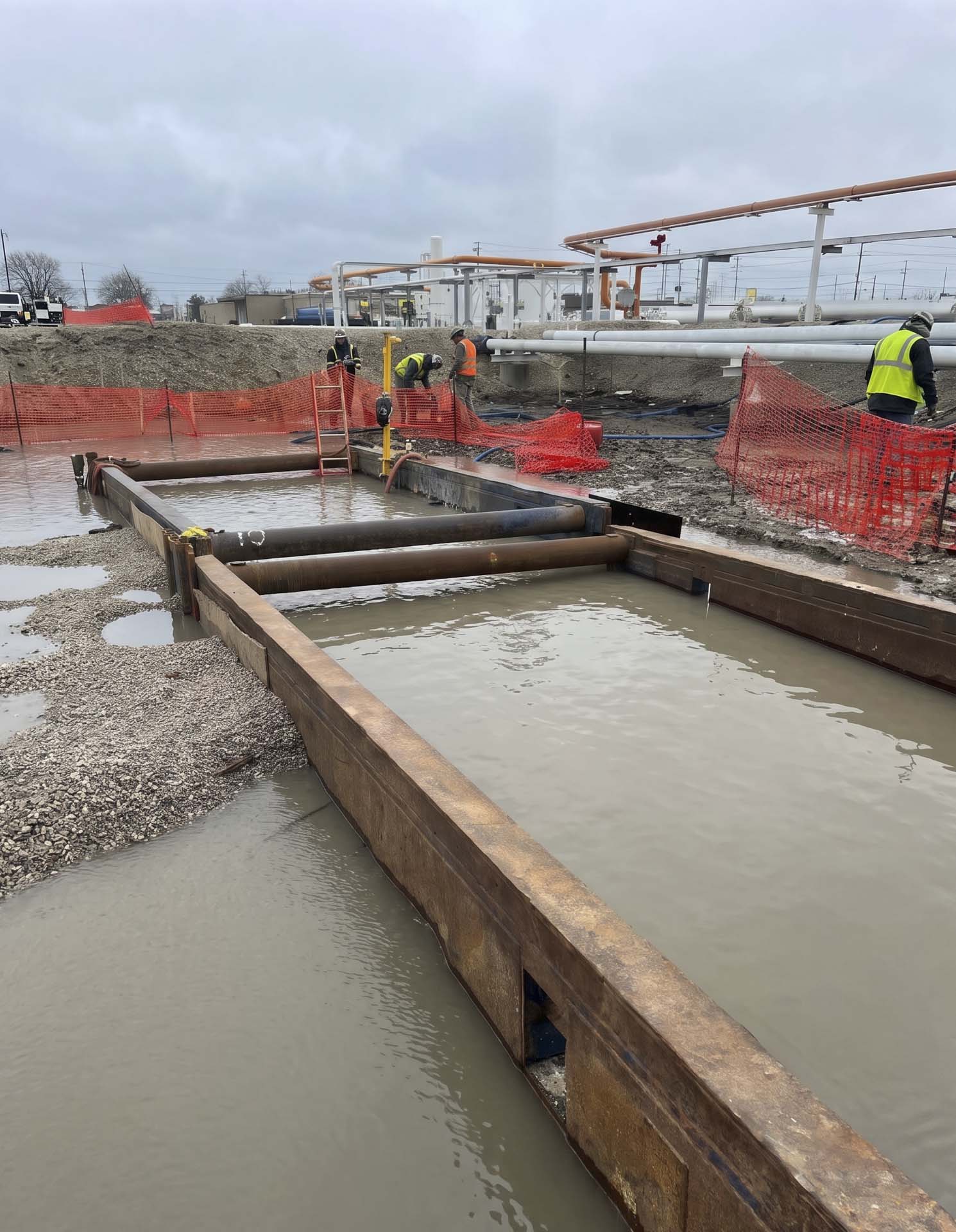
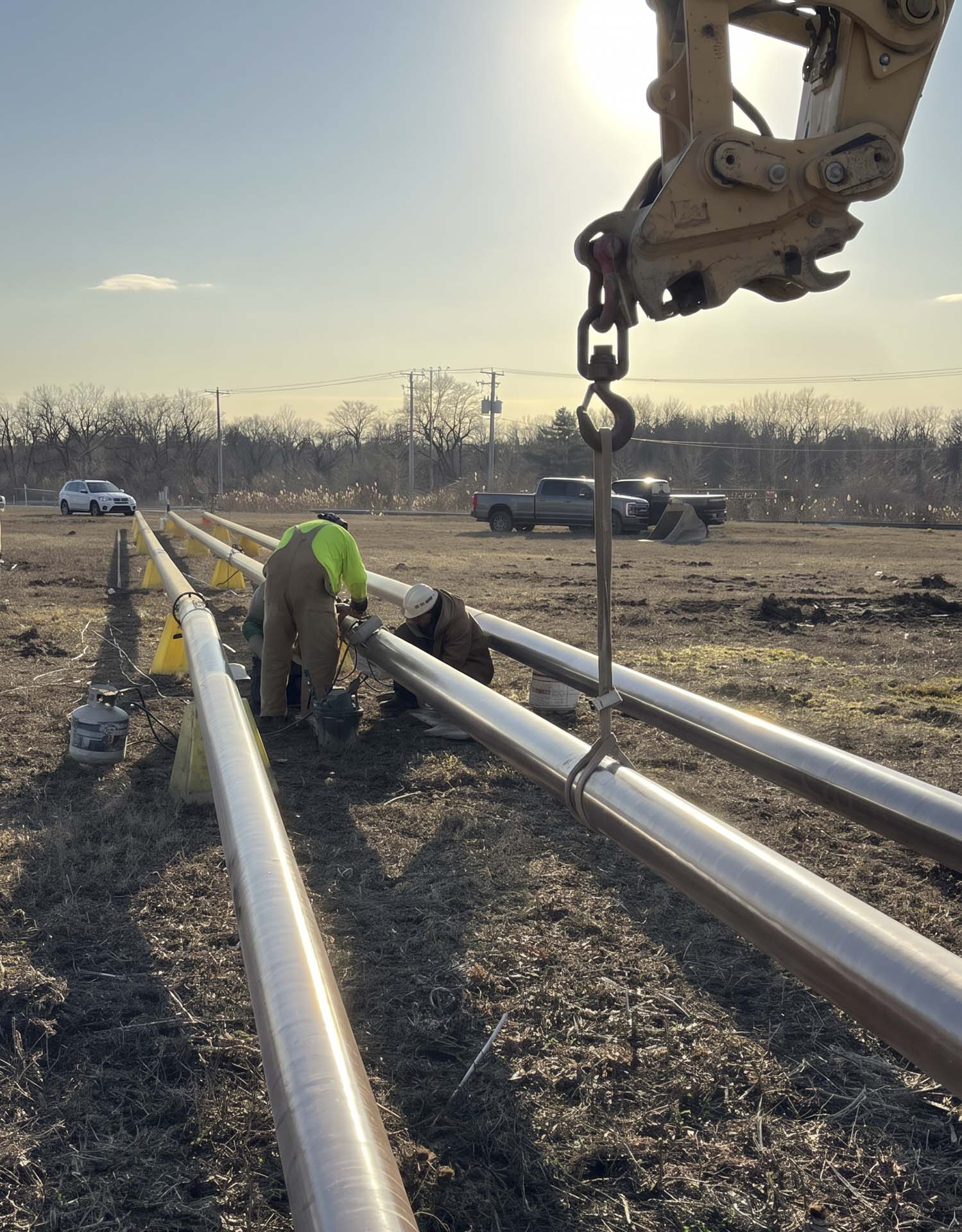
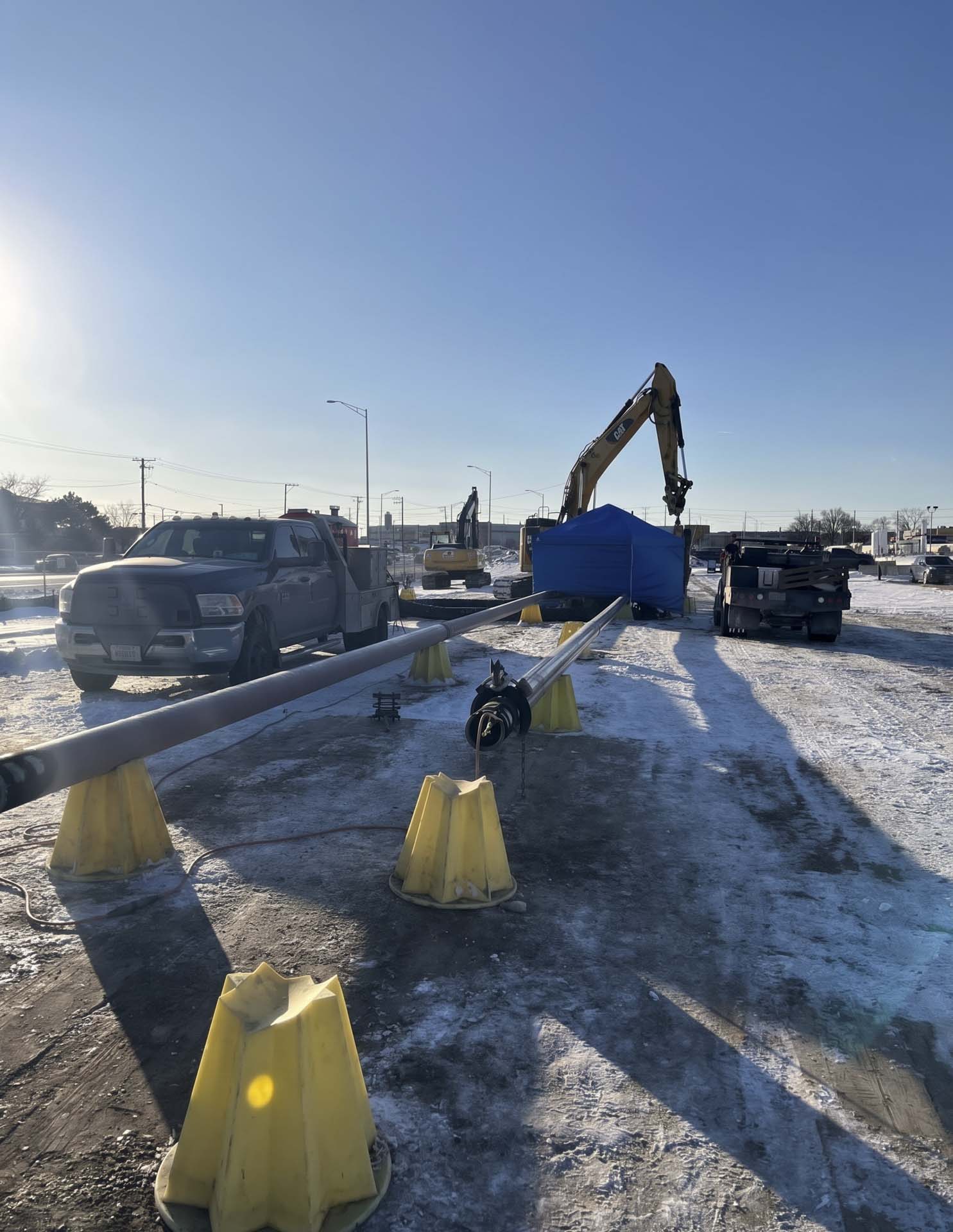
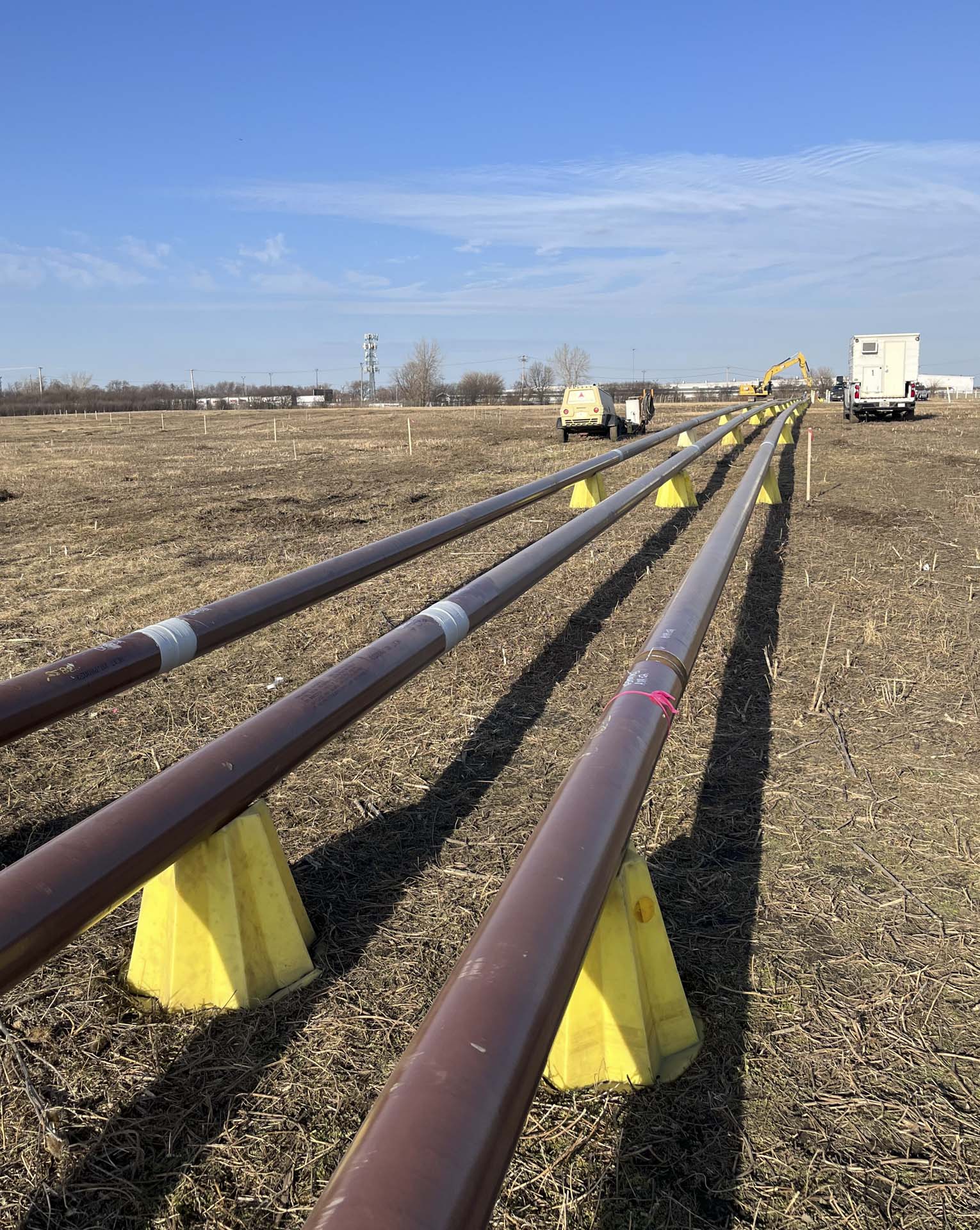
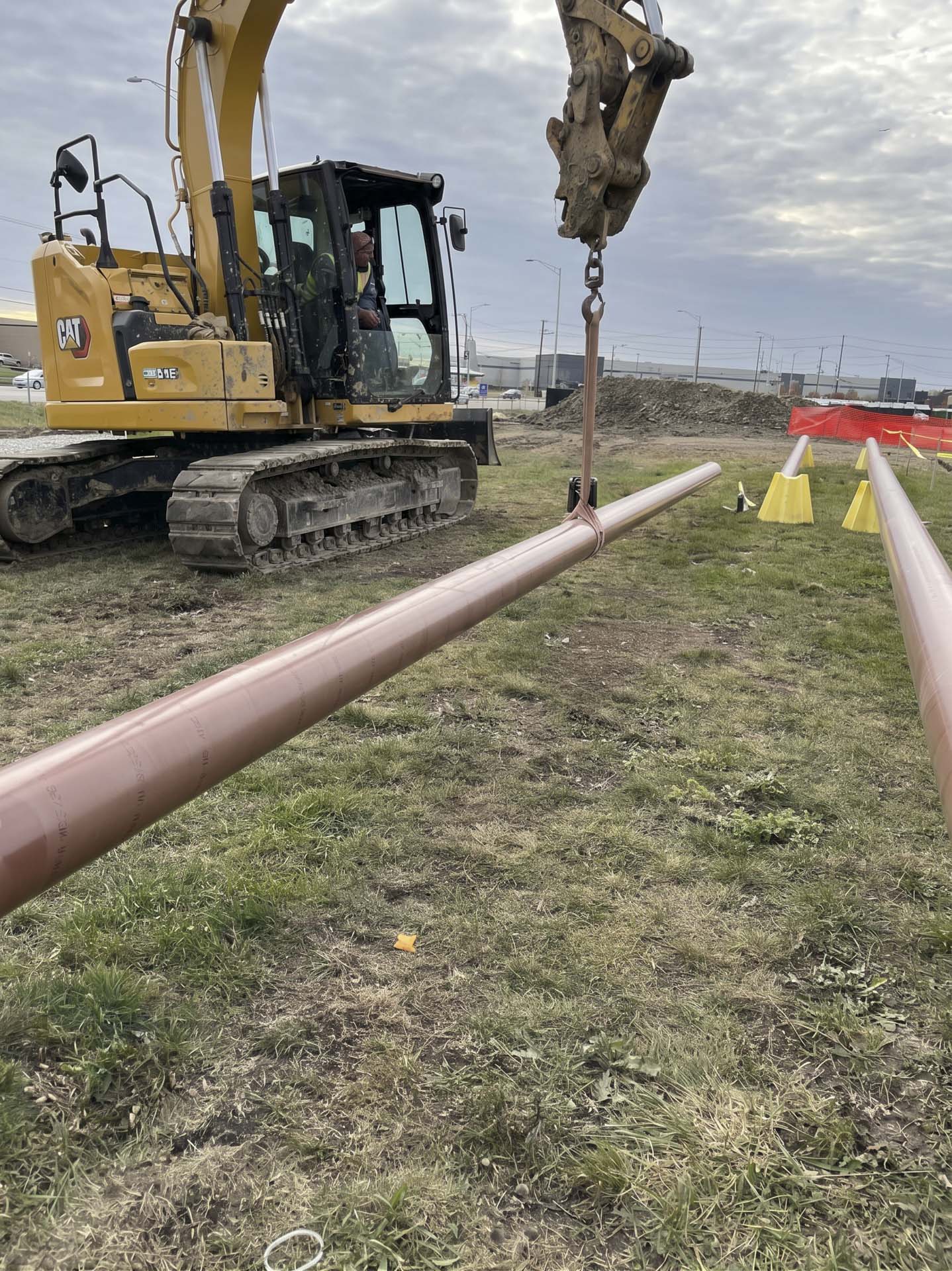
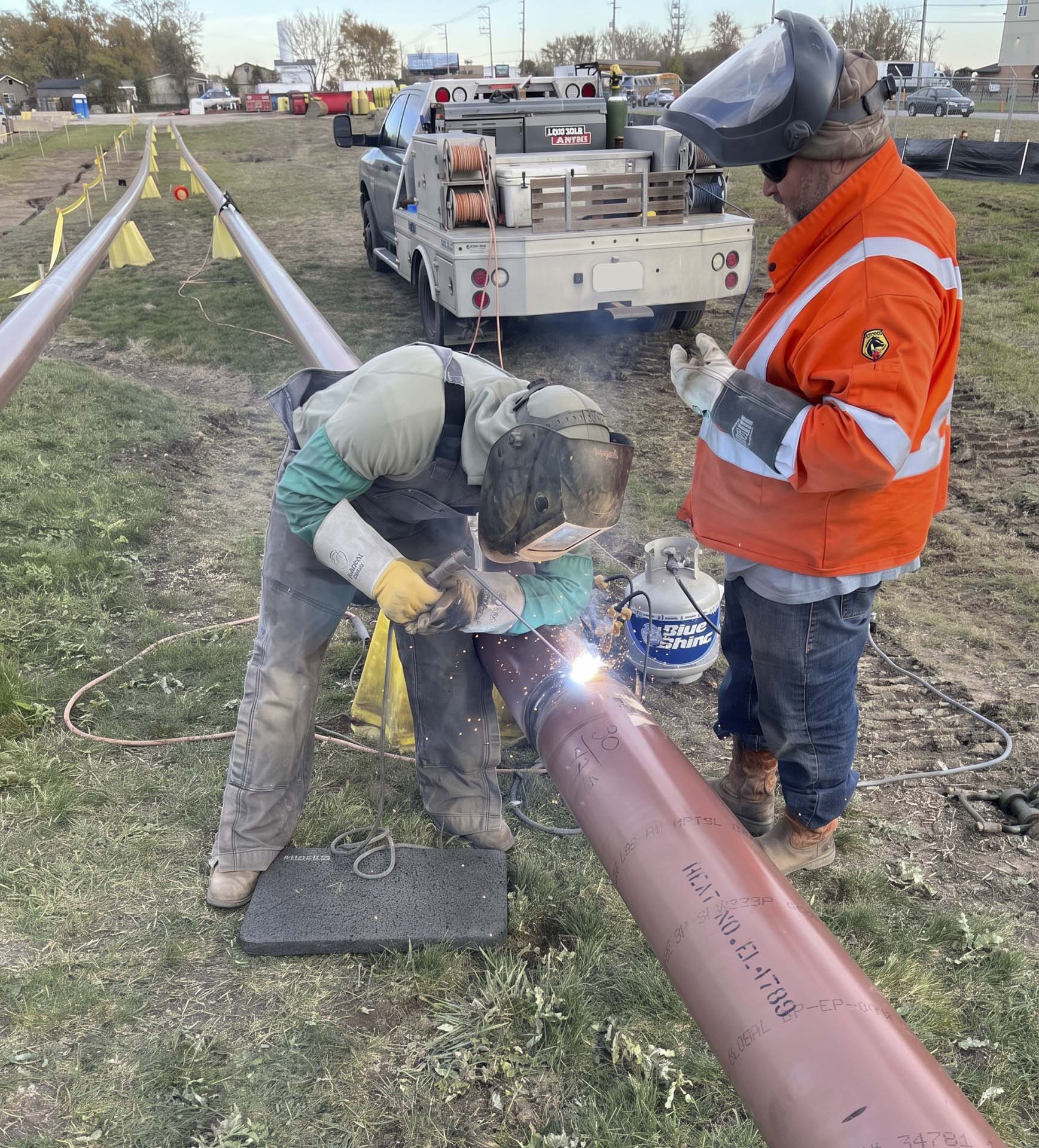
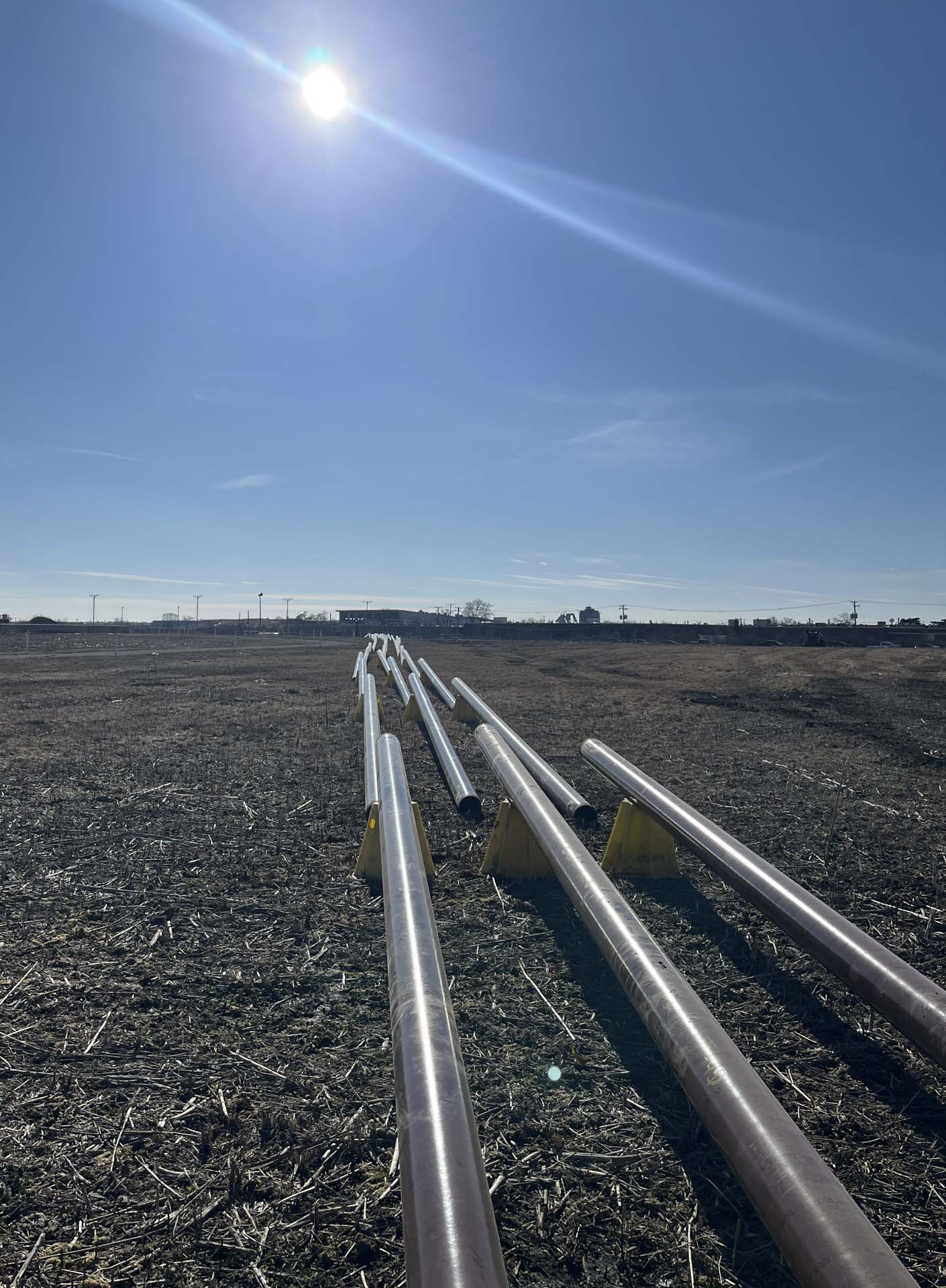
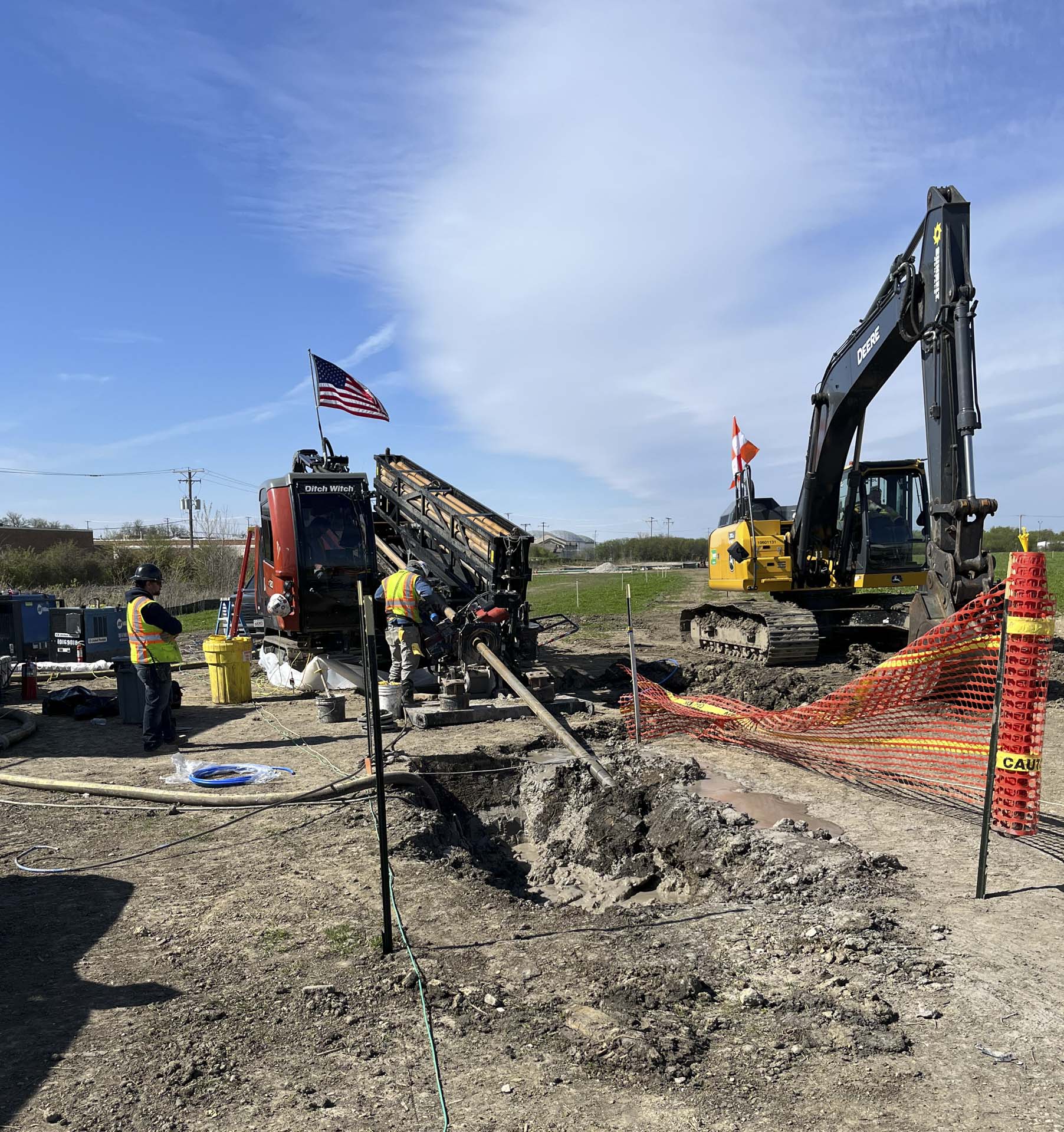
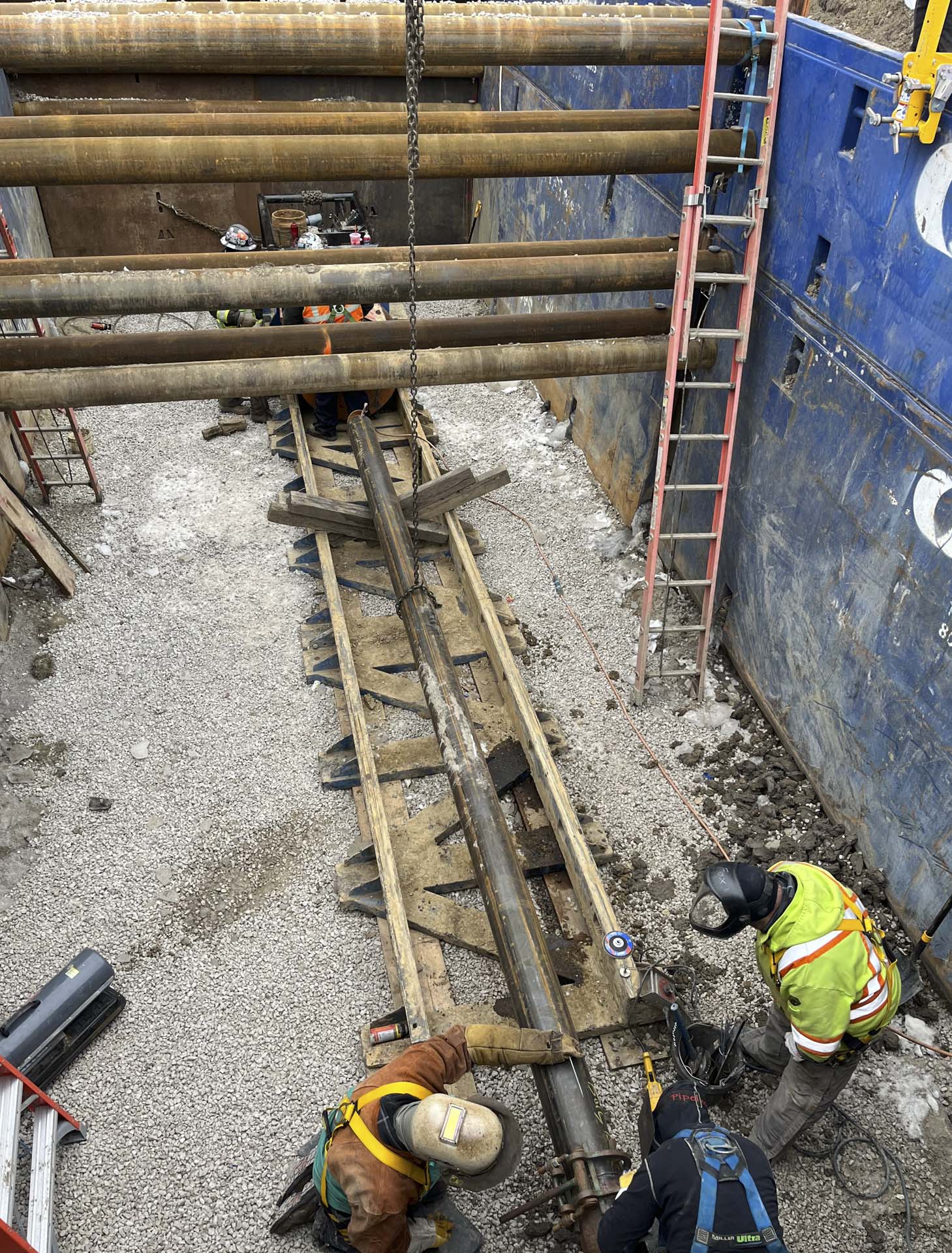
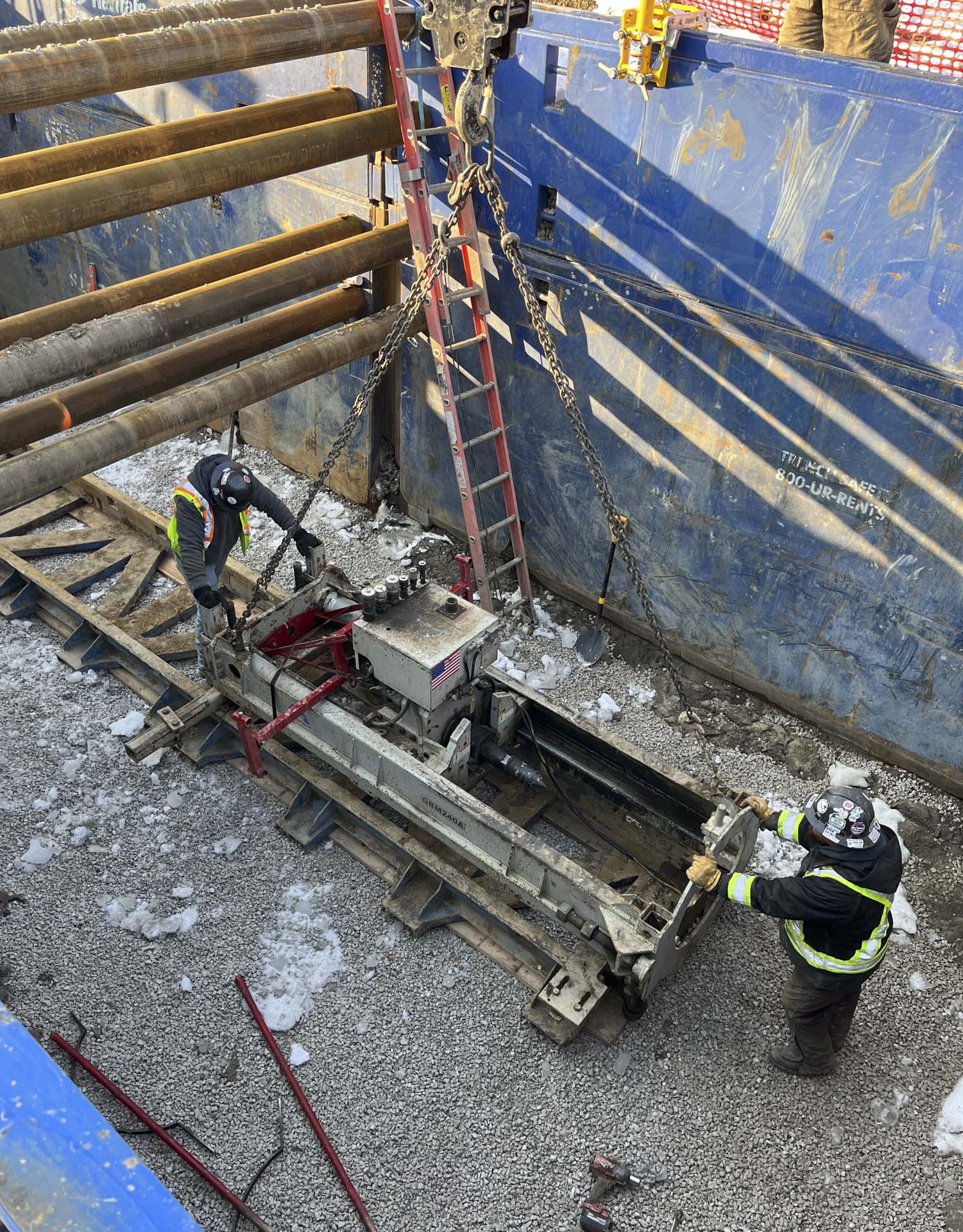
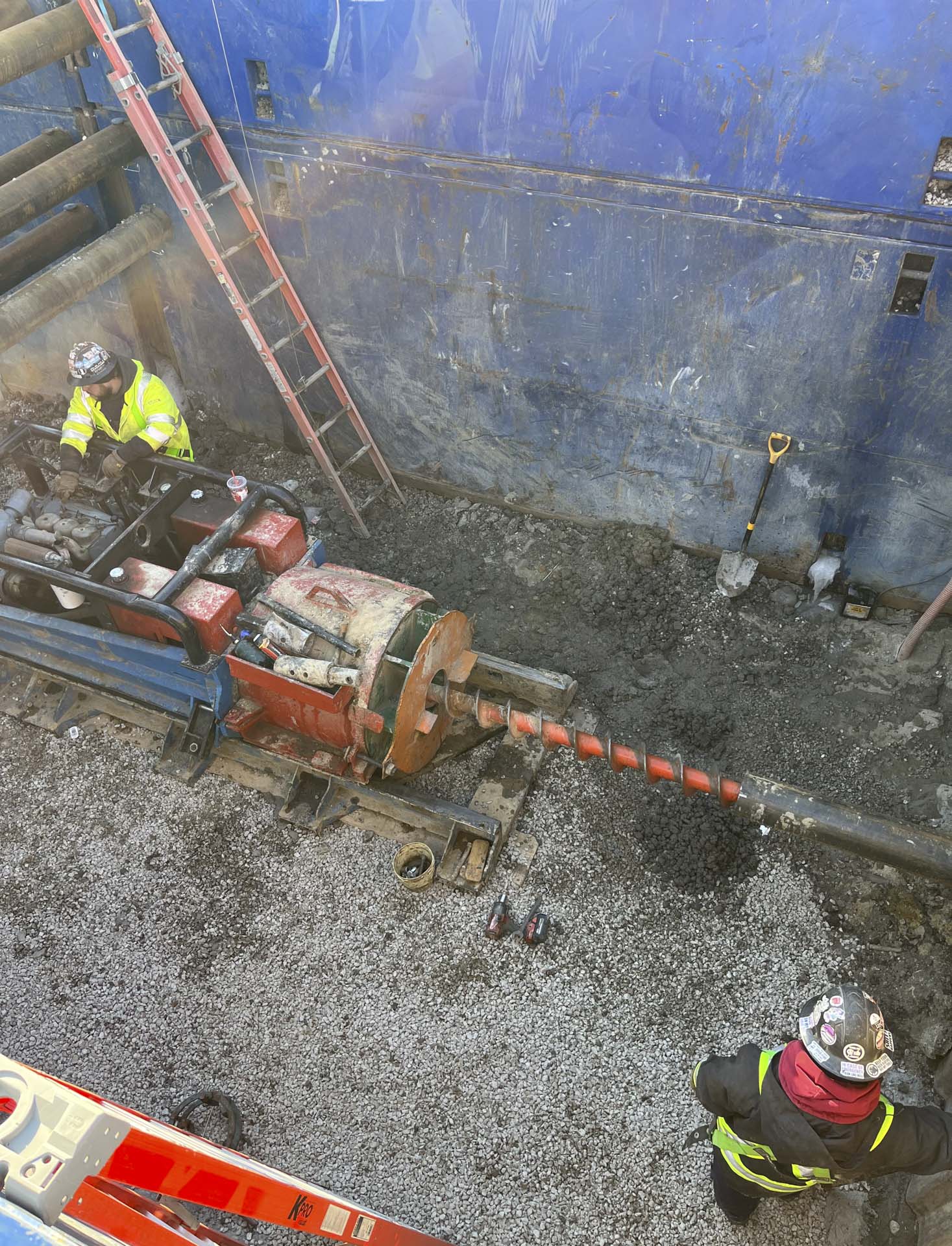
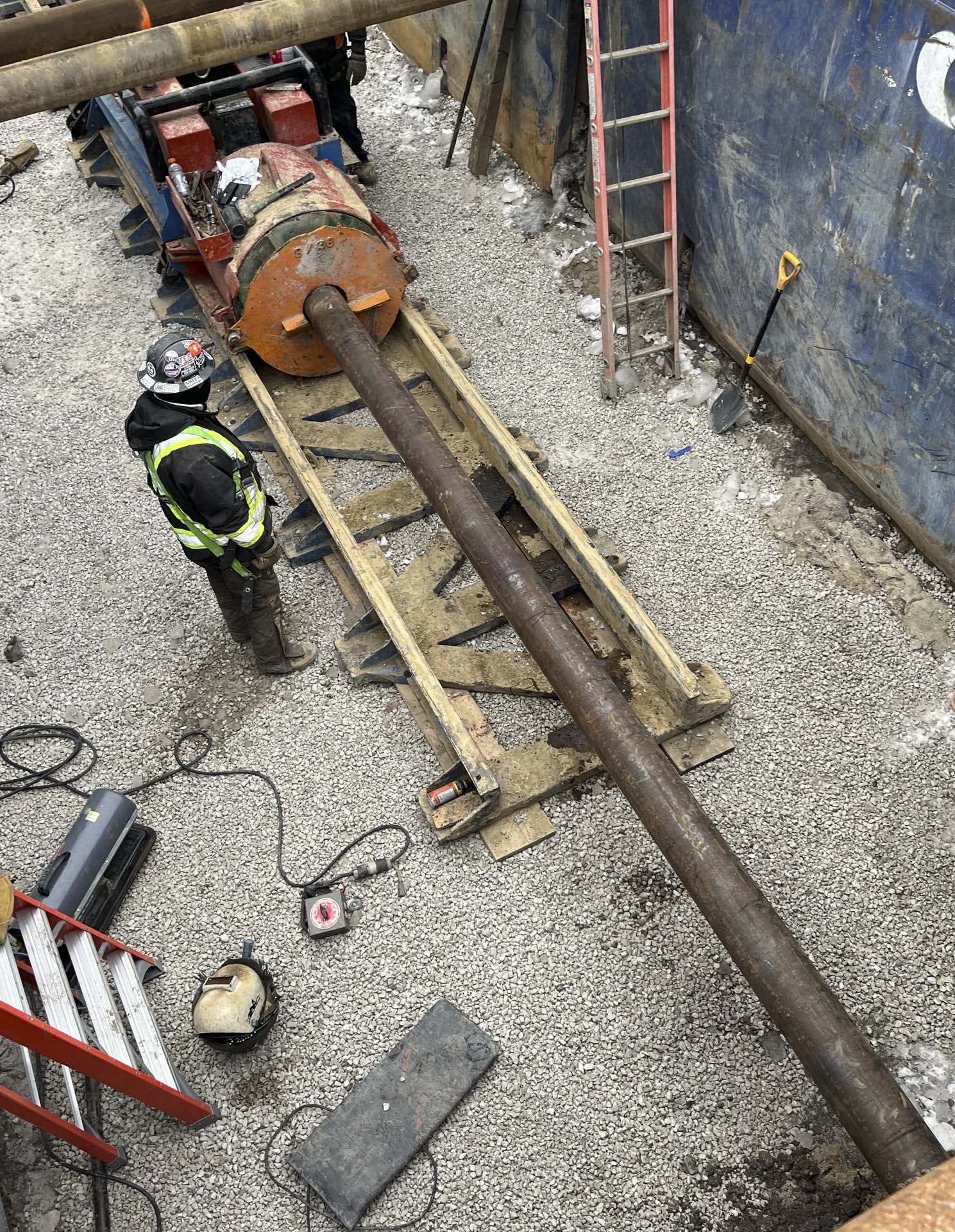
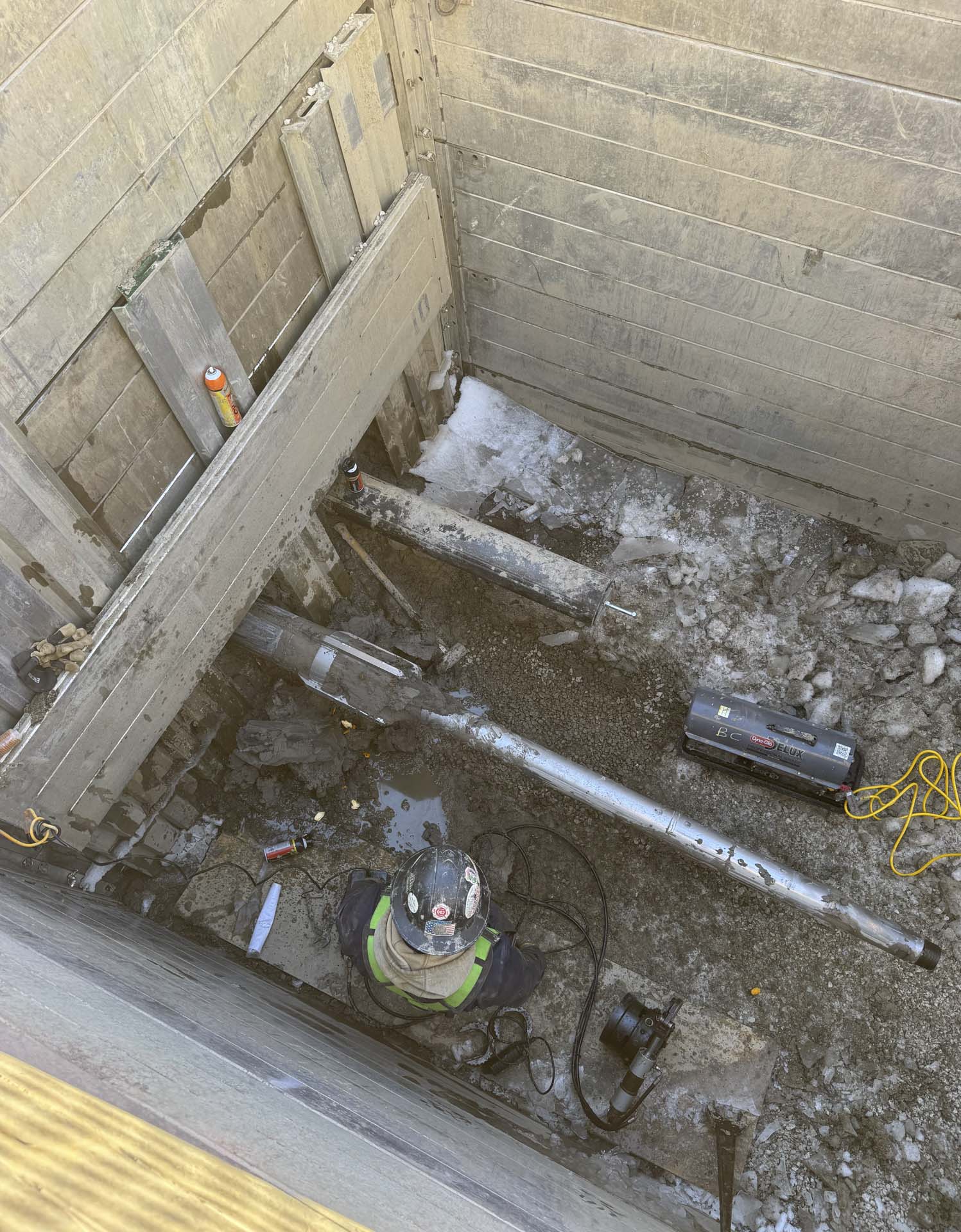
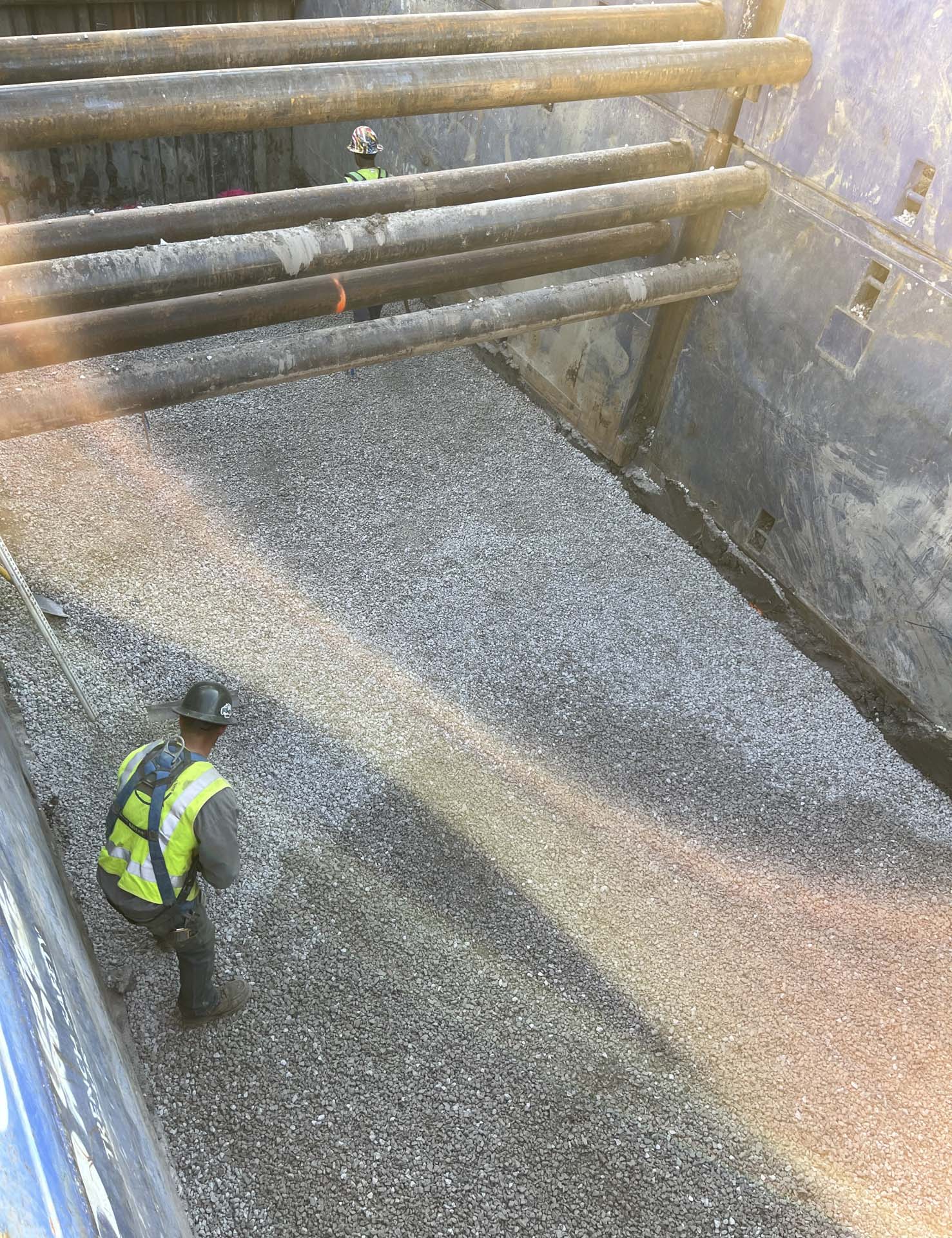
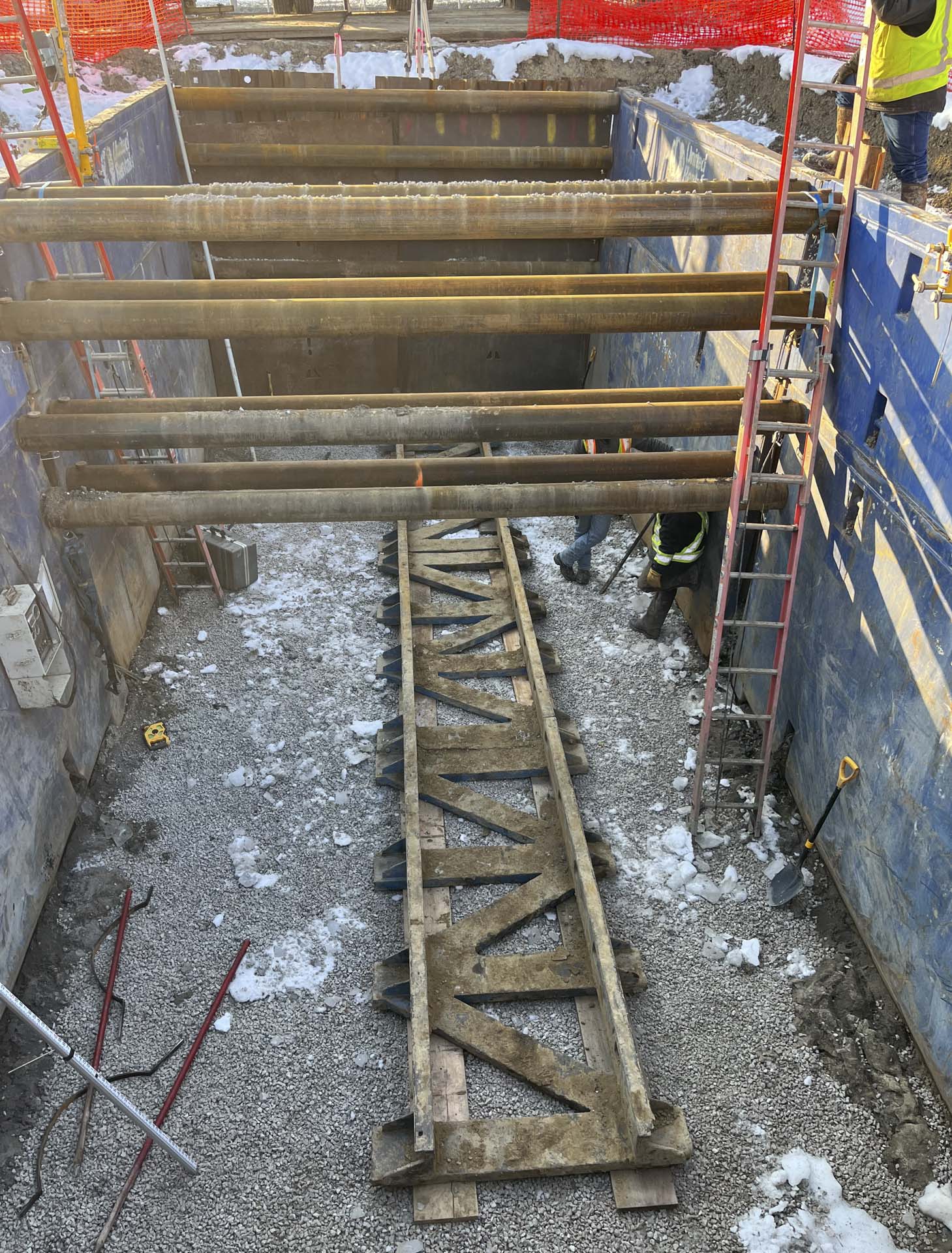
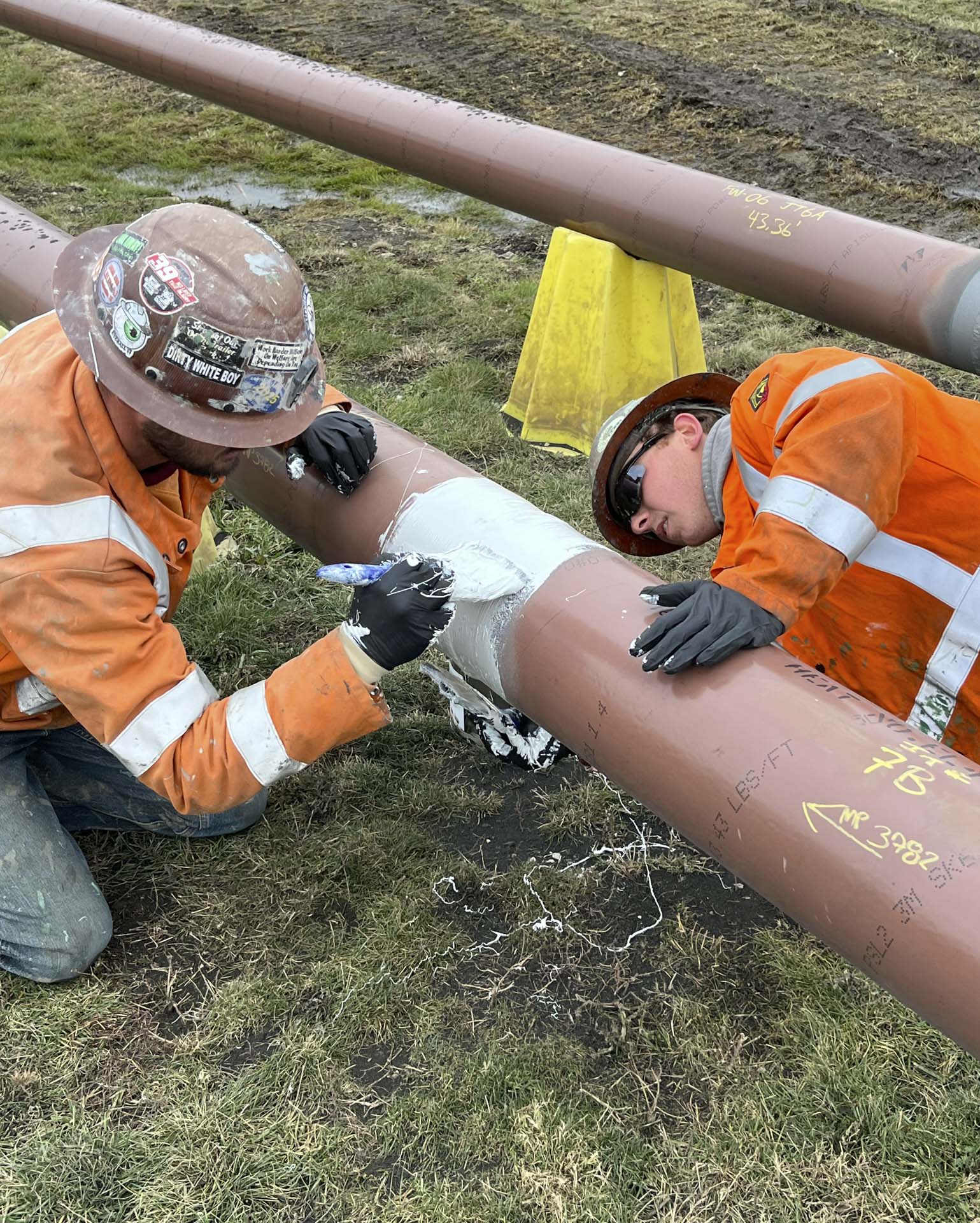
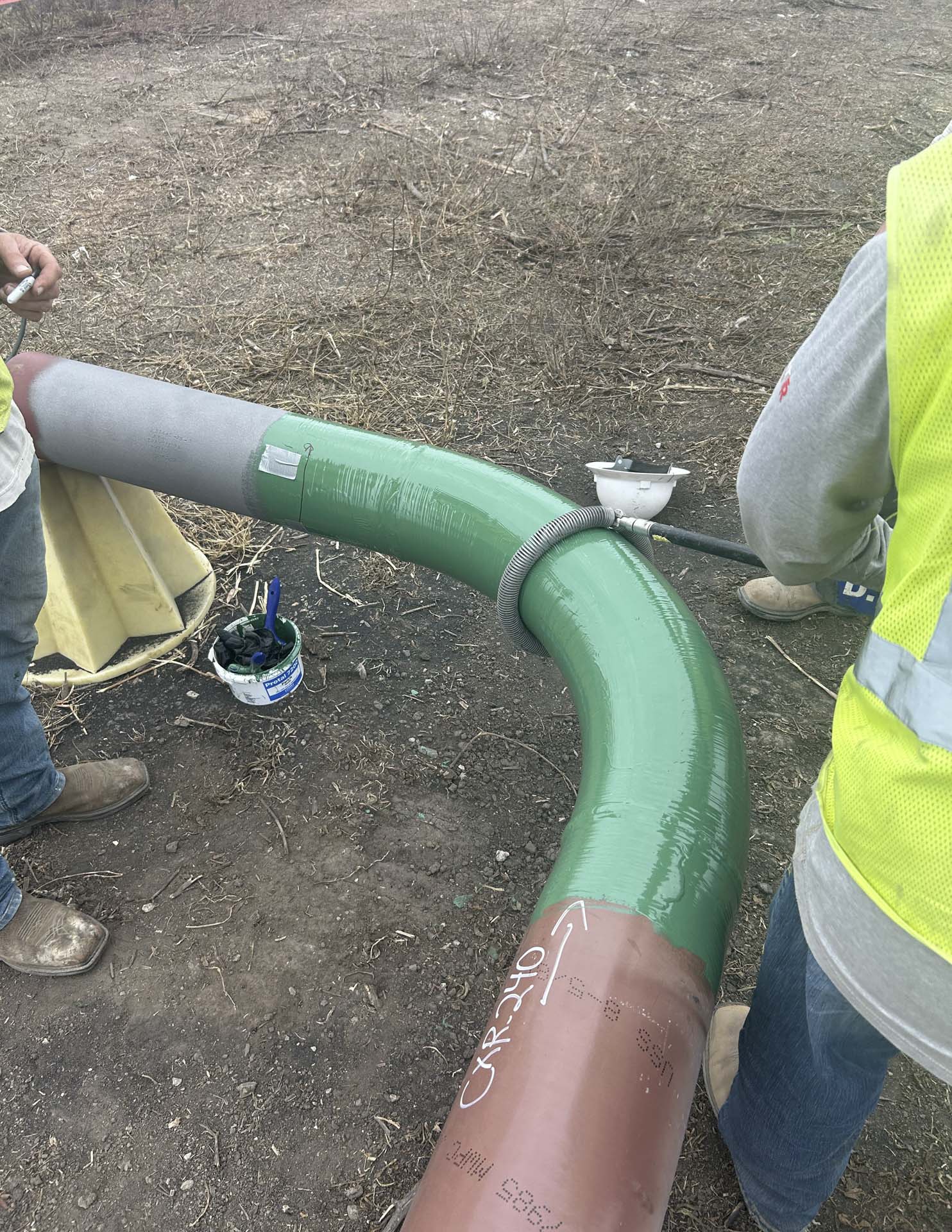
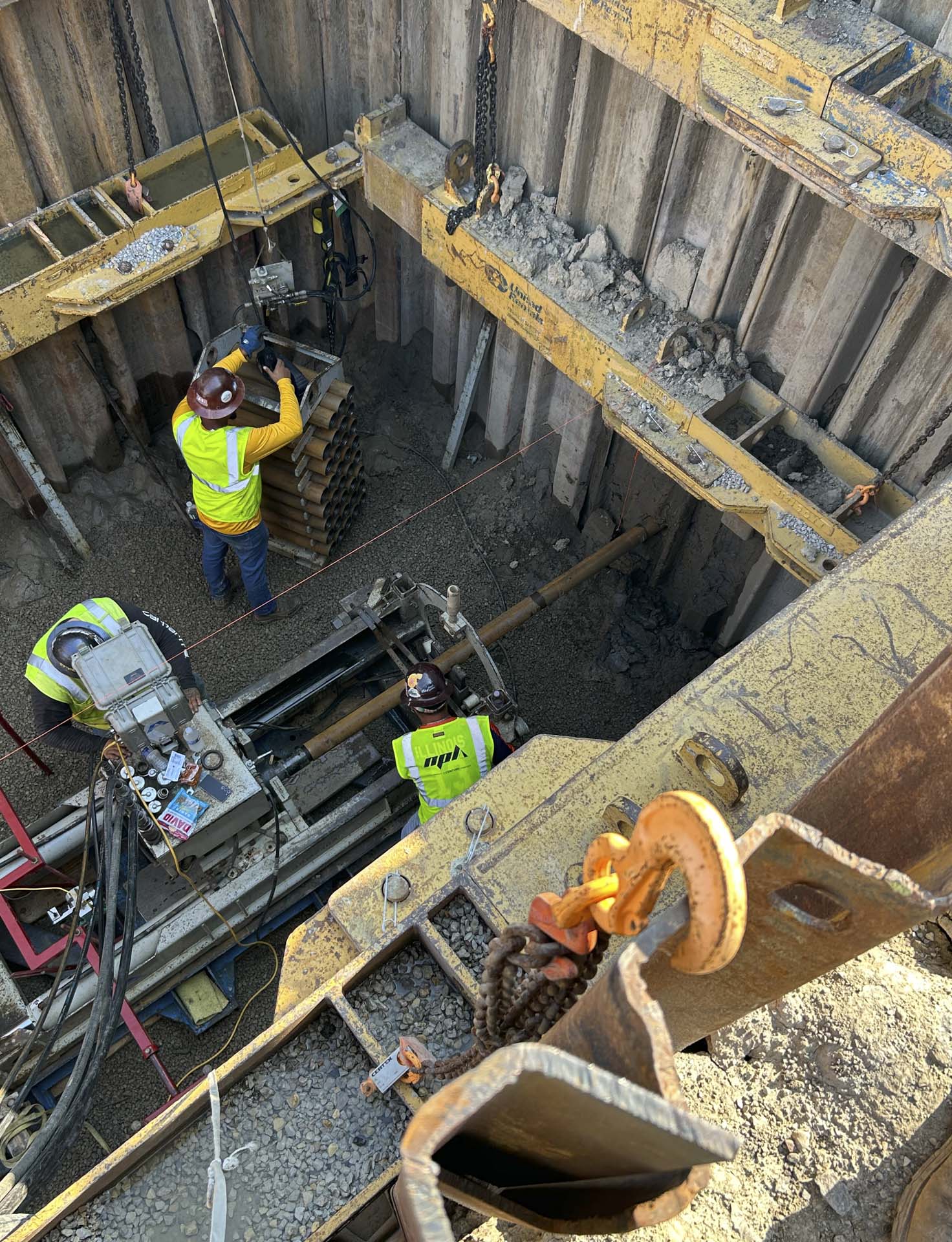
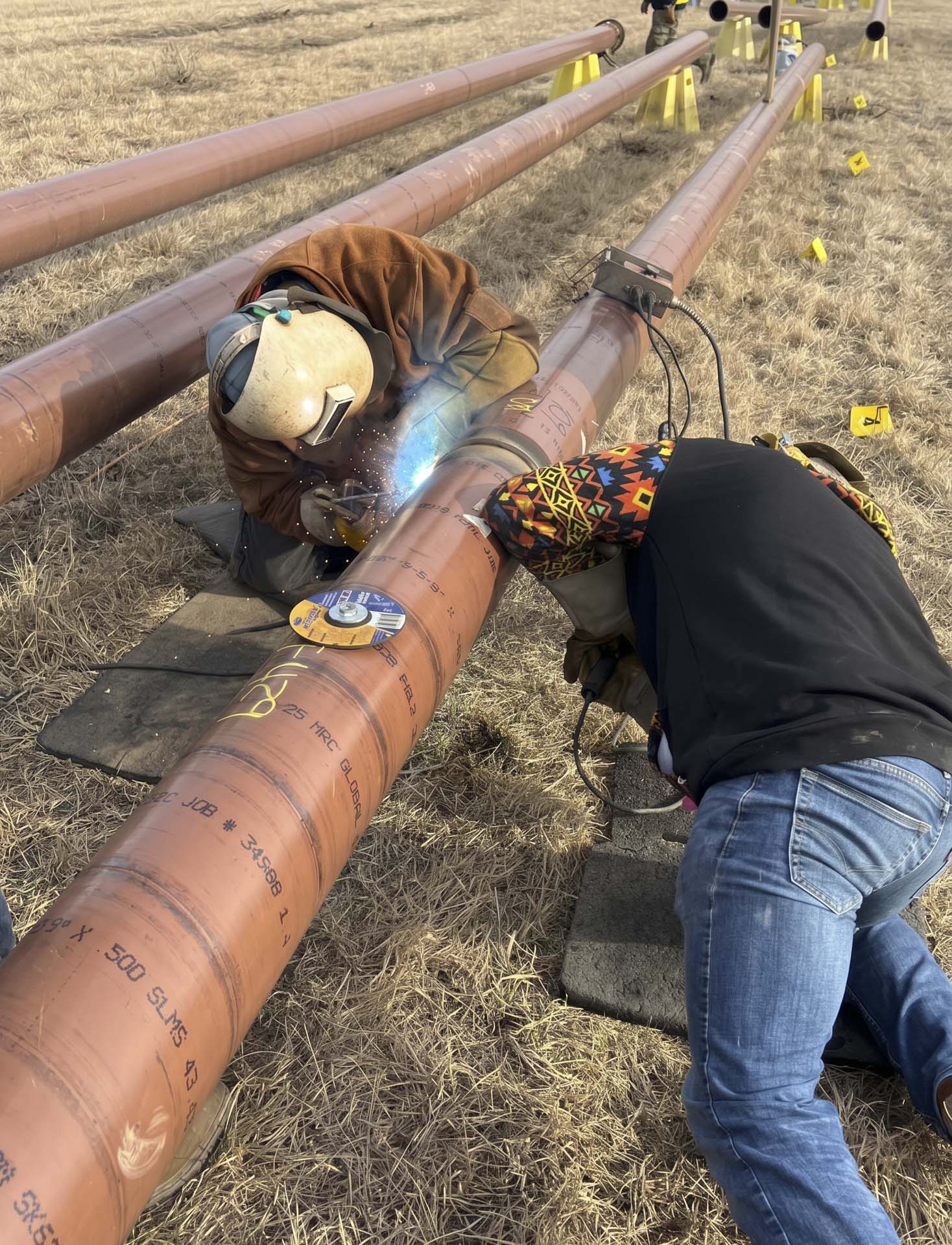
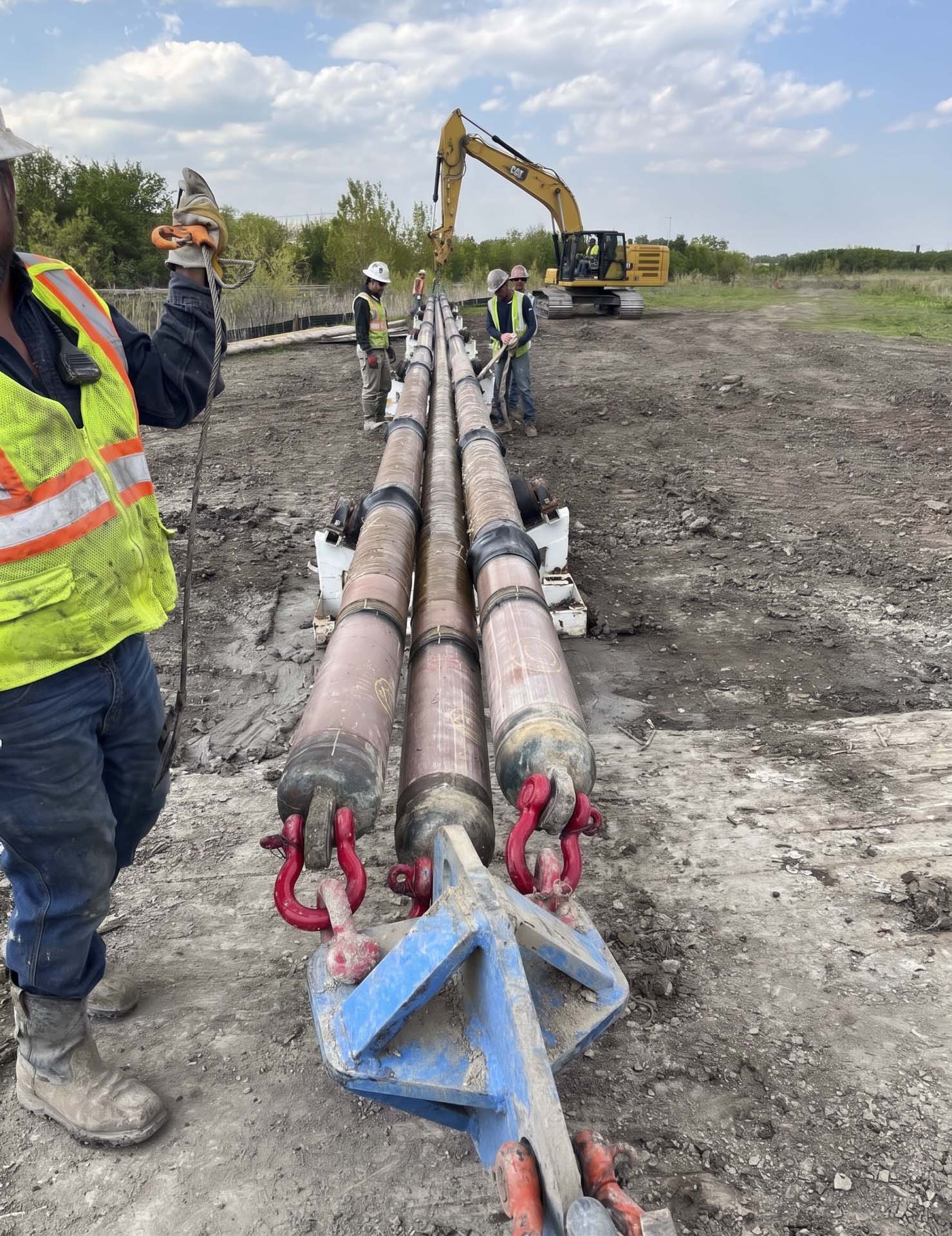
Approach and Execution
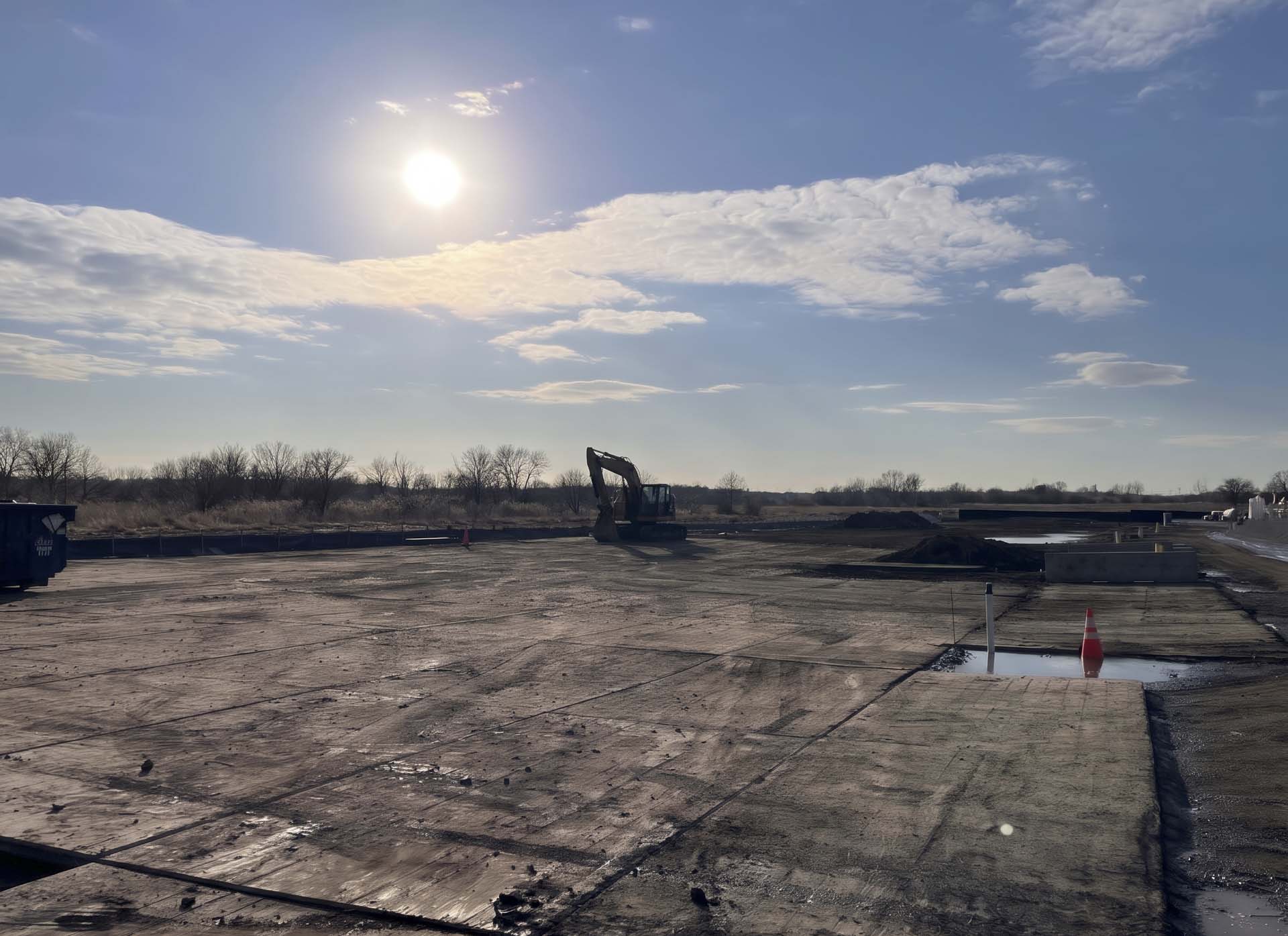
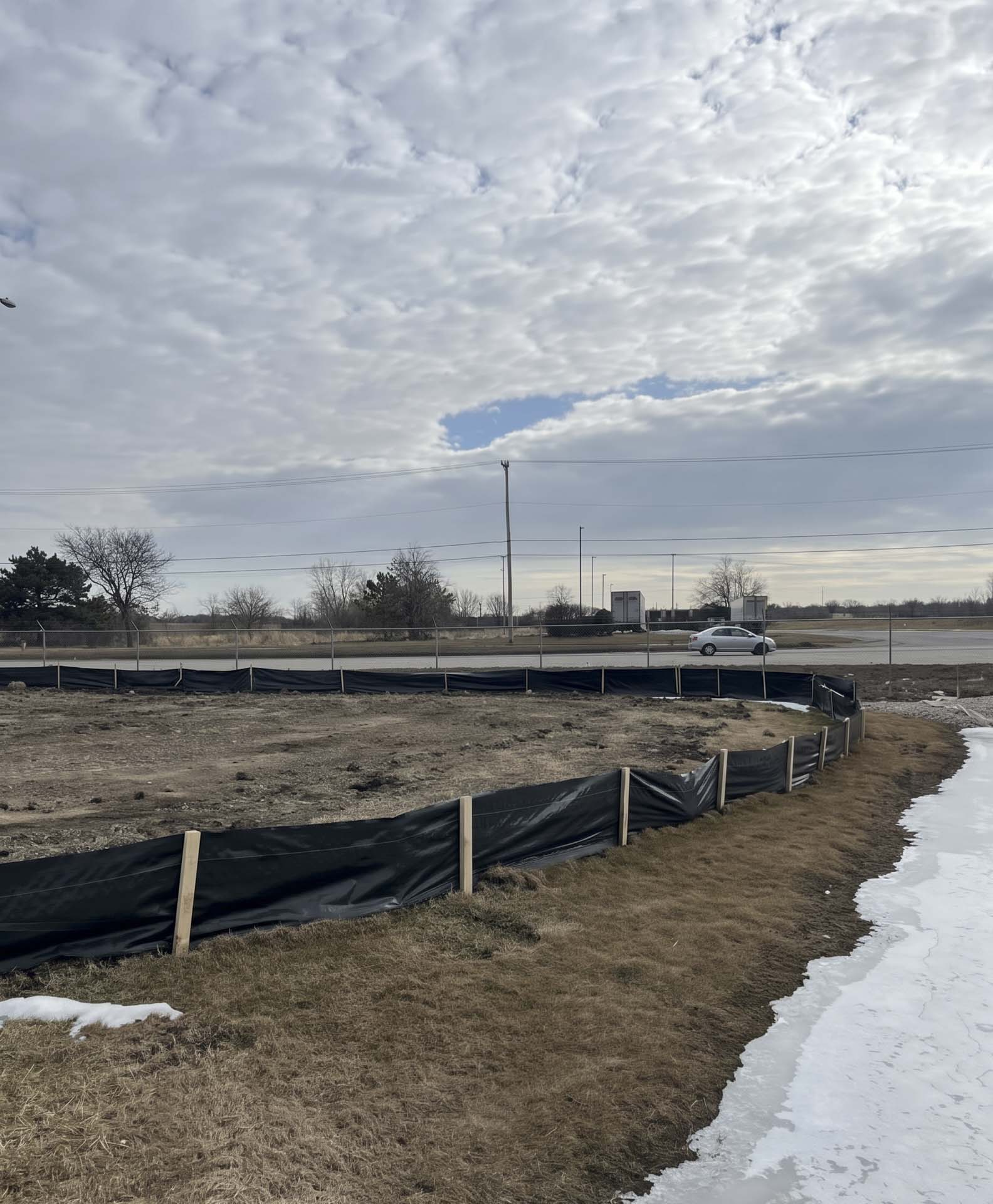
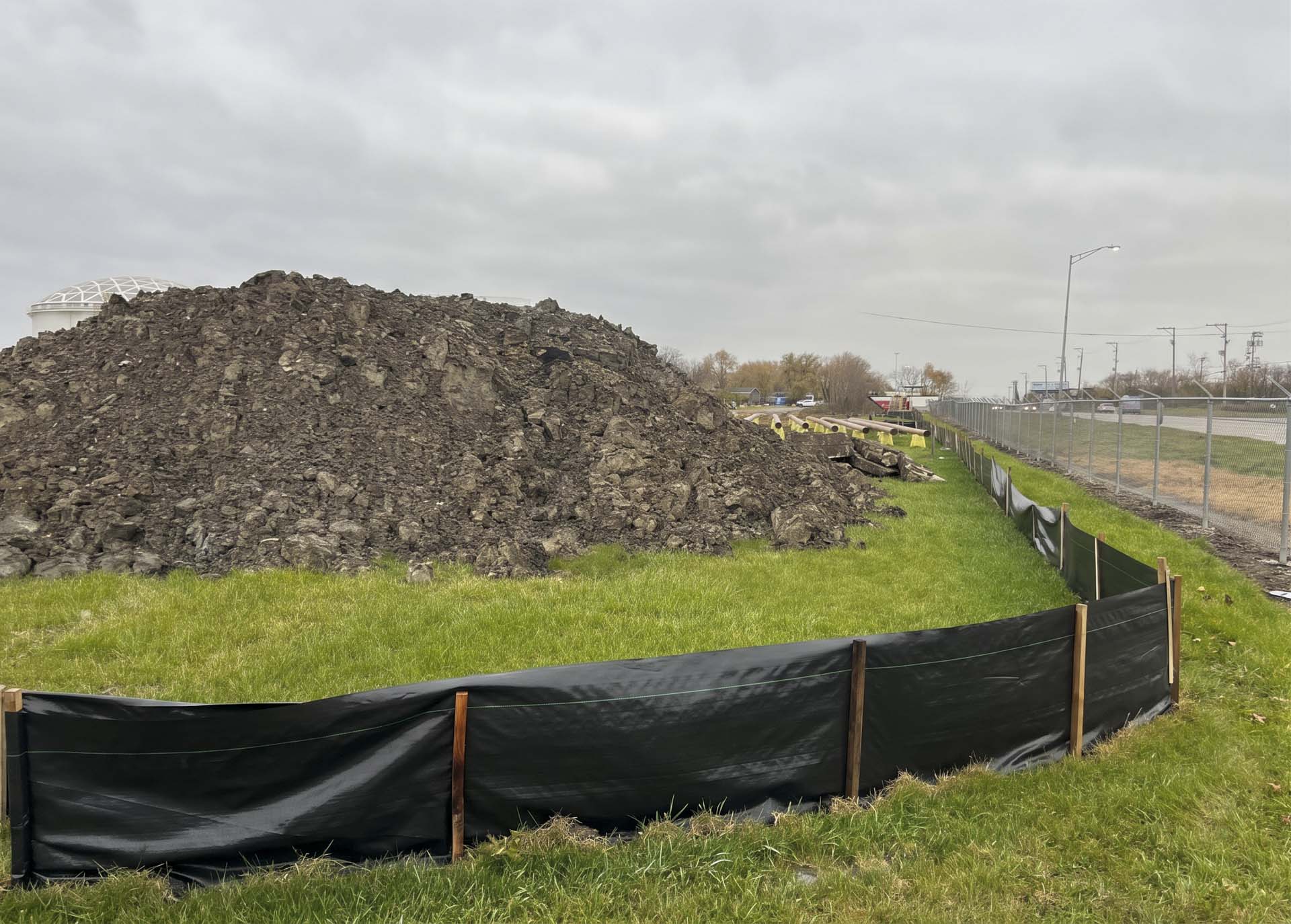
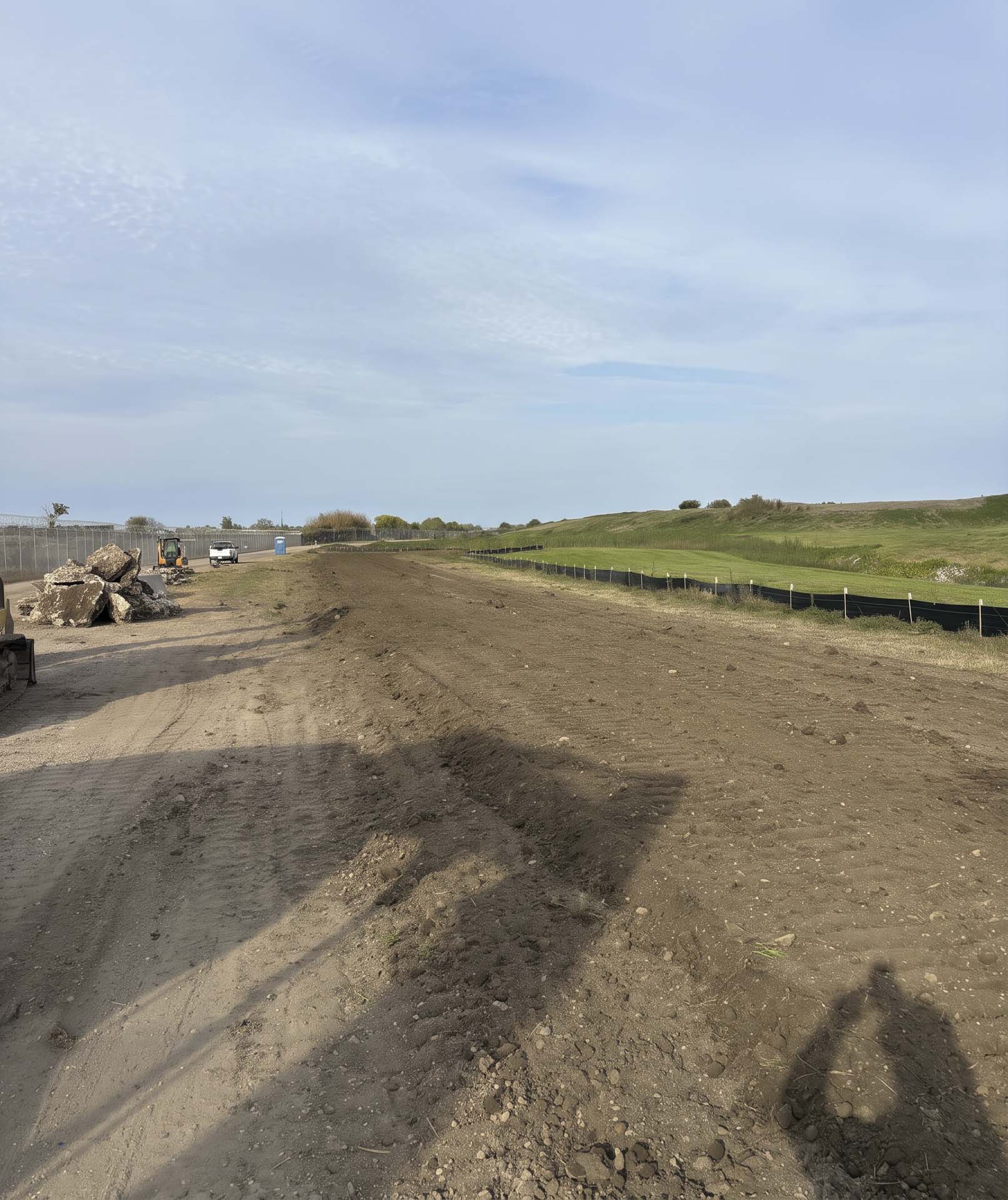
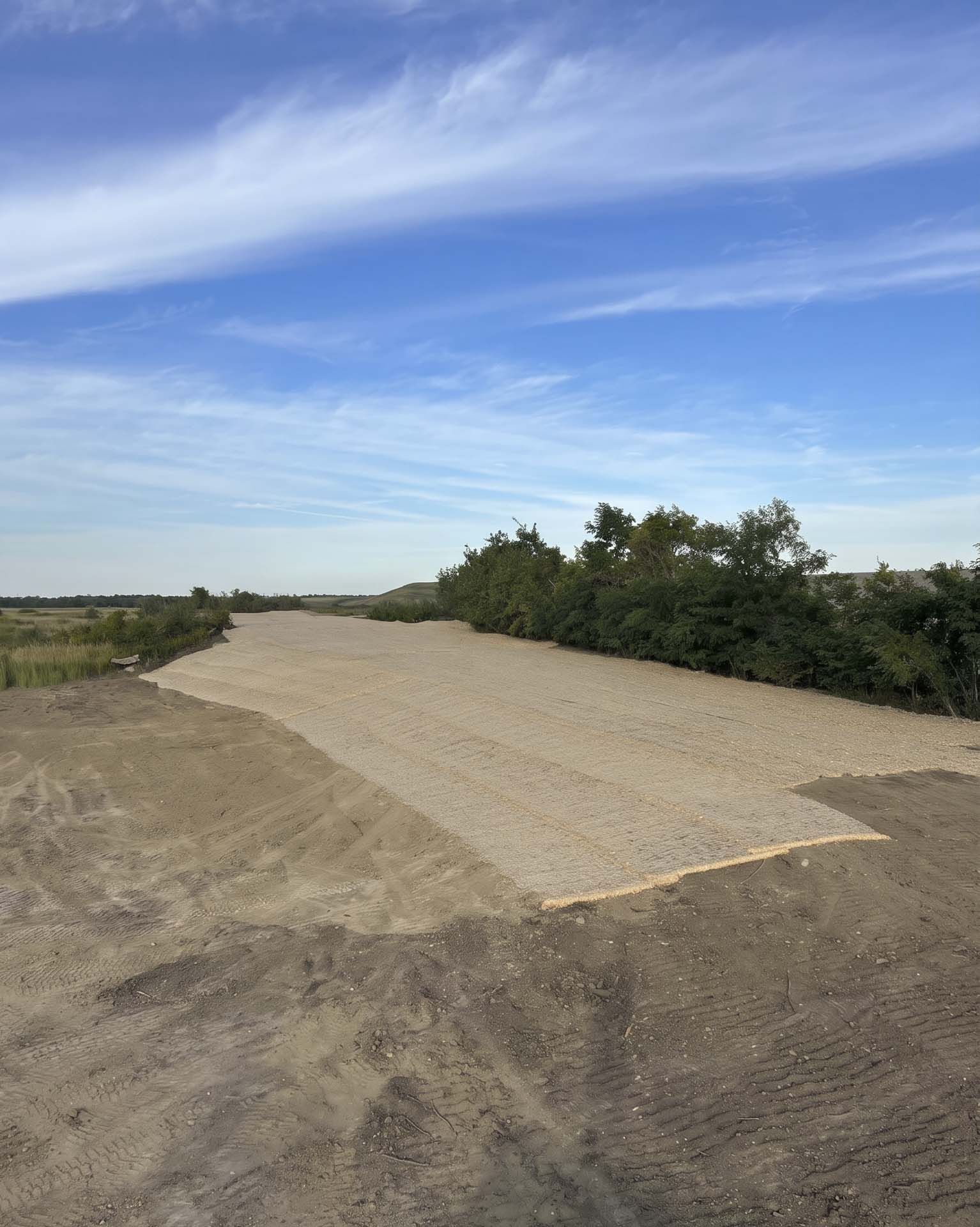
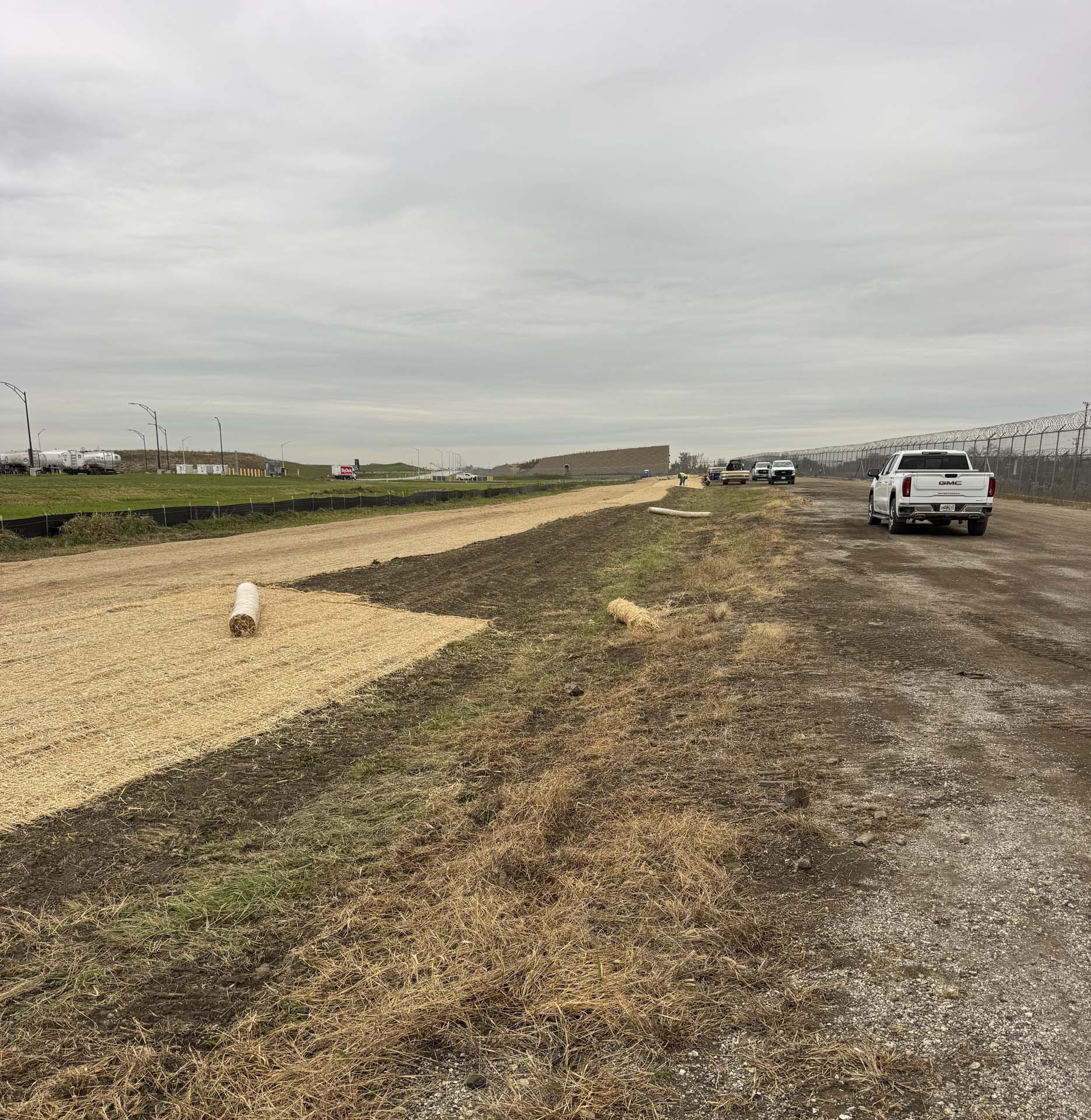
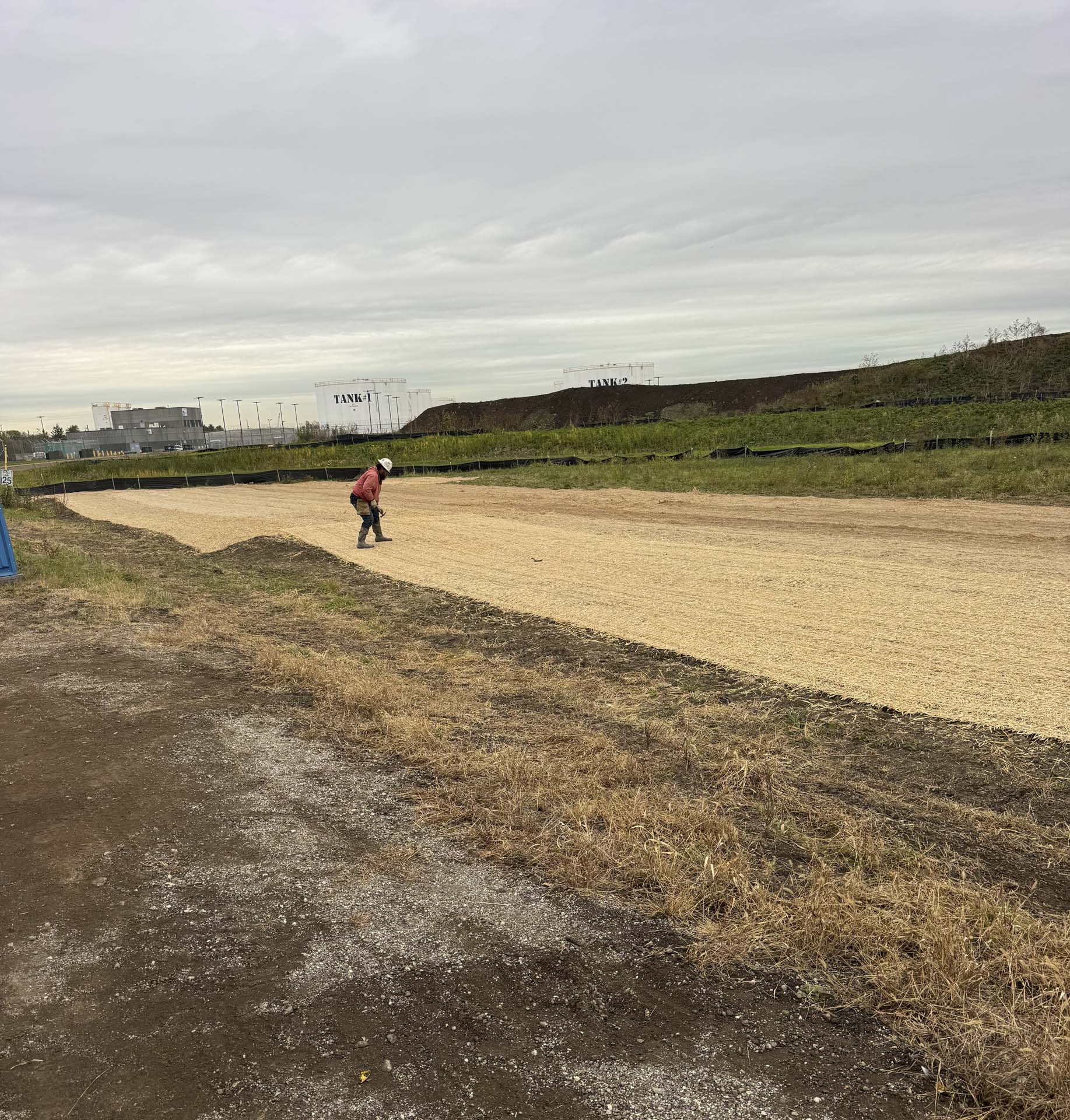
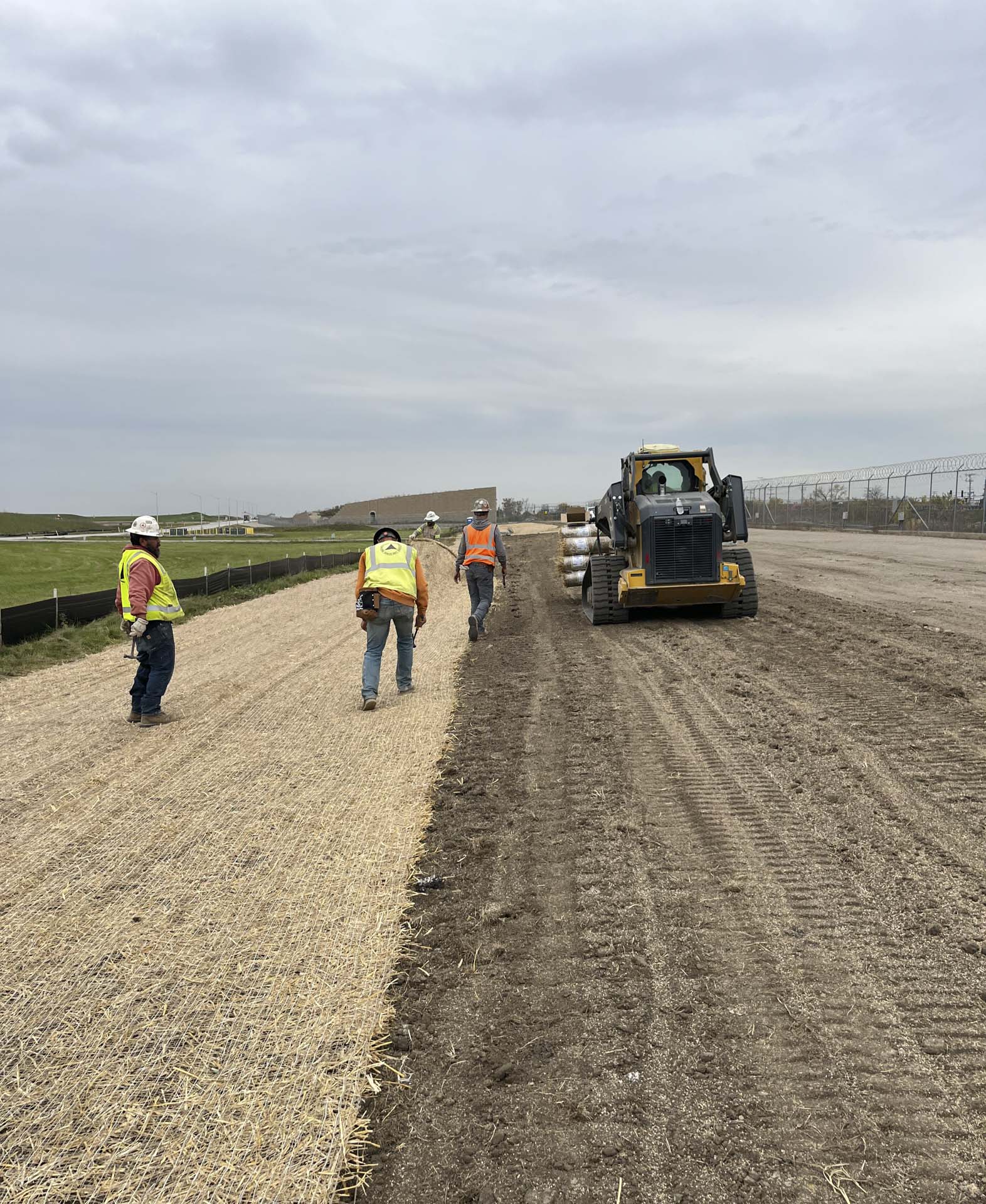
All required permits, certifications, and Operator Qualification (OQ) training were secured before fieldwork began. Environmental erosion controls (silt fence, matting, and spoil-pile protection) were installed prior to major construction.
Phase I – Station and Terminal Work
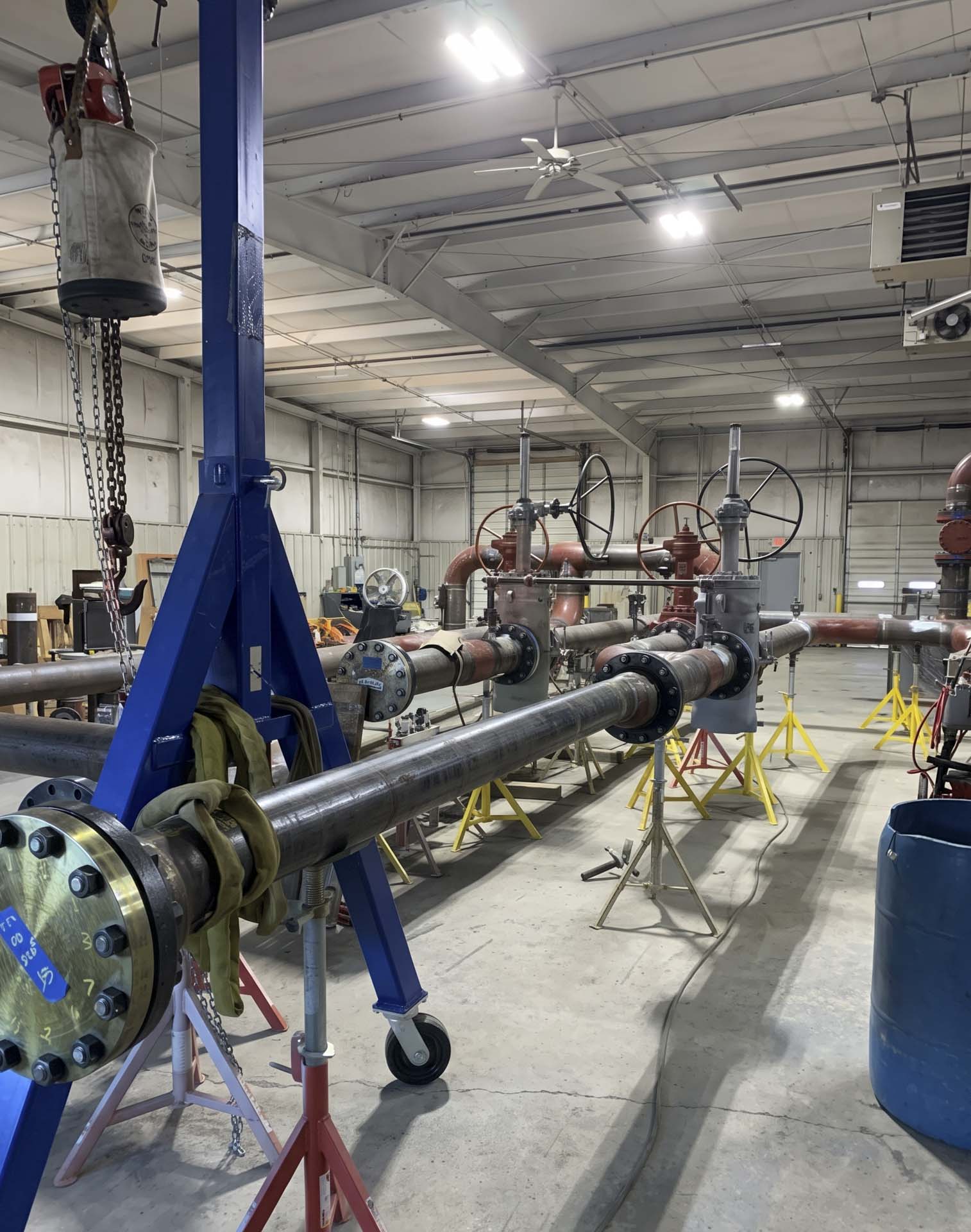
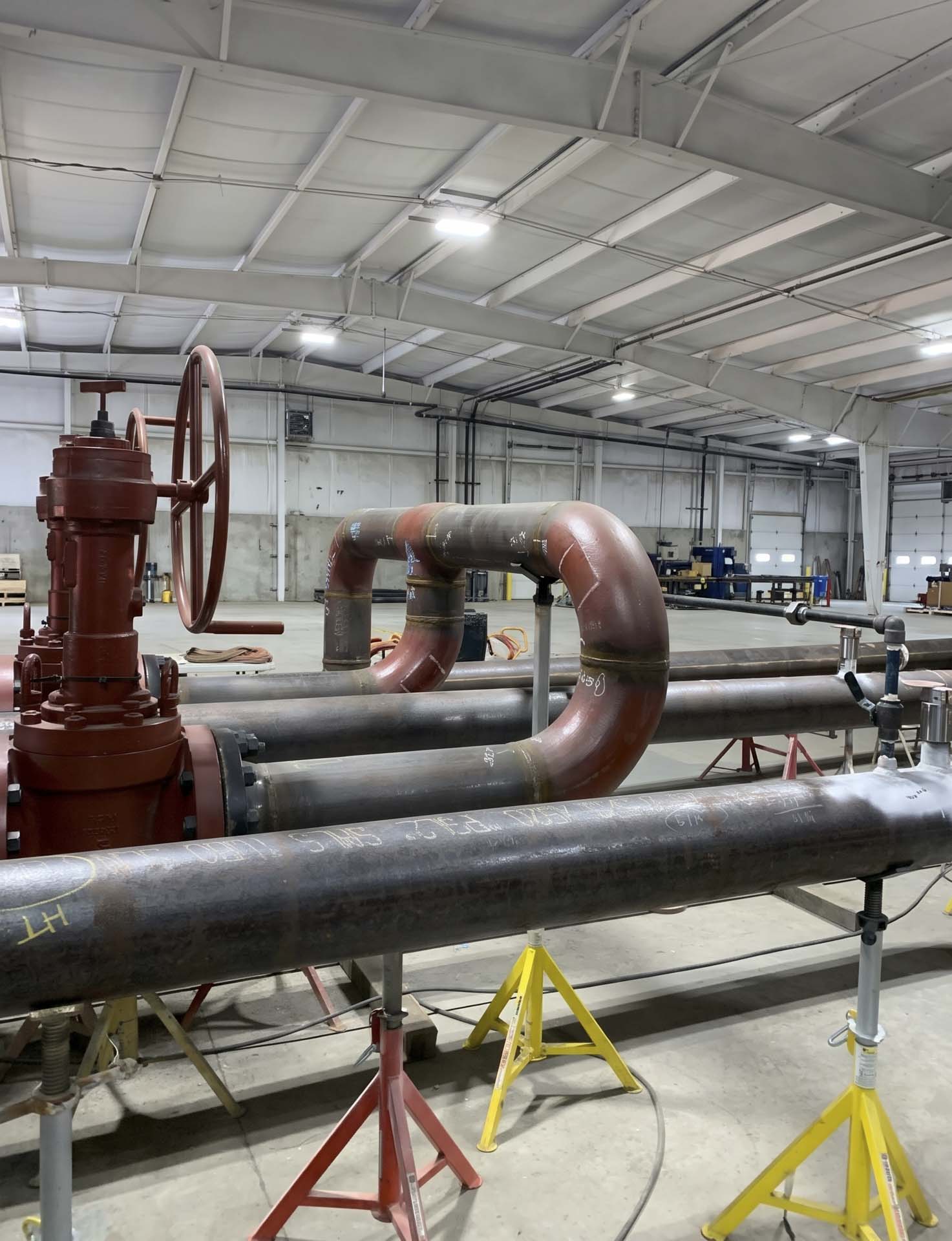
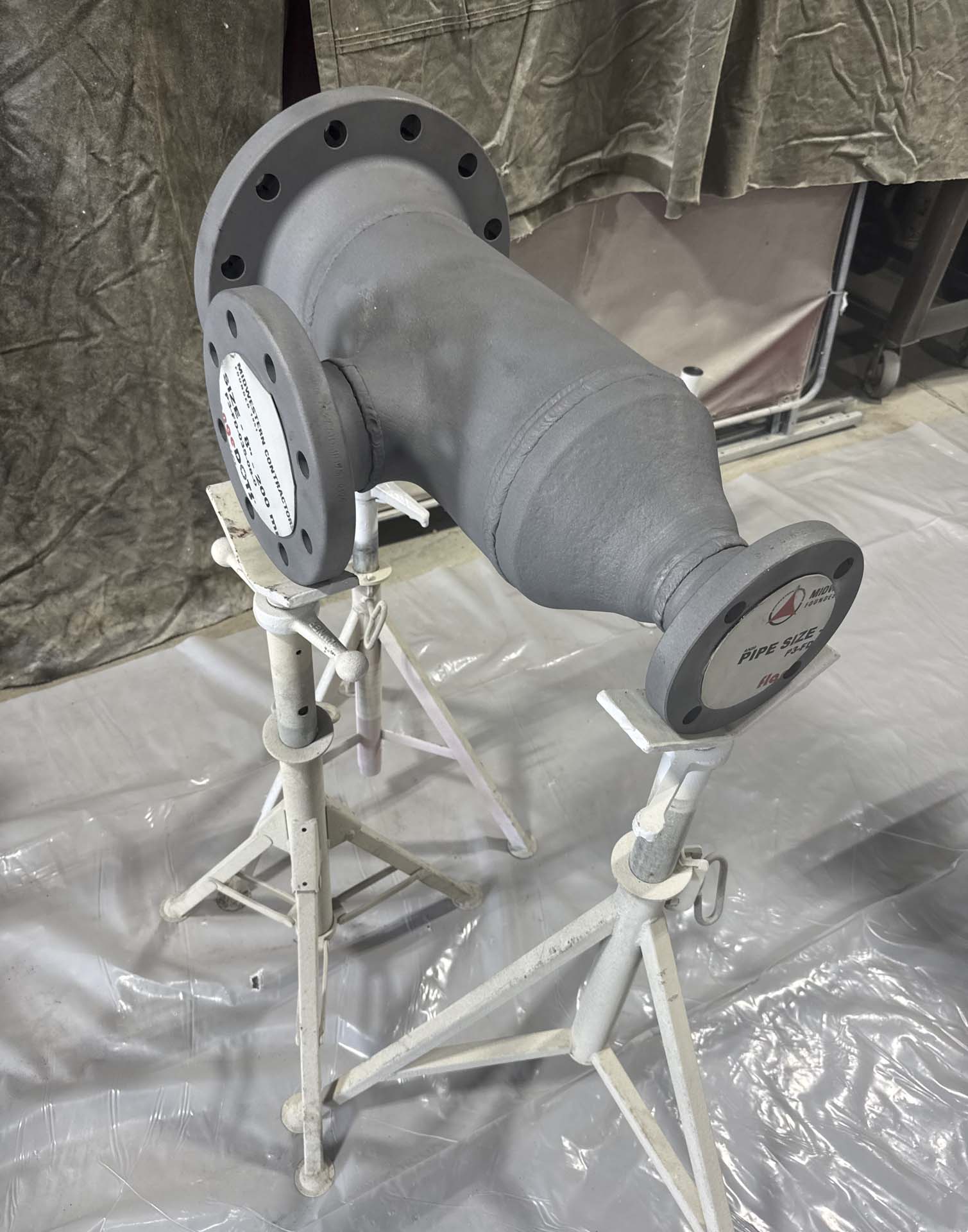
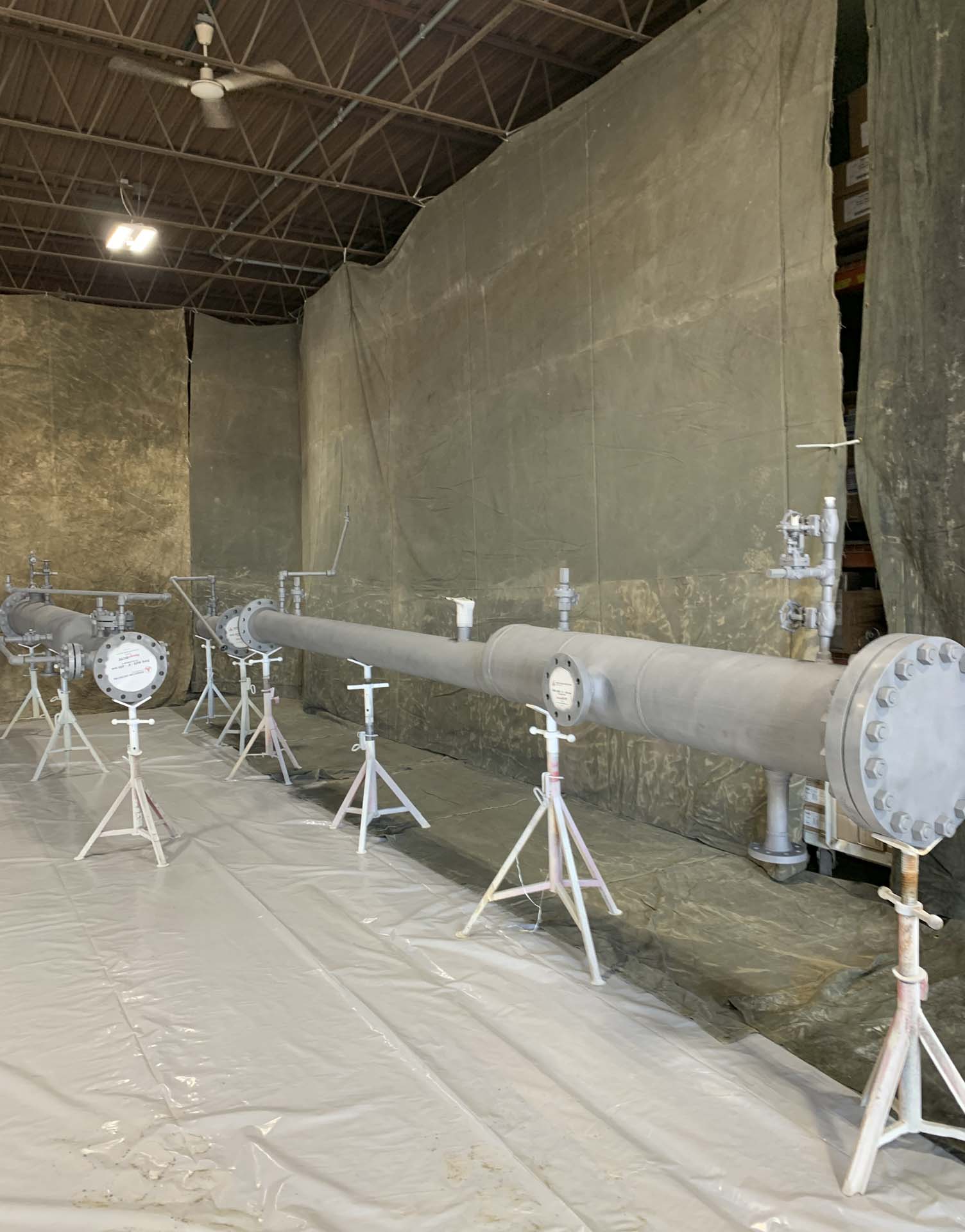
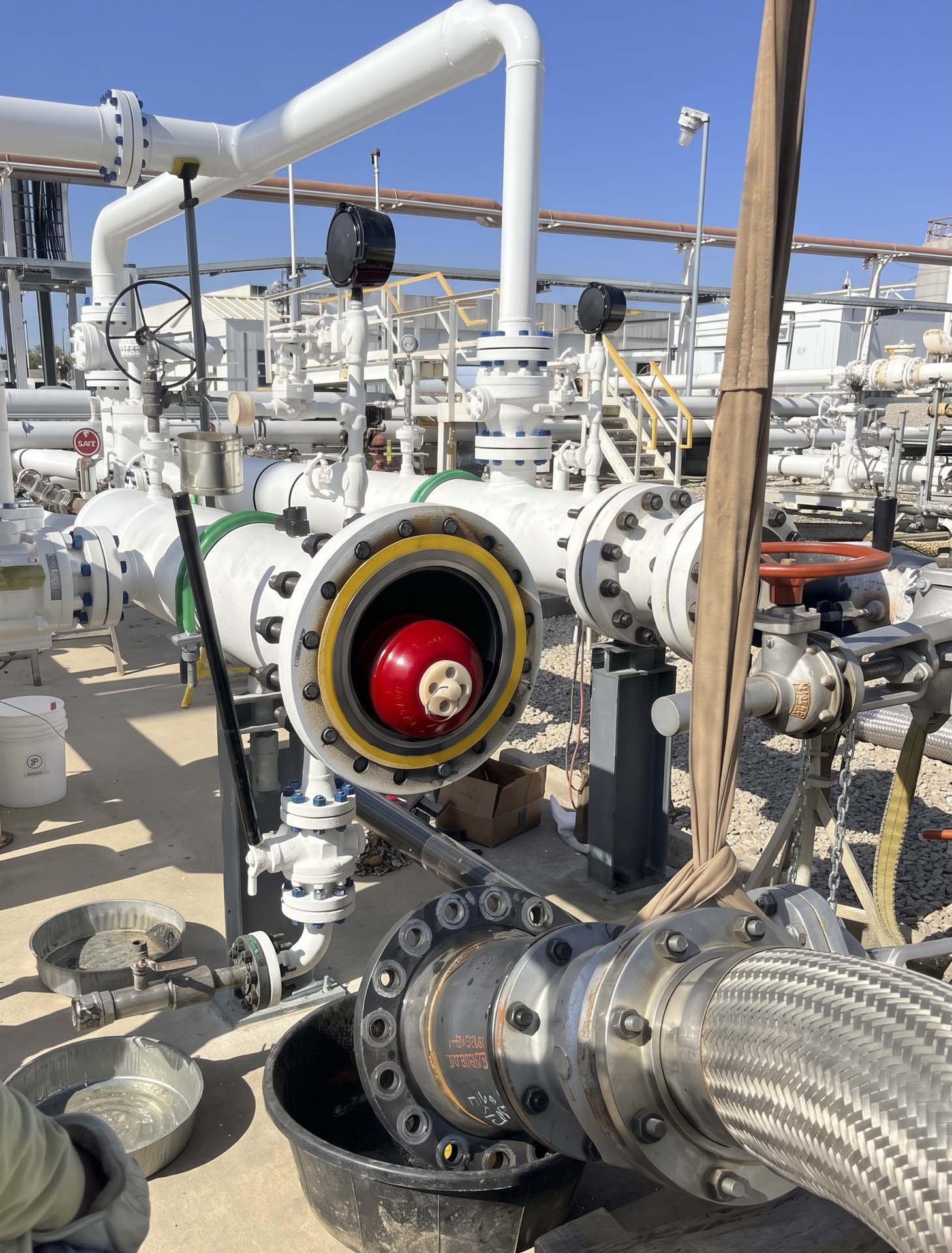
Piping was rerouted at the control stations and terminal ends, working carefully around distillate storage tanks and existing systems. Concurrently, field measurements were used to create isometric drawings for six new control stations, including valves, launchers, receivers, and related piping, which were fabricated, x-rayed and hydrostatically tested offsite.
Phase II – Drills and Bores
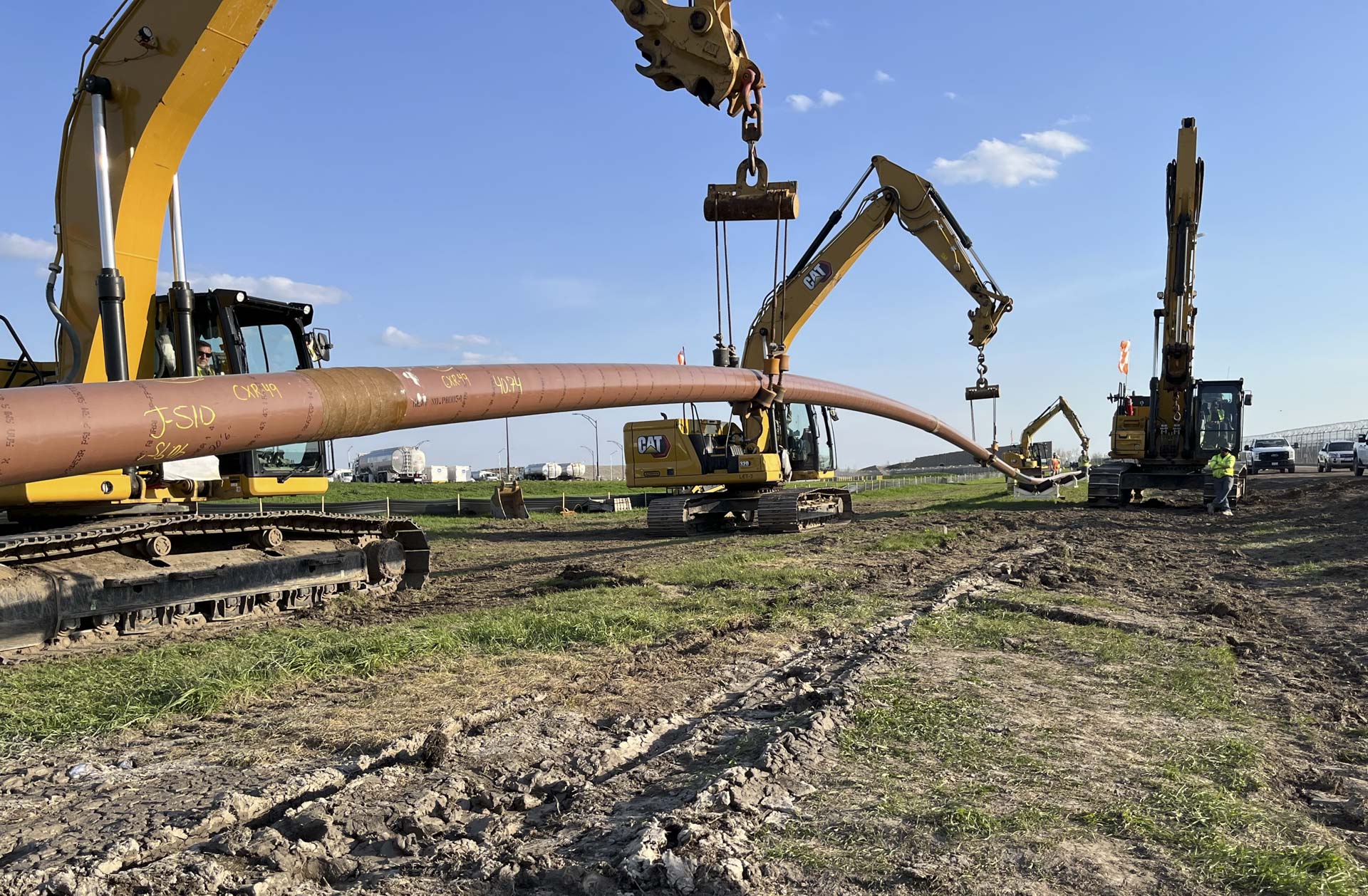
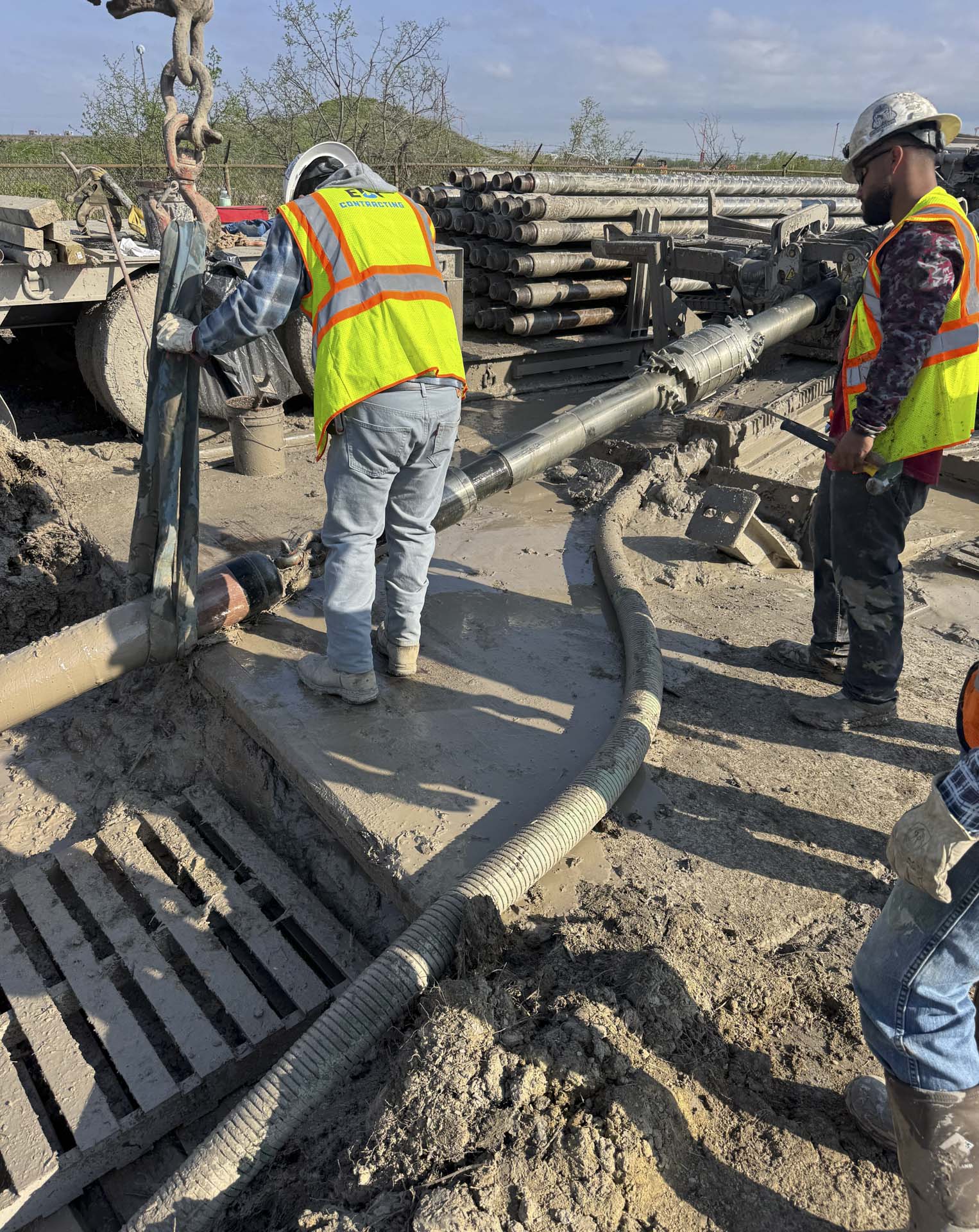
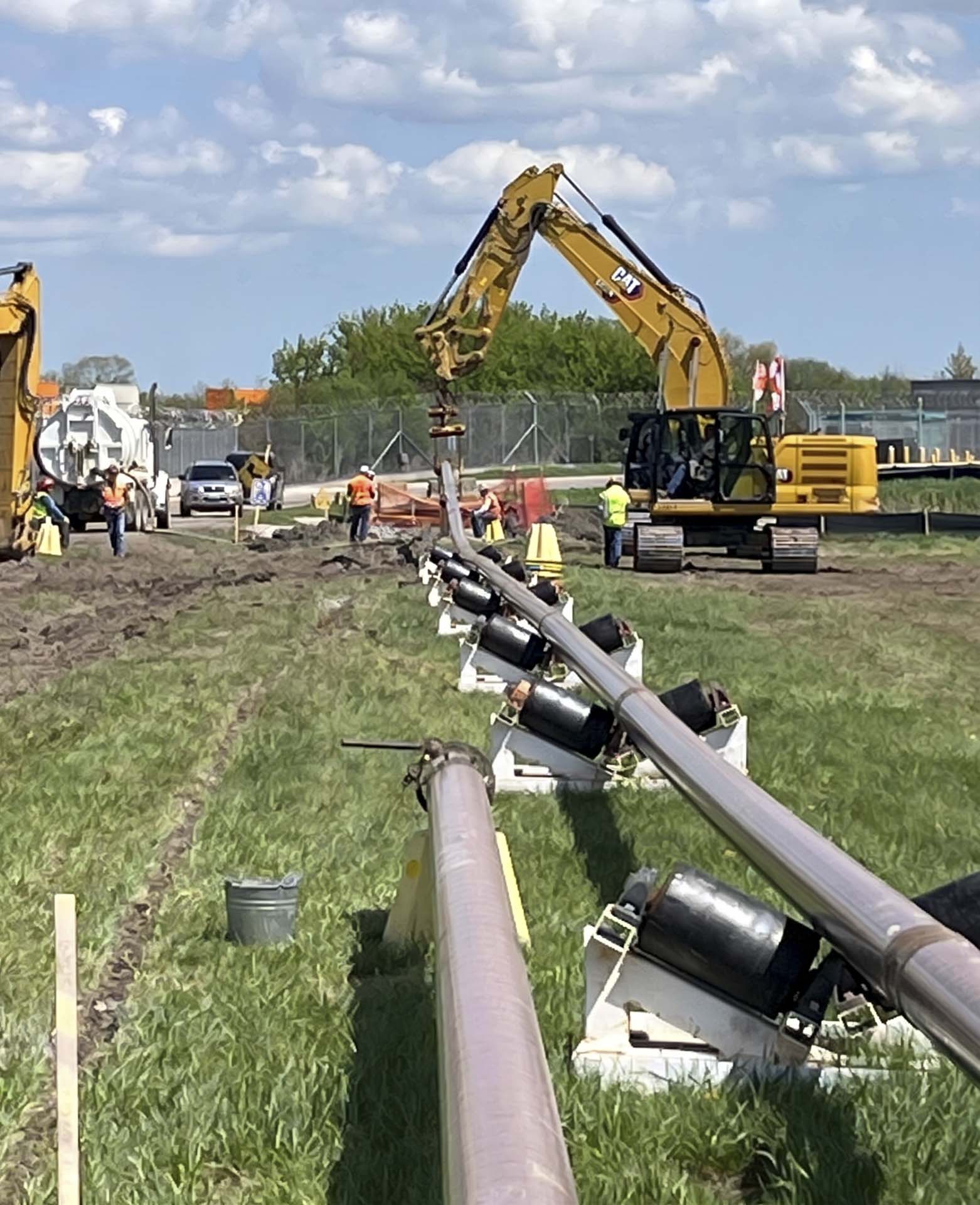
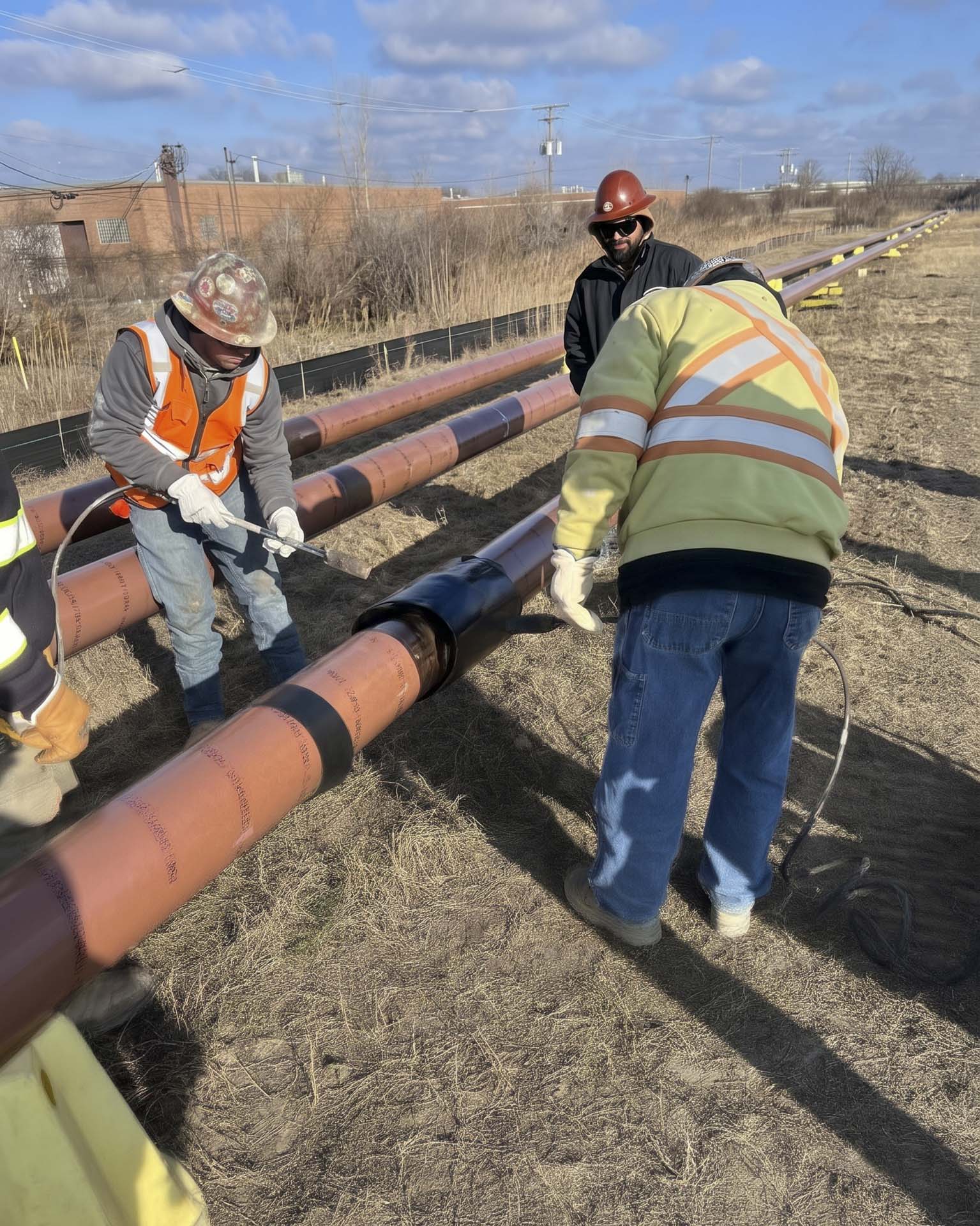
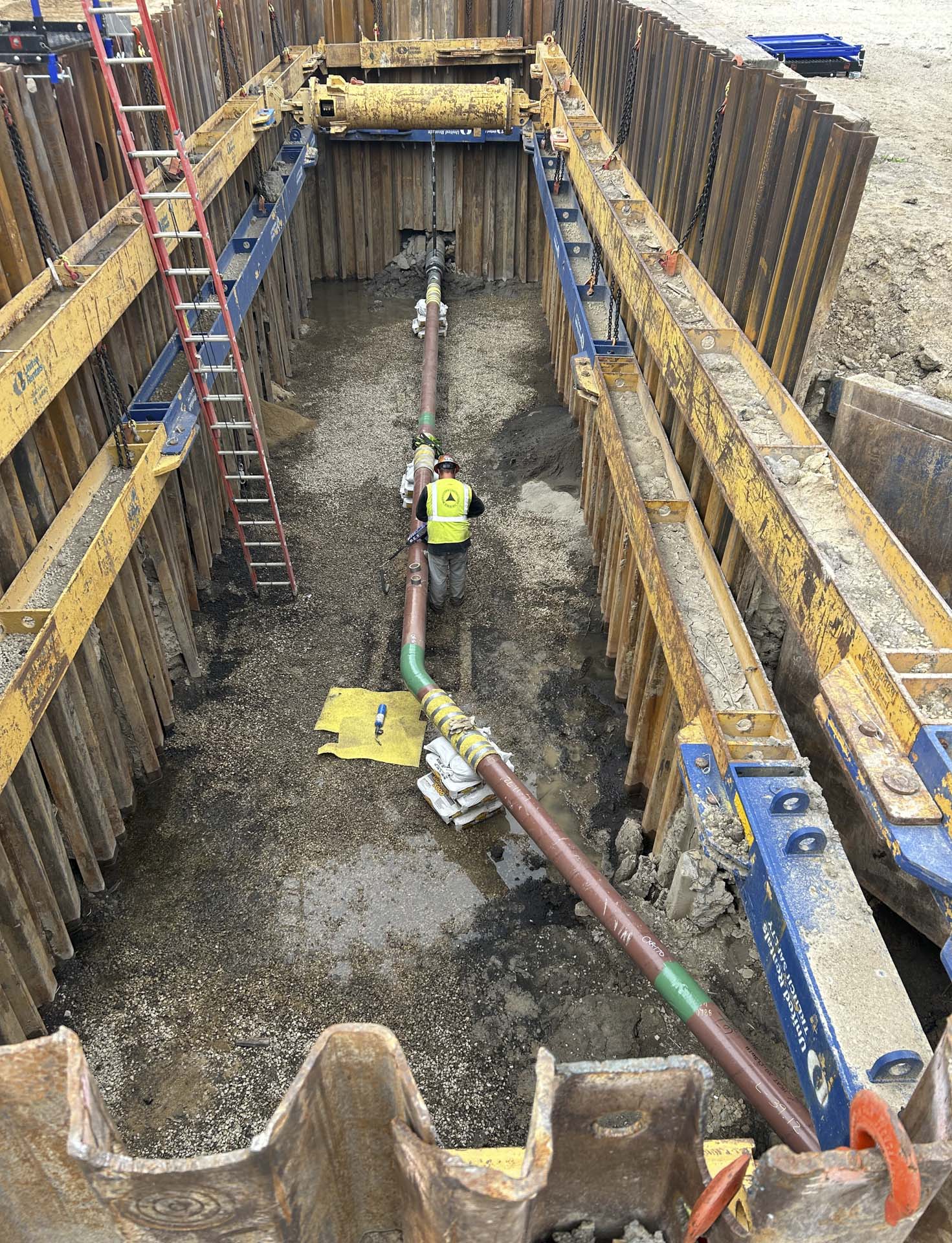
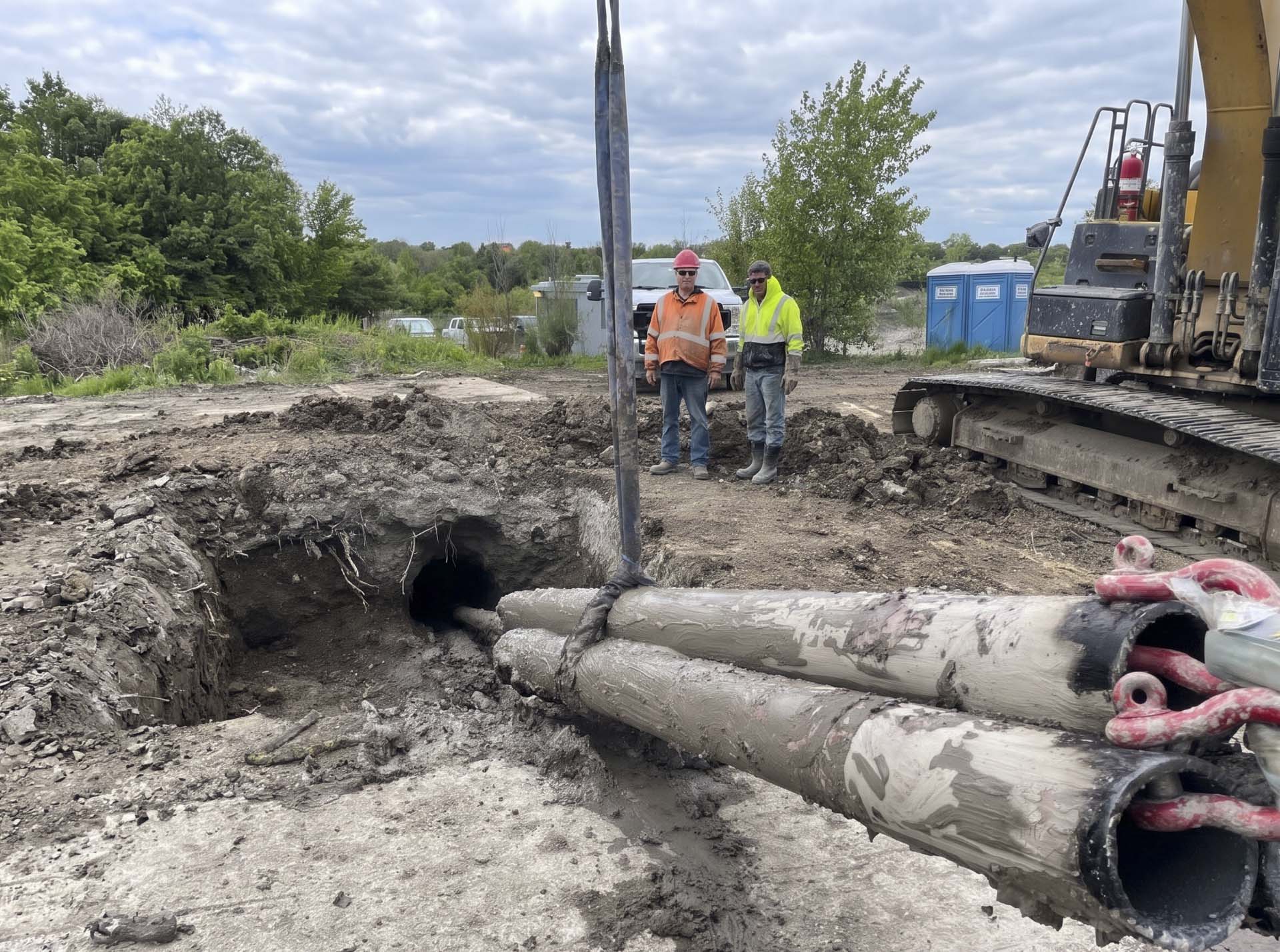
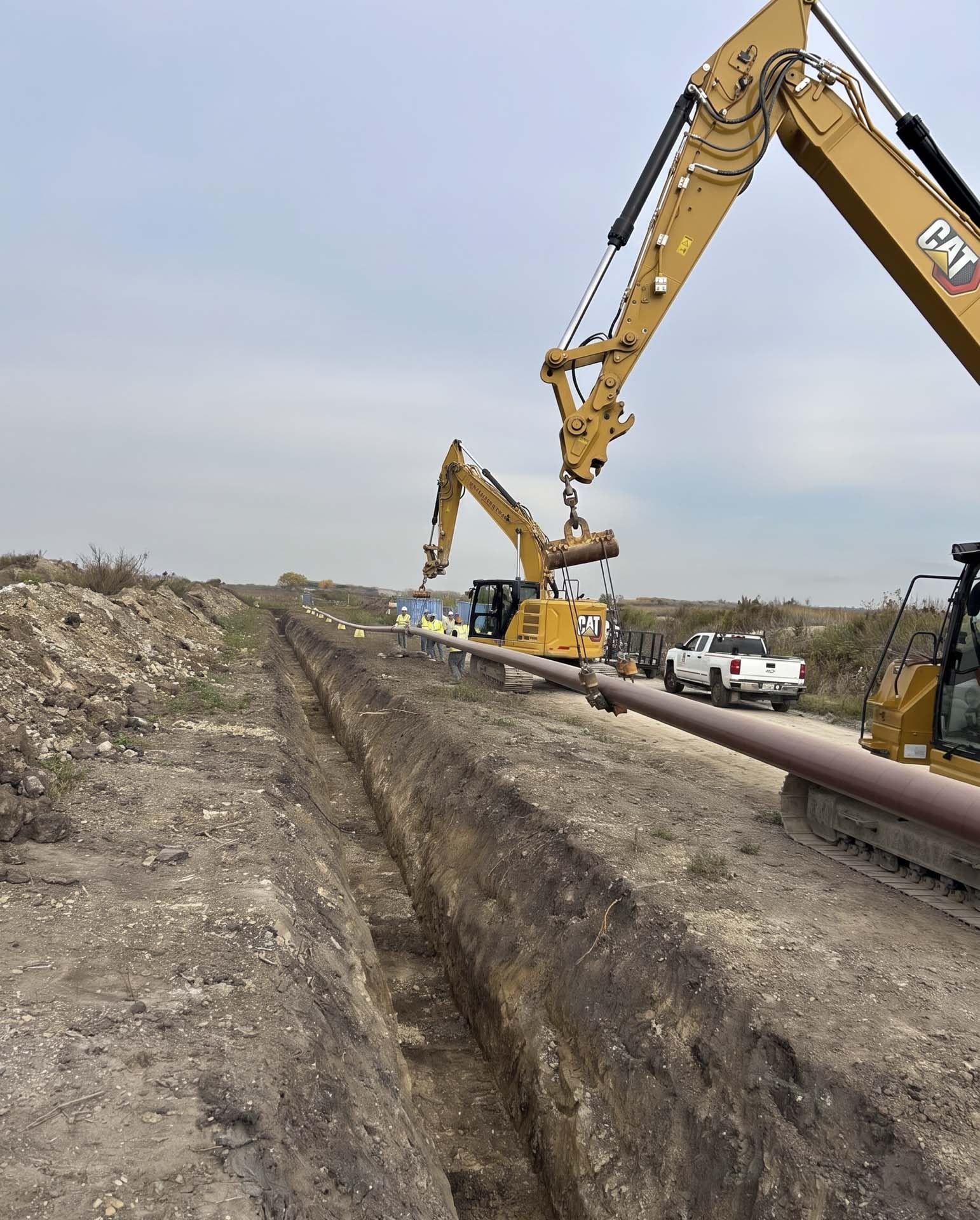
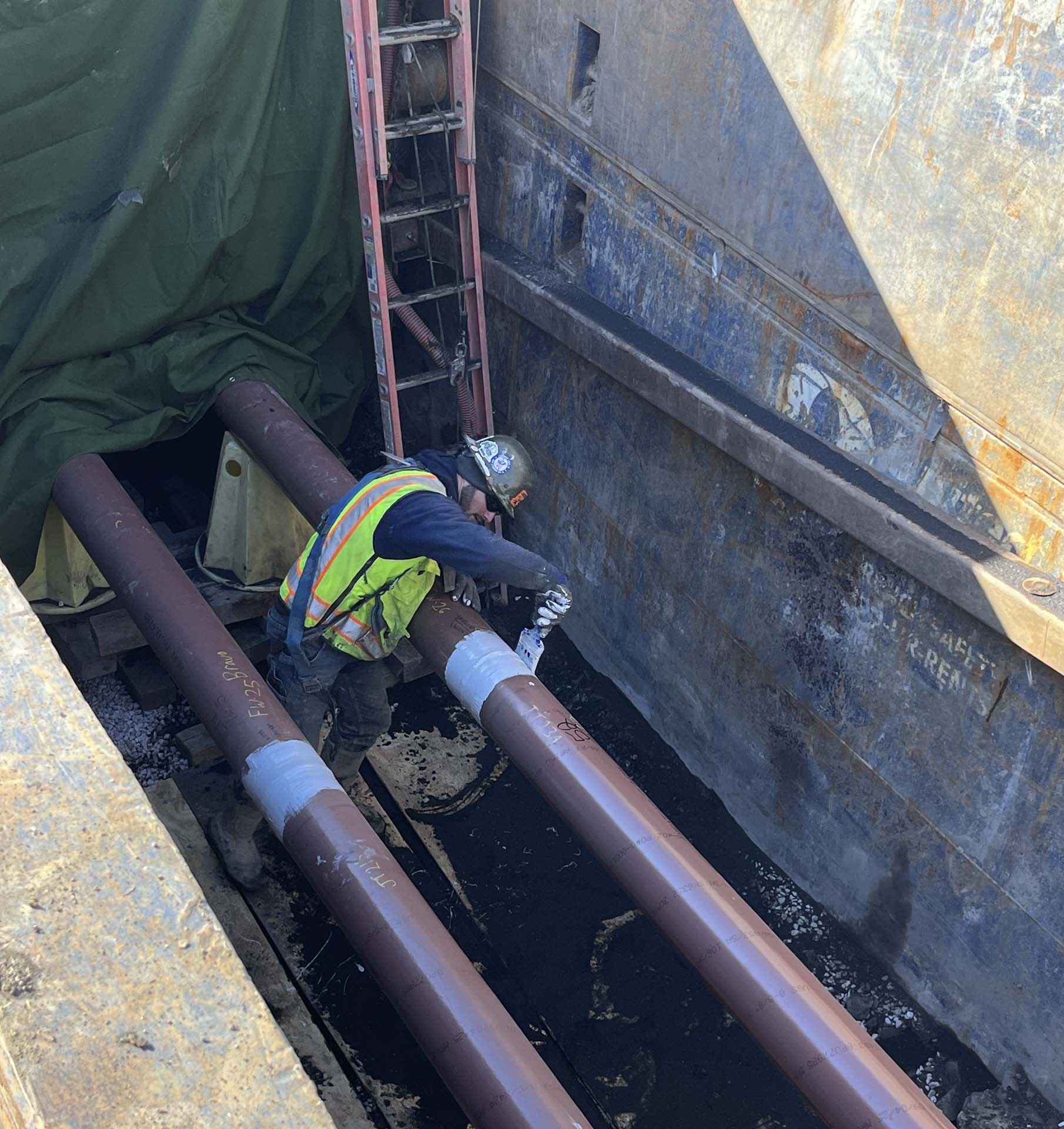
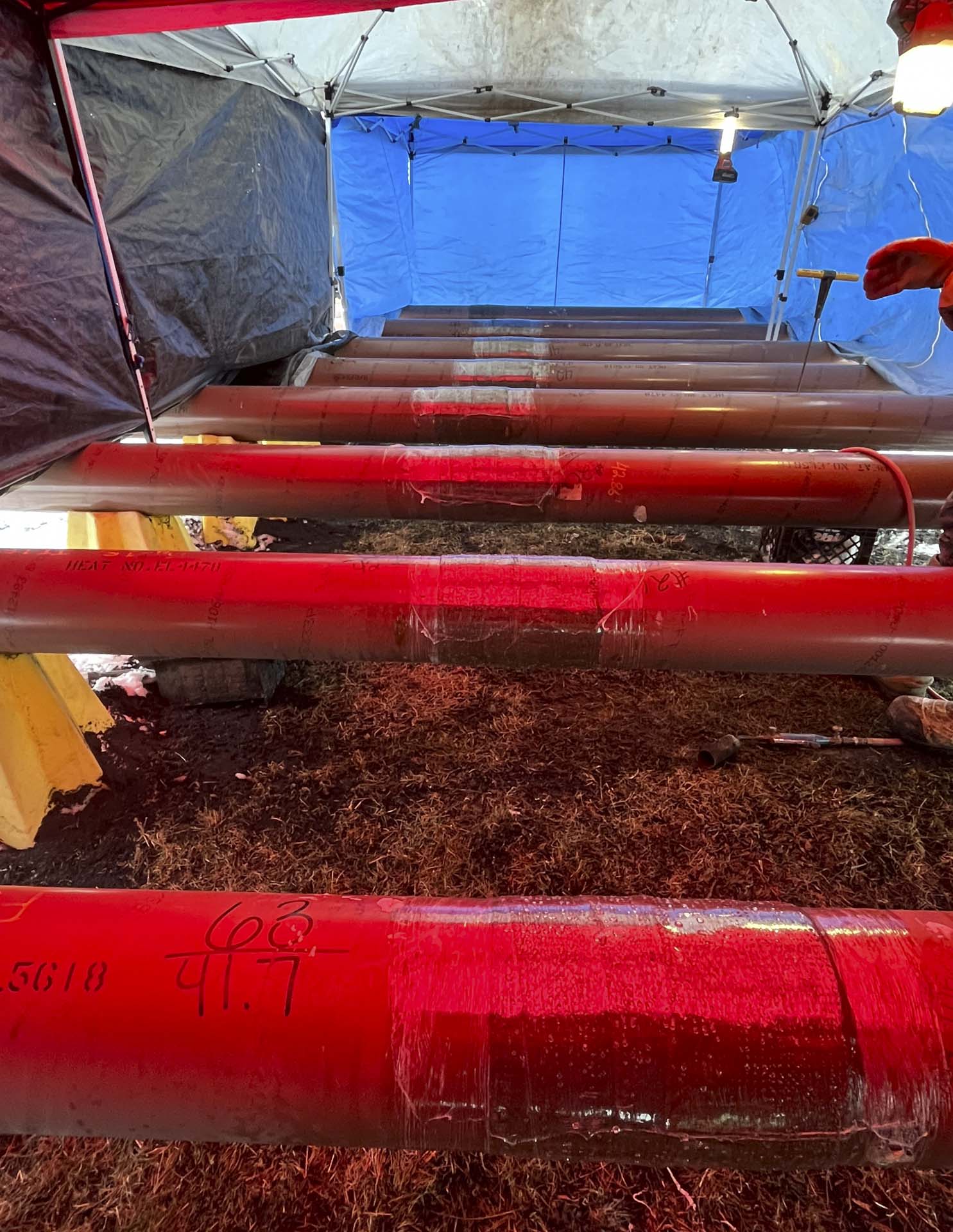
Laydown and material yards were established. Drill strings were laid out, welded, 100% x-rayed, hydrostatically tested, and recoated. Key directional drill work included:
- Three-bundle 1,700-foot intersect drill with 30-inch ream
- Three-bundle 1,650-foot drill with 30-inch ream
- Three-bundle 850-foot drill under railroad with 30-inch ream
- Two-bundle 850-foot drill
Bores included cased railroad crossings (approximately 200 feet) and slick-bore installations through dike walls (two-line 75-foot slick bore noted among project details).
Phase III – Open-Cut Installation and Tie-Ins
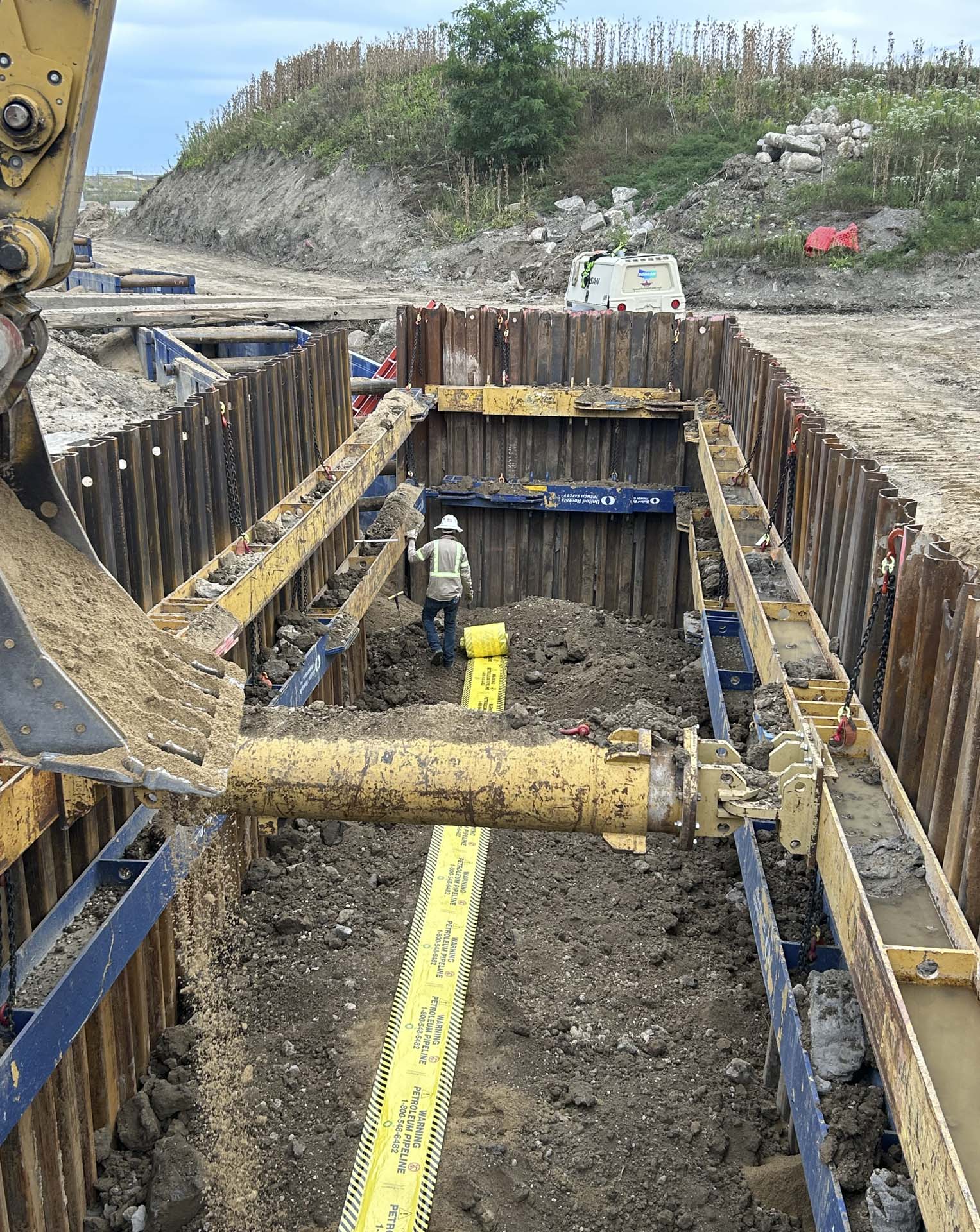
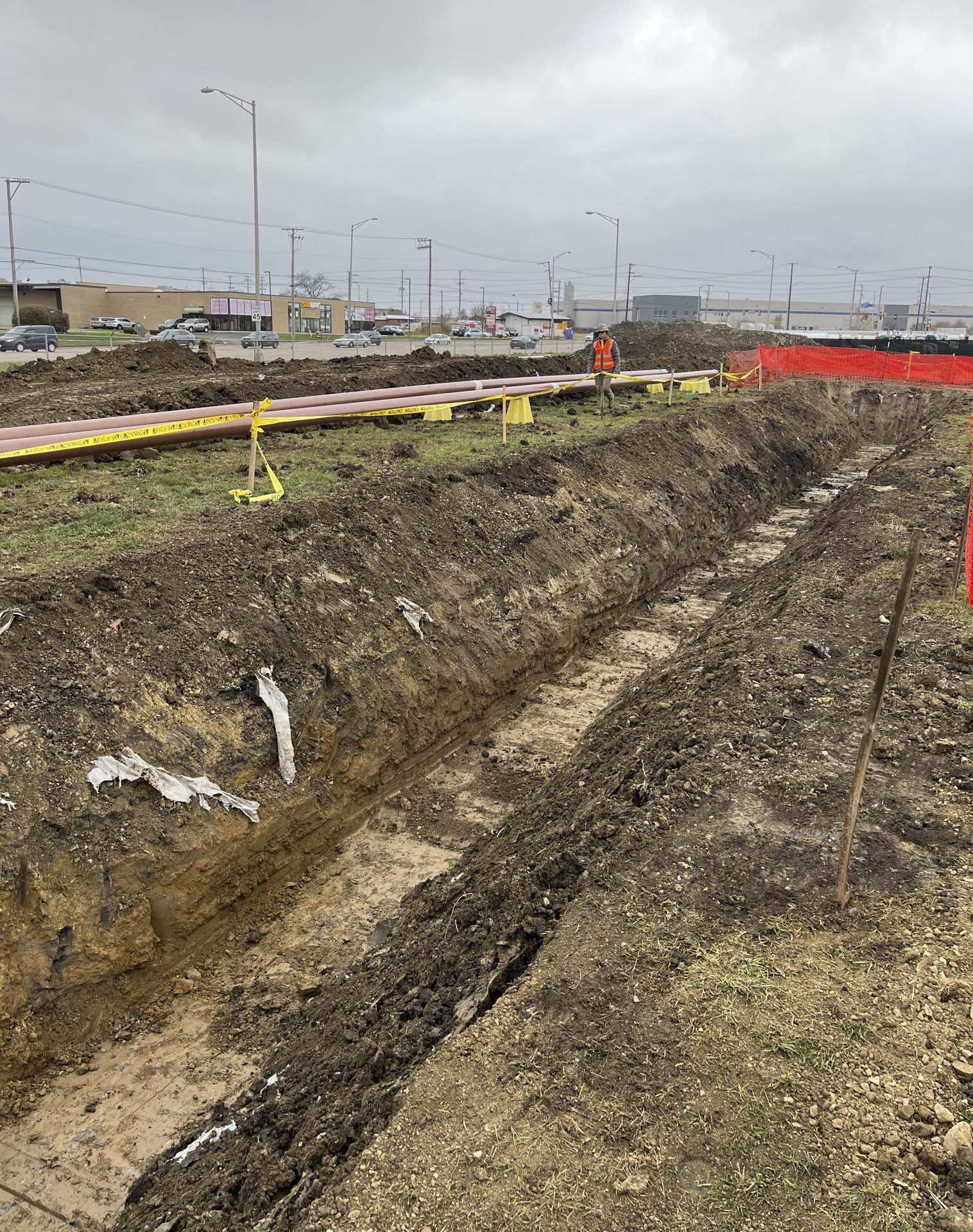
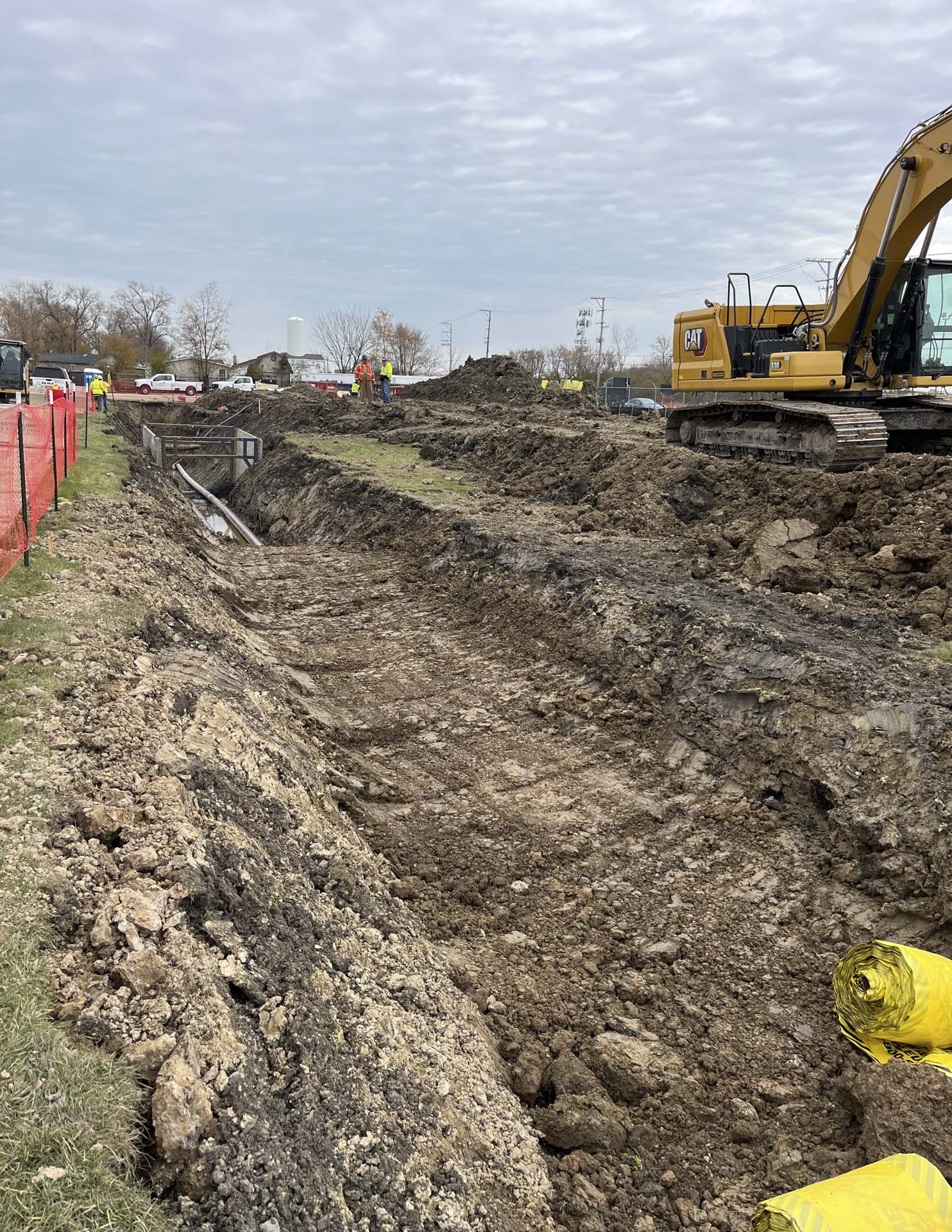
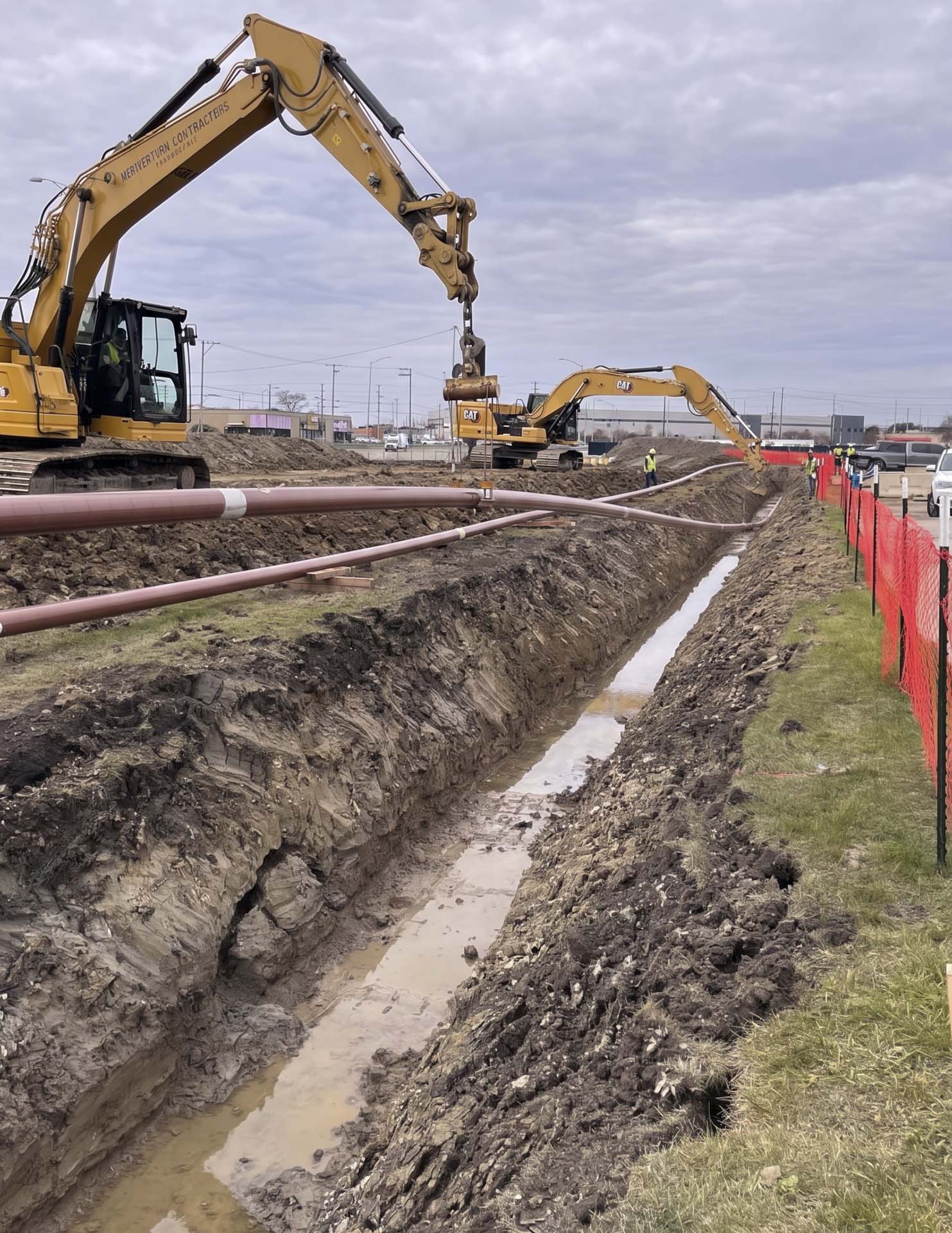
Trenching connected bore and drill pits. Pipe sections were welded, 100% x-rayed where required, hydrostatically tested, and lowered into place. Backfill used native material where suitable, supplemented by sand, and was placed over pipeline warning tape. Select areas were compacted to road standards to support future roadway expansion. Final tie-ins were completed at the newly rebuilt stations, after which system commissioning began.
Phase IV – Demolition and Restoration
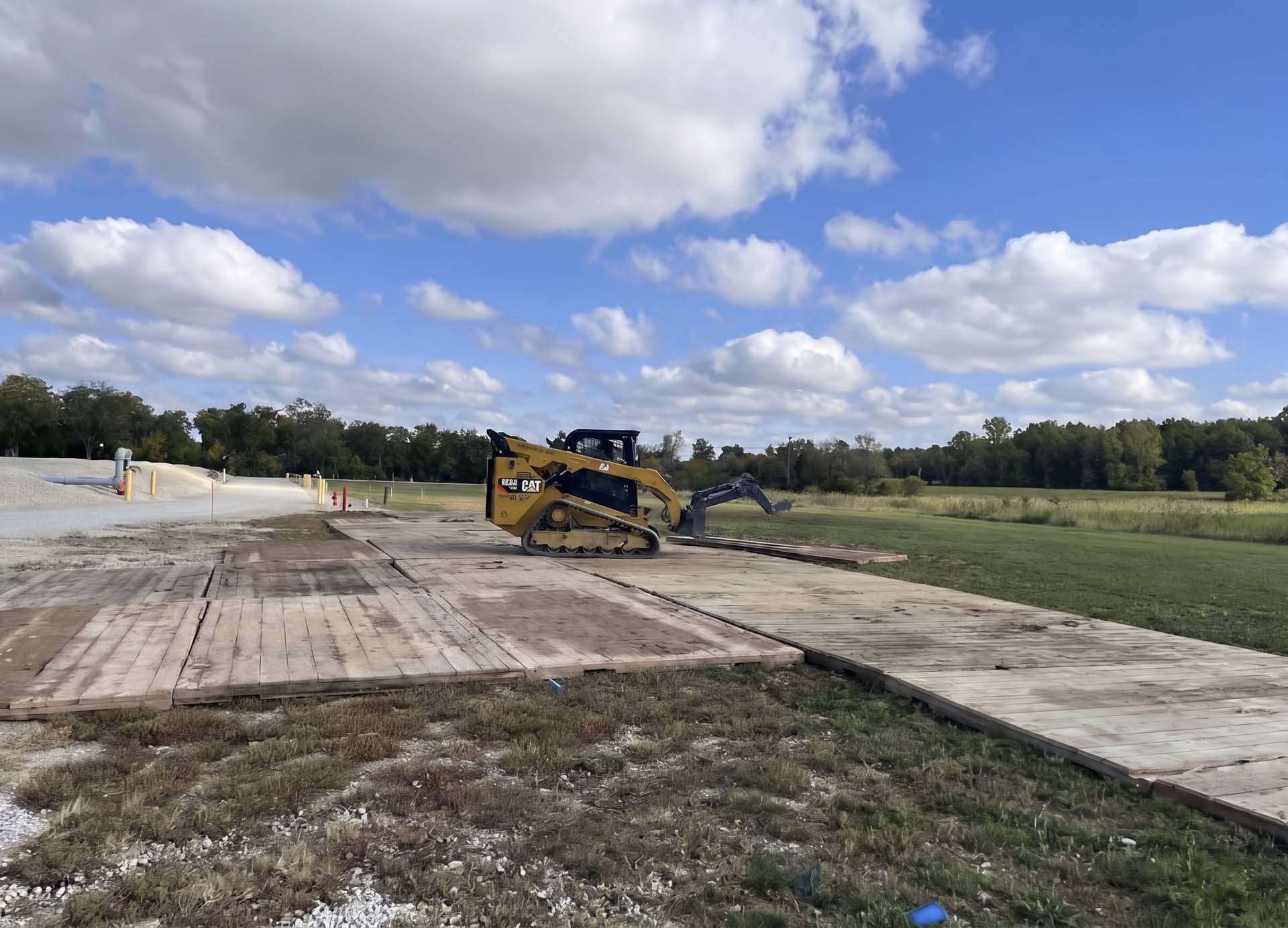
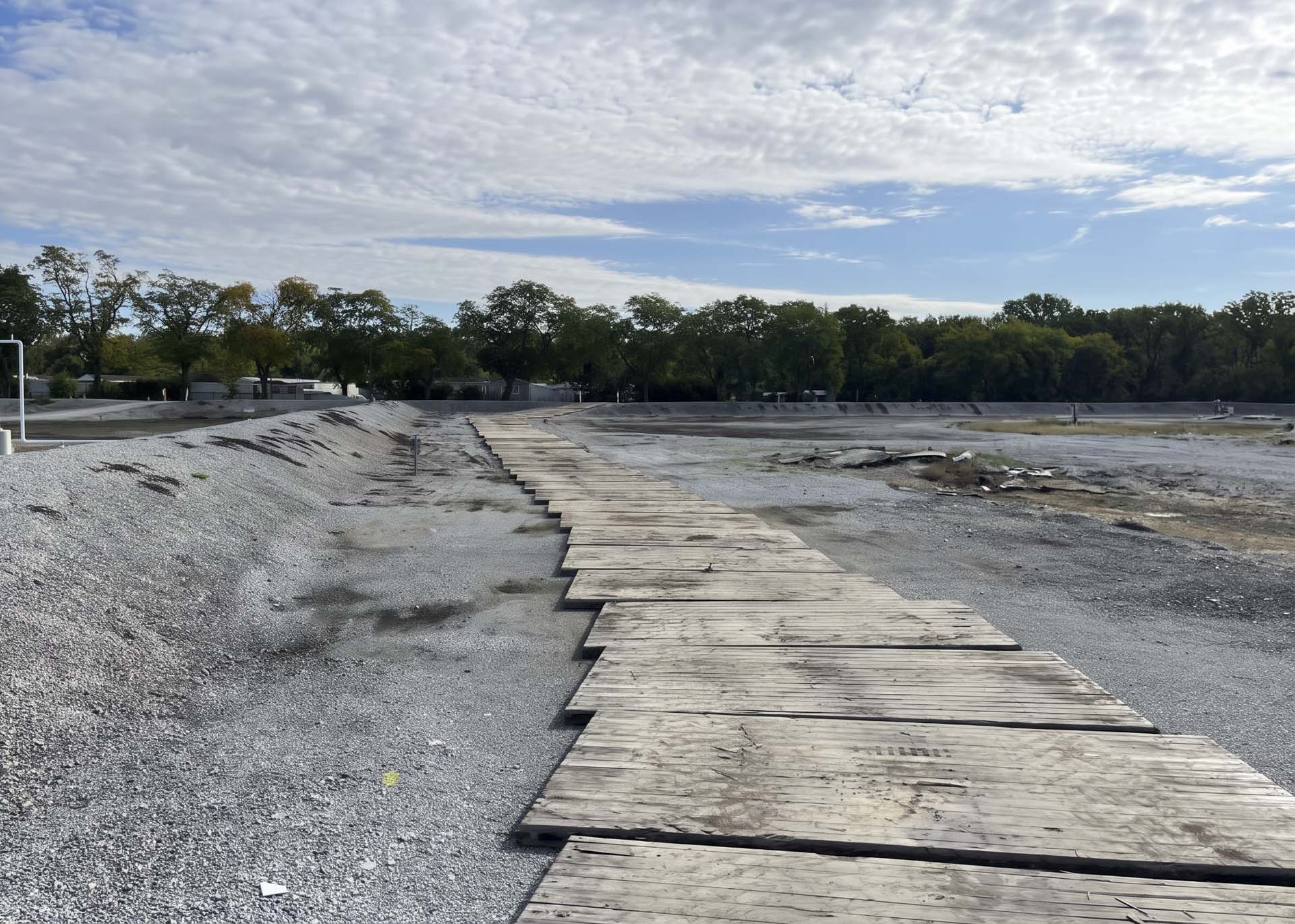
After successful commissioning, approximately 8,000 feet of abandoned pipe was removed by creating bell-holes, then sheared, extracted, sealed, and removed for disposal. Finish grading and seeding with a perennial grass mixture restored the industrial corridor, eliminating runoff and siltation risks. Construction debris and mats were removed, and laydown yards were restored.
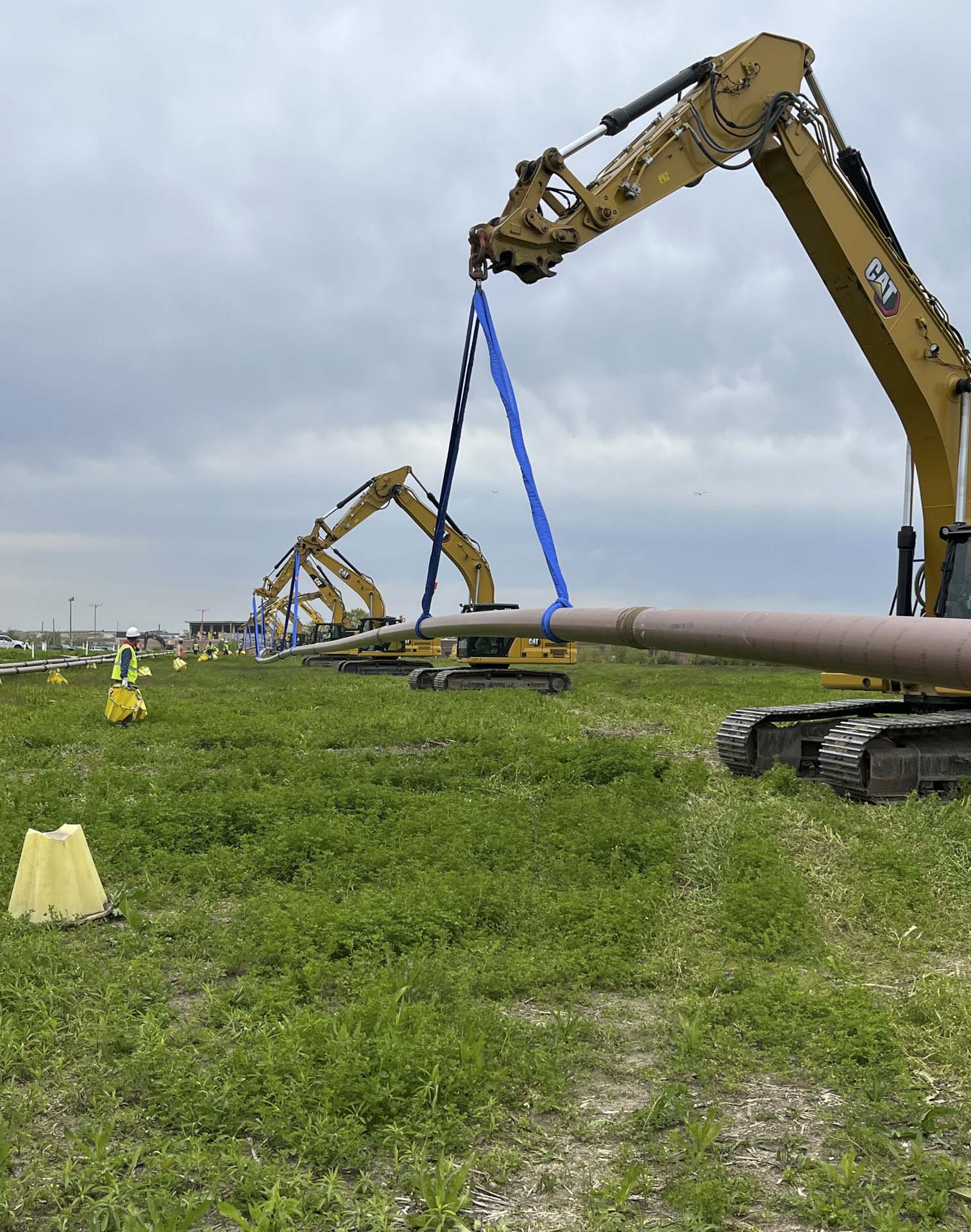
Safety management was proactive and adaptive. Plans were developed before mobilization and updated continuously for changing tasks and weather. Daily toolbox talks and Job Safety Analyses (JSAs) emphasized material handling, rigging, line-of-fire awareness, equipment movement (with spotters for welding rigs and track hoes), and hydrostatic test controls (barriers, exclusion zones, notifications). One carefully orchestrated lateral move of welded, tested, and coated drill strings required up to seven track hoes working in synchrony over 300 feet. Hydrostatic tests were performed primarily underground; mandated above-ground tests on drill strings and offsite-fabricated station piping followed strict protocols.
Communication and Project Controls
Six stakeholders were kept informed of schedule progress, milestones, and any variations through daily conference calls led by MWC project managers. Field-to-office communication used email, text, and Construction View™ (CV), MWC’s cloud-based platform for managing drawings, specifications, timesheets, permits, soil and test reports, certifications/OQs, safety audits, as-builts, drill profiles, pulling-force data, photos, and videos. CV served as both a real-time collaboration tool and a complete documentation repository for audits and recordkeeping.
Results
- Project completed on time; tie-ins and commissioning finished ahead of schedule.
- Zero recordable safety incidents.
- Full regulatory and environmental compliance achieved.
- New pipeline system and six rebuilt control stations successfully commissioned and placed into service.
- Old pipeline fully removed and sites restored to a stable, vegetated condition suitable for the industrial setting.
Key Success Factors
- Early and thorough permitting executed by in-house staff.
- Phased construction that sequenced high-risk activities (drills/bores before open cut, commissioning before demolition).
- Rigorous quality assurance (x-ray, hydrostatic testing, recoating) combined with disciplined safety culture.
- Proactive, multi-channel stakeholder communication and daily coordination.
- Integrated use of Construction View™ for information management and documentation.
- Competent, collaborative team performance across project management, superintendents, safety, controllers, foremen, and trades.
This project demonstrates MWC’s ability to execute complex, multi-method pipeline relocations under tight external constraints while delivering safe, on-schedule, and high-quality results for critical energy infrastructure.
LinkedIn Summary
We’re proud to share the successful completion of a complex 25,000+ foot pipeline relocation project driven by a major roadway improvement.
Our team relocated seven 8-inch steel distillate pipelines, rebuilt six control stations, and executed multiple directional drills (including multi-pipe bundles), railroad bores, and open-cut installations—while maintaining rigorous safety, quality, and environmental standards.
Key results:
- Completed on time, with tie-ins and commissioning finished ahead of schedule
• Approximately 8,000 feet of old pipe safely extracted and removed
• Zero recordable safety incidents
• Full stakeholder coordination across a multi-year timeline
From permitting and erosion control through final restoration, this project showcased the strength of disciplined planning, clear communication, and a highly skilled field team.
Another example of turning complex infrastructure challenges into reliable, operating assets.